
Rye Sourdough Bloomer vs Rye and Mixed Seed Sourdough Bread
Neither product is clearly better overall — it depends on what matters most to you.
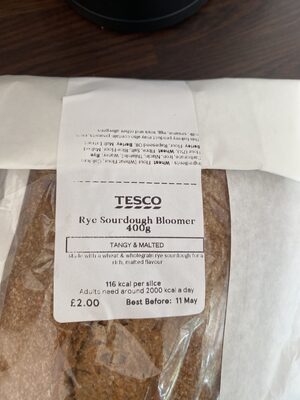
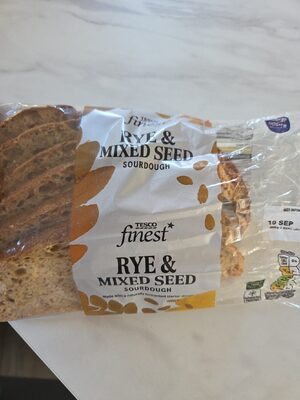
Nutrition per 100 g
| Nutrient | Rye Sourdough Bloomer | Rye and Mixed Seed Sourdough... |
|---|---|---|
| Nutri-Score | — | b |
| NOVA group | 4 | 3 |
| Calories | 232 kcal | 127 kcal |
| Fat | 1.2 g | 1.9 g |
| Saturated fat | 0.4 g | 0.2 g |
| Sugars | 1.8 g | 1.1 g |
| Salt | — | 0.4 g |
| Fiber | 6.4 g | 3.4 g |
| Protein | 8.8 g | 4.5 g |
| Additives | 0 | 1 |
| Allergens | Gluten | Gluten |
Green = better value for that nutrient (less sugar, fat, salt and calories; more fiber and protein).
Key differences
- Rye and Mixed Seed Sourdough Bread has 45% fewer calories (127 kcal vs 232 kcal).
- Rye Sourdough Bloomer has 37% less fat (1.2 g vs 1.9 g).
- Rye and Mixed Seed Sourdough Bread has 39% less sugar (1.1 g vs 1.8 g).
- Rye Sourdough Bloomer has 47% more fiber (6.4 g vs 3.4 g).
- Rye Sourdough Bloomer has 49% more protein (8.8 g vs 4.5 g).
- Rye and Mixed Seed Sourdough Bread is less processed (lower NOVA group).
Ingredients
Rye Sourdough Bloomer
Wheat Flour (Wheat Flour, Calcium Carbonate, Iron, Niacin, Thiamin], Water, Rye Flour (7%), Wheat Fibre, Salt, Rice Flour. Malted Barley Flour, Rapeseed Oil, Barley Malt Extract.
Rye and Mixed Seed Sourdough Bread
Wheat Flour, Water, Wholemeal Wheat Flour, Malted Wheat Flakes, Rye Flour, Millet Seed, Golden Linseed, Sunflower Seed, Rapeseed Oil, Fermented Wheat Flour, Salt, Poppy Seeds, Molasses, Malted Wheat Flour, Flour Treatment Agent (Ascorbic Acid), Rice Flour.
FAQ
Which is healthier: Rye Sourdough Bloomer or Rye and Mixed Seed Sourdough Bread?
Neither product is clearly better overall — it depends on what matters most to you. We compare Nutri-Score, processing level and seven nutrients per 100 g. Your own needs (for example low sugar or high protein) may make a different choice better for you.
Which has fewer calories?
Rye and Mixed Seed Sourdough Bread has fewer calories: 127 kcal versus 232 kcal per 100 g.
Which has less sugar?
Rye and Mixed Seed Sourdough Bread has less sugar: 1.1 g versus 1.8 g per 100 g.