
Calcium propionate (E282)
Updated October 12, 2026
Calcium propionate is the preservative that keeps packaged bread from going mouldy. It is the calcium salt of propionic acid, a compound that occurs naturally in cheese at far higher levels than bread ever contains and is a normal part of human metabolism. Neither JECFA nor EFSA set a numerical daily limit for it — JECFA because the toxicity is very low, EFSA because it found no systemic toxicity to base one on.
Quick facts
- Also known as
- E282
- E-number
- E282
- Function
- Preservatives
- US status
- Affirmed GRAS as an antimicrobial agent with no limit other than good manufacturing practice (21 CFR 184.1221); not on FDA's post-market review list
- EU status
- Permitted as E 282
- Acceptable daily intake
- No numerical limit. JECFA set an ADI "not limited" in 1974; EFSA did not allocate one in its 2014 re-evaluation and found no safety concern at authorised use levels
- Found in
- 13,608 products (8,062 sold in the US)
- Foodmetria concern level
- Low concern How we rate additives
What is Calcium propionate?
Calcium propionate is the calcium salt of propionic acid, made industrially by neutralising propionic acid with calcium hydroxide. It is a white crystalline solid with a faint sour smell, and it is added to bread at fractions of a percent.
Propionic acid is not an exotic industrial chemical. It is produced by the bacteria that ripen Swiss-style cheese, and natural levels as high as 6,200 mg/kg have been reported in cheese — orders of magnitude above what a loaf of bread contains. It is also, in the words of Australia's food regulator, "a normal intermediary metabolite in humans."
On labels it reads calcium propionate or, in Europe, E 282. Its siblings are E 280 (propionic acid), E 281 (sodium propionate) and E 283 (potassium propionate); regulators assess all four together.
Why is Calcium propionate used in food?
Bread is an almost ideal home for mould, and a sliced loaf has a lot of exposed surface. Propionates inhibit moulds and the bacteria that cause "rope" spoilage, which is what turns a few days of shelf life into one or two weeks. FDA classifies the job precisely: calcium propionate is an antimicrobial agent.
In the US it may be used in baked goods, cheeses, confections and frostings, gelatins, puddings and fillings, and jams and jellies — in each case at levels no higher than good manufacturing practice requires, with no numerical ceiling in the regulation.
The trade-off is visible on the shelf. Bread without a mould inhibitor keeps for a couple of days at room temperature, which is why preservative-free loaves are sold fresh daily, frozen or with a short date.
Is Calcium propionate safe? What the research says
The international limit, and why there isn't one. The WHO/FAO expert committee set an acceptable daily intake of "not limited" for propionic acid and its salts back in 1974. That wording is obsolete now; its modern equivalent is "not specified," the category reserved for substances of very low toxicity where a number would serve no purpose.
EFSA's 2014 re-evaluation. EFSA looked again at all four propionates and did not allocate an ADI — but the reason matters. Its conclusion was that the data did not support setting one, and Australia's regulator summarises the finding as no evidence of systemic toxicity in animal or human studies. The only adverse oral effect EFSA identified was reversible diffuse epithelial hyperplasia of the oesophagus in a 90-day dog study — a local irritant effect at the site of contact, seen at dietary concentrations of 1% and above, with no effect at 0.3%. EFSA explicitly judged that the forestomach hyperplasia reported in rodents is not relevant to humans, who have no forestomach.
EFSA then put the numbers side by side: the 1% dietary concentration that produced the effect in dogs is roughly three times the highest level permitted in food, so it concluded that use at authorised levels raises no safety concern. It found no concern for genotoxicity or carcinogenicity. Australia's FSANZ did not even carry out a dietary exposure assessment for its own propionates application, precisely because no systemic toxicity had been found to assess against.
Exposure, for context. EFSA's estimates of intake from additive use came out at 0.7–21.1 mg/kg of body weight a day on average and 3.6–40.8 mg/kg at the 95th percentile. With no ADI there is nothing to compare those to — which is the point: for a substance in this category, the comparison regulators make is to the dose that caused an effect, not to a limit.
Bottom line: this is one of the better-understood and least contested preservatives in the food supply. It is a near-relative of something cheese is full of, it does not accumulate, and the only effect anyone has demonstrated is local irritation at concentrations several times higher than food is allowed to contain.
Calcium propionate regulation: US vs EU
| Region | Status |
|---|---|
| United States | Affirmed GRAS as an antimicrobial agent under 21 CFR 184.1221, with no limit other than current good manufacturing practice; permitted in baked goods, cheeses, confections and frostings, gelatins, puddings and fillings, and jams and jellies. Not on FDA's post-market review list. |
| California | Not listed under Proposition 65. |
| European Union | Permitted as E 282, in a defined list of foods, mainly bread and other bakery products. EFSA re-evaluated the propionates in 2014 and set no numerical ADI, finding no safety concern at authorised levels. |
| United Kingdom | Permitted as E 282 on the official approved-additives list. |
| International (JECFA) | Acceptable daily intake "not limited" (1974) — the wording used for substances of very low toxicity, equivalent to today's "not specified". |
United States. Calcium propionate is affirmed GRAS — generally recognized as safe — as a direct human food ingredient under 21 CFR 184.1221, used as an antimicrobial agent with "no limitation other than current good manufacturing practice." The regulation names baked goods, cheeses, confections and frostings, gelatins, puddings and fillings, and jams and jellies. It was last amended in 1984 and FDA records no prior sanctions for other uses.
It does not appear on FDA's list of chemicals in the food supply under post-market review — unlike the other flour and bread additives on this site, which are all under some stage of reassessment.
European Union and United Kingdom. Permitted as E 282, on the official list of approved preservatives. Unlike many preservatives it is authorised in a limited set of foods rather than generally, with bread and other bakery products the main use.
No US state has restricted calcium propionate, and it is not listed under California's Proposition 65.
Who should limit or avoid Calcium propionate?
- People who want short-shelf-life bread have a straightforward choice: bakery bread, frozen bread, or loaves labelled preservative-free, eaten or frozen within a couple of days. This is a preference about freshness, not a safety issue.
- Anyone cutting back on ultra-processed food will encounter calcium propionate as a marker of packaged bakery goods, which is a fair reason to notice it even though the additive itself is benign.
- People avoiding dairy should know the reverse of the usual worry: calcium propionate in bread is synthesised chemically, not derived from cheese, despite propionic acid's natural presence there.
Foods that commonly contain Calcium propionate
Share of published products in each category whose ingredient list includes Calcium propionate.
Popular products with Calcium propionate
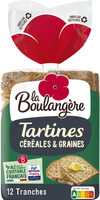 b NOVA 4
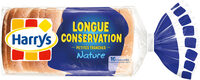 c NOVA 4
 c NOVA 4
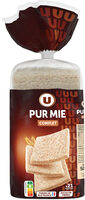 a NOVA 4
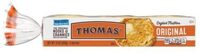 c NOVA 4
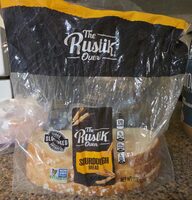 c NOVA 4
 c NOVA 4
 b NOVA 4
 c NOVA 4
 a NOVA 4
Calcium propionate-free alternatives
Popular products from the same categories that don't list Calcium propionate and score Nutri-Score A–C.
 b NOVA 4
 c NOVA 4
 a NOVA 3
 a NOVA 3
 a NOVA 4
How to spot Calcium propionate on a label
Look for any of these names in the ingredient list:
Related additives
Frequently asked questions
Is calcium propionate bad for you?
Neither JECFA nor EFSA has found a basis for a numerical daily limit, and EFSA found no concern for genotoxicity or cancer. The only demonstrated oral effect is local, reversible irritation of the oesophagus in dogs at dietary concentrations about three times higher than food is allowed to contain. Among food preservatives this is one of the least contested.
Is calcium propionate natural?
The additive is made chemically, by neutralising propionic acid with calcium hydroxide. But propionic acid itself is thoroughly natural: the bacteria that ripen Swiss-style cheese produce it, with natural levels up to 6,200 mg/kg reported in cheese, and it is a normal intermediary metabolite in the human body.
Is calcium propionate banned in Europe?
No. It is permitted in the EU and the UK as E 282. European rules authorise it for a defined list of foods rather than generally, with bread the main use.
How much calcium propionate is safe per day?
There is no numerical limit to compare an intake against — JECFA set its intake "not limited" and EFSA allocated no ADI. EFSA's own estimates of actual intake from additive use ran up to about 41 mg per kg of body weight a day at the 95th percentile, well below the levels at which any effect was seen.
Is calcium propionate vegan, halal and gluten-free?
Yes to all three as an ingredient: it is chemically synthesised, not animal-derived, and contains no gluten. Bread made with it still contains wheat, so the bread is not gluten-free.
What foods contain calcium propionate?
Mostly packaged bread, buns, tortillas, English muffins and other bakery goods; also some processed cheese, frostings, puddings and jams. See the products and categories above for what is in our database.
What can be used instead of calcium propionate?
Shorter shelf life is the honest answer: fresh bakery bread, freezing, or smaller loaves eaten quickly. Commercially, some bakers use sorbates or fermentation-derived preservative blends instead, and refrigeration slows mould without any additive at all.
Sources & references
- 21 CFR 184.1221 — Calcium propionate (affirmed GRAS)
- EFSA (2014). Scientific Opinion on the re-evaluation of propionic acid (E 280), sodium propionate (E 281), calcium propionate (E 282) and potassium propionate (E 283) as food additives. EFSA Journal 12(7):3779
- Food Standards Australia New Zealand — Application A1113, Propionates in Processed Meat: risk and technical assessment (natural occurrence, JECFA and EFSA conclusions)
- U.S. FDA — List of Select Chemicals in the Food Supply Under FDA Review (calcium propionate does not appear)
- UK Government — Approved additives and E numbers
Product data: Open Food Facts (ODbL), updated daily. Additive information is for general education and is not medical advice. Always check the package label. Our methodology.