
Sorbic acid (E200)
Updated October 26, 2026
Sorbic acid (E200) is a preservative that stops mold and yeast rather than bacteria, which is why it turns up in cheese, baked goods, dried fruit and drinks. Regulators treat it as low-risk: EFSA set a group daily limit of 11 mg per kg of body weight in 2019, after a decade of revising the figure as better data arrived, and found no evidence of genotoxicity. Its close relative calcium sorbate was a different story — the EU removed it in 2018 for lack of data.
Quick facts
- Also known as
- E200
- E-number
- E200
- Function
- Preservatives
- US status
- Generally recognized as safe as a chemical preservative (21 CFR 182.3089), used per good manufacturing practice
- EU status
- Permitted as E200. Its calcium salt, E203, was removed from the EU list in 2018
- Acceptable daily intake
- 11 mg per kg of body weight per day as sorbic acid, as a group with potassium sorbate (EFSA, 2019). JECFA applies 0–25 mg/kg
- Found in
- 12,512 products (6,873 sold in the US)
- Foodmetria concern level
- Low concern How we rate additives
What is Sorbic acid?
Sorbic acid is a short-chain unsaturated fatty acid used as a preservative. It is one of a small family that works the same way and is regulated as a group:
- E200 sorbic acid itself
- E202 potassium sorbate — the salt, far more common in practice because it dissolves in water
- E203 calcium sorbate — no longer permitted in the EU (see below)
Because the acid form is poorly soluble, most products you pick up actually contain potassium sorbate; sorbic acid appears where the food is already acidic or where an oil-based system suits it. JECFA, FDA and EFSA all assess the acid and its salts together, expressed as sorbic acid, because that is the active form in food.
How it works is worth knowing, because it explains where it is used: sorbic acid only works properly in acidic foods. It needs to be in its undissociated form to pass through a microbial cell membrane, and that happens at low pH. In a neutral food it does very little.
Why is Sorbic acid used in food?
Sorbic acid occupies a specific niche: it is a mold and yeast inhibitor rather than an antibacterial. That makes it the preservative of choice wherever spoilage shows up as fuzzy growth rather than as food poisoning risk:
- Cheese, especially sliced, shredded and processed cheese
- Baked goods — though for bread specifically, calcium propionate is usually preferred, because sorbates inhibit the yeast doing the rising
- Dried fruit, jams, syrups and fruit fillings
- Soft drinks, juice drinks and wine — often alongside other preservatives
- Dressings, dips and condiments
It has a second, less obvious attraction: it is close to tasteless at use levels, where benzoates can leave a detectable note. That is why sorbates have steadily displaced benzoates in some product categories.
Is Sorbic acid safe? What the research says
What regulators say. In the US, sorbic acid is generally recognized as safe as a chemical preservative. The regulation is unusually short — it lists the product and then states that it "is generally recognized as safe when used in accordance with good manufacturing practice," with no numerical levels and no category limits. The WHO/FAO expert committee (JECFA) applies an ADI of 0–25 mg/kg of body weight, counted as the sum of sorbic acid and its calcium, potassium and sodium salts expressed as sorbic acid.
The European limit has moved three times, and the reason is better data, not worse news. This is the clearest recent example of how a modern re-evaluation works:
- The EU's old Scientific Committee on Food set a group ADI of 25 mg/kg in 1996.
- EFSA re-evaluated the group in 2015 and cut it to a temporary 3 mg/kg, derived from a no-effect level of 300 mg/kg in a two-generation rat reproduction study with the standard hundred-fold safety factor. The figure was temporary because the reproductive and developmental dataset was not strong enough to settle on a permanent one.
- A better study was then done — an extended one-generation reproductive toxicity study — and EFSA reassessed it in 2019. From that study it identified a benchmark dose of 1,110 mg/kg, applied the same hundred-fold factor, and set a full group ADI of 11 mg sorbic acid per kg of body weight per day for sorbic acid and potassium sorbate.
So the limit went 25 → 3 → 11. The 2015 drop was a precaution taken while the data were thin; the 2019 figure is what the better study supports. Read as a sequence, it is a limit being pinned down, not a substance becoming more dangerous.
What the toxicology actually shows. EFSA's 2015 review found no evidence of genotoxicity for sorbic acid or potassium sorbate. Sub-acute, sub-chronic and chronic rat studies reported no adverse effects at doses up to 9,200 mg/kg of body weight per day — several hundred times the ADI. On exposure, the most realistic estimates did not exceed even the stricter temporary ADI for any population group at average intakes, nor for adolescents, adults and the elderly at high intakes; the exception was toddlers and children in one country.
Calcium sorbate is the exception that proves the system works. E203 was authorized alongside the other two until EFSA's 2015 review found something simple and awkward: there were no genotoxicity data for it at all. EFSA excluded it from the group ADI on that basis. The European Commission issued a call for data; as its later regulation records, "no business operator committed to providing the requested genotoxicity data for calcium sorbate (E 203)." In January 2018 the Commission removed it from the EU list entirely, concluding that "due to the absence of appropriate genotoxicity data its inclusion in the list can no longer be justified." The deletion took effect on August 12, 2018. Nothing had been found wrong with calcium sorbate — nobody was willing to pay for the test that would have kept it on the market.
Cancer. No regulatory body classifies sorbic acid as a carcinogen, and it does not appear on FDA's list of chemicals under post-market review.
Bottom line: of the common preservatives, this is one of the better documented and least contentious. The useful thing to understand is not a risk but a mechanism — sorbates work on molds and yeasts in acidic foods, which tells you why they are in your shredded cheese and not in your deli meat.
Sorbic acid regulation: US vs EU
| Region | Status |
|---|---|
| United States | Generally recognized as safe as a chemical preservative (21 CFR 182.3089), used in accordance with good manufacturing practice; the regulation sets no numerical levels. Not on FDA's post-market review list. |
| European Union | Permitted as E200. Group ADI of 11 mg sorbic acid/kg of body weight per day with potassium sorbate (EFSA, 2019), revised up from a temporary 3 mg/kg set in 2015. Regulation (EU) 2024/2597 tightened purity limits and added one new authorized use from October 27, 2024. |
| European Union — calcium sorbate | Calcium sorbate (E 203) was removed from the EU list by Regulation (EU) 2018/98, applying from August 12, 2018, because no business operator supplied the genotoxicity data EFSA had asked for. |
| United Kingdom | Permitted as E200, with potassium sorbate as E202; calcium sorbate is not on the approved list. |
| JECFA (WHO/FAO) | ADI 0–25 mg/kg of body weight as the sum of sorbic acid and its calcium, potassium and sodium salts, expressed as sorbic acid. This assessment predates EFSA's and has not been revised. |
Sorbic acid is permitted in the US, the EU and the UK, with no pending ban or phase-out. It does not appear on FDA's list of chemicals under post-market review (page updated October 2, 2026), and the state additive laws passed in recent years do not cover it.
Two recent EU actions are worth noting, and they point in opposite directions:
- Commission Regulation (EU) 2018/98 removed calcium sorbate (E 203) from the Union list of approved additives, applying from August 12, 2018, because the genotoxicity data EFSA asked for were never supplied. Sorbic acid and potassium sorbate were unaffected.
- Commission Regulation (EU) 2024/2597, dated October 4, 2024 and applying from October 27, 2024, went the other way for the remaining two. It tightened the purity specifications — arsenic and lead down to 0.1 mg/kg, mercury to 0.01 mg/kg, and a new 0.1 mg/kg limit for zinc — added a granular form of potassium sorbate to the description, and authorized a new use: both additives as preservatives in fruit-flavoured water-based gelatine desserts, up to 1,000 mg/kg. Stock placed on the market before April 27, 2025 can be sold until it runs out. No existing use was withdrawn.
One inconsistency is worth flagging for anyone comparing numbers: JECFA's ADI of 0–25 mg/kg is older than EFSA's work and has not been revised in light of it. The EU figure of 11 mg/kg is the more recent assessment, and it rests on a study that did not exist when JECFA last looked.
Who should limit or avoid Sorbic acid?
- Toddlers and young children. This is the only group EFSA flagged. In its 2015 modelling, high-intake toddlers and children in one country exceeded the stricter temporary limit — and since children are small, the same portion of preserved juice drink or snack represents a much larger dose per kilogram of body weight than it does for an adult.
- Anyone wanting to compare preservatives. Sorbates and benzoates often substitute for one another, and sorbates are the lower-concern choice of the two on current evidence: no genotoxicity signal, and no equivalent of the benzene-formation issue that arises when sodium benzoate meets vitamin C in a drink.
- People who think they react to preservatives. We did not find regulatory evidence linking sorbates to allergic reactions, hyperactivity or gut effects, so this page does not claim them. If a specific product reliably causes you symptoms, the ingredient list is a reasonable place to start — but sorbic acid is not one of the additives with a documented reaction profile.
- Home preservers and winemakers. Potassium sorbate is sold for domestic use. The practical point from the chemistry above is that it needs an acidic environment to work, and in wine it stops refermentation rather than killing what is already there.
Foods that commonly contain Sorbic acid
Share of published products in each category whose ingredient list includes Sorbic acid.
Popular products with Sorbic acid
 c NOVA 4
 c NOVA 4
 c NOVA 4
 c NOVA 4
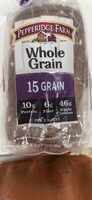 b NOVA 4
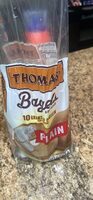 c NOVA 4
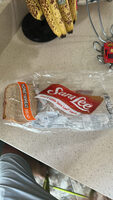 c NOVA 4
 a NOVA 4
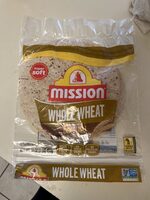 c NOVA 4
 d NOVA 4
Sorbic acid-free alternatives
Popular products from the same categories that don't list Sorbic acid and score Nutri-Score A–C.
 c NOVA 4
 a NOVA 3
 a NOVA 4
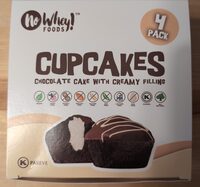 a NOVA 4
 a NOVA 4
How to spot Sorbic acid on a label
Look for any of these names in the ingredient list:
Related additives
Frequently asked questions
Is sorbic acid bad for you?
Regulators do not treat it as a significant concern. EFSA found no evidence of genotoxicity, rat studies reported no adverse effects at doses up to 9,200 mg per kg of body weight a day, and no body classifies it as a carcinogen. The EU group limit is 11 mg per kg of body weight per day, and typical intakes sit below it for almost every population group.
Is sorbic acid banned in Europe?
No — sorbic acid (E200) and potassium sorbate (E202) are both permitted in the EU and the UK. What was banned is their relative calcium sorbate (E203), removed from the EU list in 2018. The reason was not a finding of harm but a missing study: EFSA asked for genotoxicity data, no company agreed to provide it, and the Commission concluded the authorization could no longer be justified.
Why did the sorbic acid limit change from 3 to 11 mg/kg?
Because a better study became available. EFSA set a temporary limit of 3 mg/kg in 2015 as a precaution while the reproductive toxicity data were incomplete. Once an extended one-generation study was done, EFSA reassessed it in 2019, identified a benchmark dose of 1,110 mg/kg, applied the standard hundred-fold safety factor, and arrived at a full group ADI of 11 mg/kg. The limit was being pinned down, not loosened after a scare.
What is the difference between sorbic acid and potassium sorbate?
They are the same preservative in different forms. Sorbic acid barely dissolves in water, so most foods use the potassium salt instead; once in an acidic food, the salt converts to the acid, which is the form that actually works. Regulators assess them together and express the limit as sorbic acid.
How much sorbic acid is safe per day?
The EU group ADI is 11 mg per kg of body weight per day — about 330 mg for a 30 kg child and 770 mg for a 70 kg adult, counting sorbic acid and potassium sorbate together. JECFA applies an older and higher figure of 0–25 mg/kg. Labels state presence, not amount.
Is sorbic acid vegan and gluten-free?
Yes on both counts. It is produced synthetically, not from animal or cereal sources, and contains no protein.
What foods contain sorbic acid?
Mostly things that spoil by going moldy rather than by going off: cheese — especially sliced, shredded and processed — baked goods and fillings, dried fruit, jams and syrups, soft and juice drinks, wine, and dressings and dips. In practice you will see potassium sorbate on the label more often than sorbic acid itself. See the products and categories above for what is in our database.
Sources & references
- 21 CFR 182.3089 — Sorbic acid (GRAS chemical preservative)
- EFSA (2019). Opinion on the follow-up of the re-evaluation of sorbic acid (E200) and potassium sorbate (E202) as food additives. EFSA Journal 17(3):e05625
- EFSA (2015). Scientific Opinion on the re-evaluation of sorbic acid (E 200), potassium sorbate (E 202) and calcium sorbate (E 203) as food additives. EFSA Journal 13(6):4144
- JECFA — Evaluation of sorbic acid (ADI 0–25 mg/kg as the sum of sorbic acid and its salts)
- Commission Regulation (EU) 2018/98 of 22 January 2018 — removal of calcium sorbate (E 203) from the Union list
- AGRINFO — Food additives: sorbates and propyl gallate (summary of Commission Regulation (EU) 2024/2597)
- UK Government — Approved additives and E numbers
- U.S. FDA — List of Select Chemicals in the Food Supply Under FDA Review
Product data: Open Food Facts (ODbL), updated daily. Additive information is for general education and is not medical advice. Always check the package label. Our methodology.