
Thai Vegetable Gyoza vs Gyoza
Neither product is clearly better overall — it depends on what matters most to you.

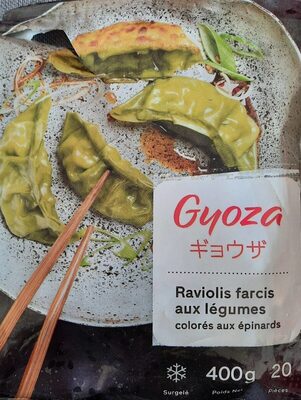
Nutrition per 100 g
| Nutrient | Thai Vegetable Gyoza | Gyoza |
|---|---|---|
| Nutri-Score | b | c |
| NOVA group | 4 | 4 |
| Calories | 188 kcal | 133 kcal |
| Fat | 5.3 g | 0.9 g |
| Saturated fat | 1.8 g | 0.2 g |
| Sugars | 2.4 g | 3.9 g |
| Salt | 0.9 g | 1 g |
| Fiber | 2.4 g | 1.2 g |
| Protein | 3.5 g | 4.9 g |
| Additives | 0 | 0 |
| Allergens | Gluten, Sesame seeds, Soybeans | Gluten, Sesame seeds, Soybeans |
Green = better value for that nutrient (less sugar, fat, salt and calories; more fiber and protein).
Key differences
- Gyoza has 29% fewer calories (133 kcal vs 188 kcal).
- Gyoza has 83% less fat (0.9 g vs 5.3 g).
- Gyoza has 89% less saturated fat (0.2 g vs 1.8 g).
- Thai Vegetable Gyoza has 40% less sugar (2.4 g vs 3.9 g).
- Thai Vegetable Gyoza has 49% more fiber (2.4 g vs 1.2 g).
- Gyoza has 28% more protein (4.9 g vs 3.5 g).
- Thai Vegetable Gyoza has the better Nutri-Score.
Ingredients
Thai Vegetable Gyoza
filling: white cabbage,carrot, chive, white radish, green onion, onion, ginger, garlic, soy sauce (soybeans,wheat, salt, alcohol, water), wheat flour, wheat starch, corn flour, soybean oil, sesame oil, sugar, salt, pepper, vegetable powder (onion, cabbage, carrot, spring onion, maltodextrin [corn], salt), dough: unbleached wheat flour, tapioca starch, water, palm oil, made on equipment shared with shelfish, facility processes fish, contains: soybeans,wheat,
Gyoza
Légumes 55 % (chou, pois, graine de soja [edamame], carotte, radis blanc), farine de blé, eau, chapelure (farine de blé, sel, levure), sel, épinard en poudre 0,6 %, sauce soja (eau, graine de soja, blé, sel), gluten de blé, ail en poudre, huile de sésame, arôme naturel, fécule de pomme de terre, gingembre en poudre, poivre noir.
FAQ
Which is healthier: Thai Vegetable Gyoza or Gyoza?
Neither product is clearly better overall — it depends on what matters most to you. We compare Nutri-Score, processing level and seven nutrients per 100 g. Your own needs (for example low sugar or high protein) may make a different choice better for you.
Which has fewer calories?
Gyoza has fewer calories: 133 kcal versus 188 kcal per 100 g.
Which has less sugar?
Thai Vegetable Gyoza has less sugar: 2.4 g versus 3.9 g per 100 g.