
Seitan vs Seitan
Overall, Seitan has the better nutritional profile on the measures we compare. It wins on 6 of our comparison points versus 0.
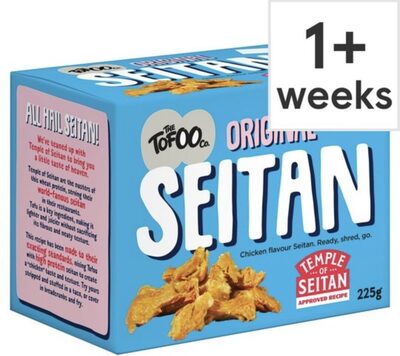
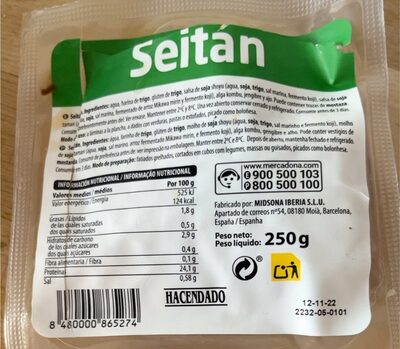
Nutrition per 100 g
| Nutrient | Seitan | Seitan |
|---|---|---|
| Nutri-Score | c | a |
| NOVA group | 4 | 4 |
| Calories | 162 kcal | 124 kcal |
| Fat | 6.9 g | 1.8 g |
| Saturated fat | 1.2 g | 0.5 g |
| Sugars | 0.2 g | 0.4 g |
| Salt | 1.5 g | 0.6 g |
| Fiber | 0.1 g | 0.1 g |
| Protein | 22.5 g | 24.1 g |
| Additives | 1 | 0 |
| Allergens | Gluten, Soybeans | Gluten, Soybeans |
Green = better value for that nutrient (less sugar, fat, salt and calories; more fiber and protein).
Key differences
- Seitan has 23% fewer calories (124 kcal vs 162 kcal).
- Seitan has 74% less fat (1.8 g vs 6.9 g).
- Seitan has 58% less saturated fat (0.5 g vs 1.2 g).
- Seitan has 61% less salt (0.6 g vs 1.5 g).
- Seitan has the better Nutri-Score.
Ingredients
Seitan
Tofu (51%) (Water, Soya Beans (36%), Nigari), Water, Seitan Blend (22%) (Wheat Gluten, Salt, Thickener (Hydroxypropyl Methyl Cellulose)), Rapeseed Oil, Chicken Flavouring (Natural Flavouring Substances, Flavouring preparations)
Seitan
Agua, harina de trigo, gluten de trigo, salsa de soja shoyu (agua, soja, trigo, sal marina, fermento koji), salsa de soja tamari (agua, soja, sal marina, fermentado de arroz Mikawa mirin y fermento koji), alga kombu, jengibre y ajo. Puede contener trazas de mostaza.
FAQ
Which is healthier: Seitan or Seitan?
Overall, Seitan has the better nutritional profile on the measures we compare. We compare Nutri-Score, processing level and seven nutrients per 100 g. Your own needs (for example low sugar or high protein) may make a different choice better for you.
Which has fewer calories?
Seitan has fewer calories: 124 kcal versus 162 kcal per 100 g.
Which has less sugar?
Seitan has less sugar: 0.2 g versus 0.4 g per 100 g.