
Seitan bio vs Seitan
Overall, Seitan bio has the better nutritional profile on the measures we compare. It wins on 7 of our comparison points versus 0.
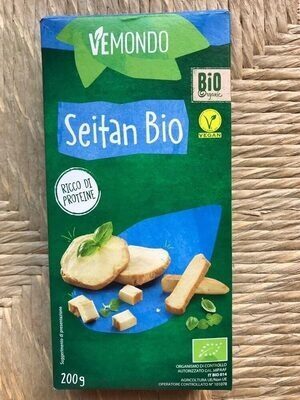

Nutrition per 100 g
| Nutrient | Seitan bio | Seitan |
|---|---|---|
| Nutri-Score | a | c |
| NOVA group | 4 | 4 |
| Calories | 154 kcal | 162 kcal |
| Fat | 0.9 g | 6.9 g |
| Saturated fat | 0.2 g | 1.2 g |
| Sugars | 0.2 g | 0.2 g |
| Salt | 0 g | 1.5 g |
| Fiber | 0.9 g | 0.1 g |
| Protein | 26 g | 22.5 g |
| Additives | 0 | 1 |
| Allergens | Gluten, Soybeans | Gluten, Soybeans |
Green = better value for that nutrient (less sugar, fat, salt and calories; more fiber and protein).
Key differences
- Seitan bio has 87% less fat (0.9 g vs 6.9 g).
- Seitan bio has 83% less saturated fat (0.2 g vs 1.2 g).
- Seitan bio has no salt, while Seitan has 1.5 g.
- Seitan bio has 89% more fiber (0.9 g vs 0.1 g).
- Seitan bio has 13% more protein (26 g vs 22.5 g).
- Seitan bio has the better Nutri-Score.
Ingredients
Seitan bio
Farina di frumento* (15% glutine*), acqua, salsa di soia* (acqua, edamame*, grano*, sale marino), zenzero*. *da agricoltura biologica. Può contenere tracce di frutta a guscio, sedano, senape, latte e uova.
Seitan
Tofu (51%) (Water, Soya Beans (36%), Nigari), Water, Seitan Blend (22%) (Wheat Gluten, Salt, Thickener (Hydroxypropyl Methyl Cellulose)), Rapeseed Oil, Chicken Flavouring (Natural Flavouring Substances, Flavouring preparations)
FAQ
Which is healthier: Seitan bio or Seitan?
Overall, Seitan bio has the better nutritional profile on the measures we compare. We compare Nutri-Score, processing level and seven nutrients per 100 g. Your own needs (for example low sugar or high protein) may make a different choice better for you.
Which has fewer calories?
Seitan bio has fewer calories: 154 kcal versus 162 kcal per 100 g.
Which has less sugar?
Seitan bio has less sugar: 0.2 g versus 0.2 g per 100 g.