
Kitchari vs Puy lentils and whole grain quinoa
Overall, Kitchari has the better nutritional profile on the measures we compare. It wins on 5 of our comparison points versus 1.

Kitchari
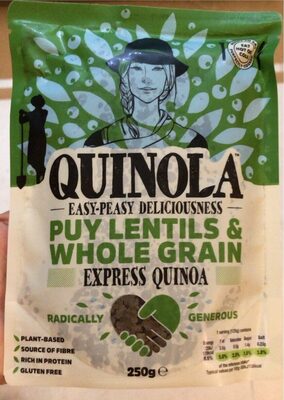
Puy lentils and whole grain quinoa
Nutrition per 100 g
| Nutrient | Kitchari | Puy lentils and whole grain... |
|---|---|---|
| Nutri-Score | c | d |
| NOVA group | 3 | — |
| Calories | 74 kcal | 138 kcal |
| Fat | 3.2 g | 3.5 g |
| Saturated fat | 0.4 g | 0.4 g |
| Sugars | 0.7 g | 7 g |
| Salt | 0.7 g | 2.8 g |
| Fiber | 2.1 g | — |
| Protein | 2.5 g | 4.3 g |
| Additives | 0 | 0 |
| Allergens | Mustard | None listed |
Green = better value for that nutrient (less sugar, fat, salt and calories; more fiber and protein).
Key differences
- Kitchari has 46% fewer calories (74 kcal vs 138 kcal).
- Kitchari has 90% less sugar (0.7 g vs 7 g).
- Kitchari has 74% less salt (0.7 g vs 2.8 g).
- Puy lentils and whole grain quinoa has 43% more protein (4.3 g vs 2.5 g).
- Kitchari has the better Nutri-Score.
- Only Kitchari lists: Mustard.
Ingredients
Kitchari
WATER, PEARL MILLET, SPLIT MUNG BEANS, RED PUMPKIN, CARROT, GREEN PEAS, BROWN RICE, SUNFLOWER OIL, ROLLED OATS, AMARANTH, FINGER MILLET, SALT, GINGER, GREEN CHILI, GROUND SPICES (CORIANDER, RED CHILI PEPPER, CUMIN, FENNEL, GREEN CARDAMOM, CINNAMON, BLACK PEPPER, STAR ANISE, MACE, BLACK CARDAMOM, FENUGREEK, CLOVE), MUSTARD SEED, CUMIN SEED, LEMON JUICE POWDER, DRIED GARLIC, GROUND TURMERIC, GROUND BLACK PEPPER, DRIED CURRY LEAVES. MAY CONTAIN MILK, SOY, SESAME, WHEAT, PEANUT, CASHEW, COCONUT.
Puy lentils and whole grain quinoa
Not available.
FAQ
Which is healthier: Kitchari or Puy lentils and whole grain quinoa?
Overall, Kitchari has the better nutritional profile on the measures we compare. We compare Nutri-Score, processing level and seven nutrients per 100 g. Your own needs (for example low sugar or high protein) may make a different choice better for you.
Which has fewer calories?
Kitchari has fewer calories: 74 kcal versus 138 kcal per 100 g.
Which has less sugar?
Kitchari has less sugar: 0.7 g versus 7 g per 100 g.