
Hafer Dinkel Porridge vs Super Smooth Porridge
Overall, Super Smooth Porridge has the better nutritional profile on the measures we compare. It wins on 2 of our comparison points versus 1.
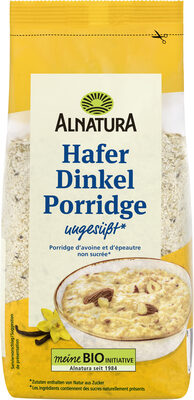

Nutrition per 100 g
| Nutrient | Hafer Dinkel Porridge | Super Smooth Porridge |
|---|---|---|
| Nutri-Score | a | a |
| NOVA group | 1 | 1 |
| Calories | 380 kcal | 373 kcal |
| Fat | 8.5 g | 8.7 g |
| Saturated fat | 1.5 g | 1.2 g |
| Sugars | 1.3 g | 1 g |
| Salt | 0 g | 0.1 g |
| Fiber | 9.9 g | 7.9 g |
| Protein | 13 g | 12 g |
| Additives | 0 | 0 |
| Allergens | Gluten, Nuts | None listed |
Green = better value for that nutrient (less sugar, fat, salt and calories; more fiber and protein).
Key differences
- Super Smooth Porridge has 20% less saturated fat (1.2 g vs 1.5 g).
- Super Smooth Porridge has 23% less sugar (1 g vs 1.3 g).
- Hafer Dinkel Porridge has 20% more fiber (9.9 g vs 7.9 g).
- Only Hafer Dinkel Porridge lists: Gluten, Nuts.
Ingredients
Hafer Dinkel Porridge
HAFERVOLLKORNFLOCKEN* 64 %, DINKELVOLLKORNFLOCKEN*¹ 18 %, Reis* gepufft, Leinsaat* braun geschrotet, Erdmandeln* gemahlen 2 %, MANDELN* geschält und gehackt 2 %, Amaranth* gepufft 2 %, HASELNÜSSE* geröstet und gehackt 1 %, Bourbonvanille* gemahlen *aus biologischer Landwirtschaft ¹DINKEL IST EINE WEIZENART. Kann Spuren von anderen Nüssen, Soja, Milch und Sesam enthalten.
Super Smooth Porridge
Wholegrain Rolled Oats (60%), Wholegrain Oat Flour (38%), Calcium Carbonate, Niacin, Iron, Riboflavin (B2), Vitamin B6, Thiamin (B1), Folic Acid, Vitamin D, Vitamin B12.
FAQ
Which is healthier: Hafer Dinkel Porridge or Super Smooth Porridge?
Overall, Super Smooth Porridge has the better nutritional profile on the measures we compare. We compare Nutri-Score, processing level and seven nutrients per 100 g. Your own needs (for example low sugar or high protein) may make a different choice better for you.
Which has fewer calories?
Super Smooth Porridge has fewer calories: 373 kcal versus 380 kcal per 100 g.
Which has less sugar?
Super Smooth Porridge has less sugar: 1 g versus 1.3 g per 100 g.