
Vegetable Korean Dumplings vs Samlip Spicy Vermicelli Dumpling
Overall, Vegetable Korean Dumplings has the better nutritional profile on the measures we compare. It wins on 7 of our comparison points versus 0.
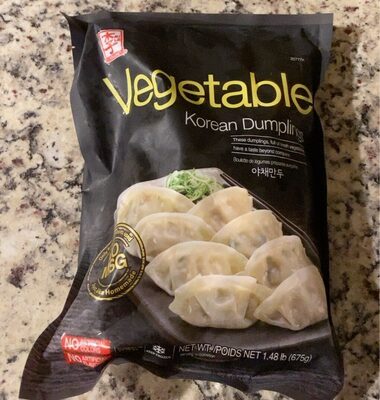
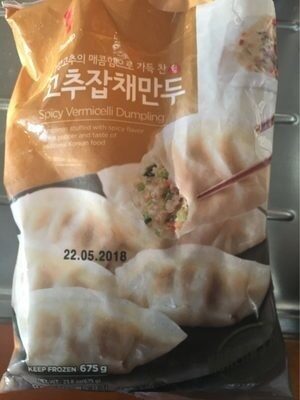
Nutrition per 100 g
| Nutrient | Vegetable Korean Dumplings | Samlip Spicy Vermicelli Dump... |
|---|---|---|
| Nutri-Score | b | c |
| NOVA group | 3 | — |
| Calories | 170 kcal | 207 kcal |
| Fat | 3.7 g | 5.9 g |
| Saturated fat | 0.7 g | 3 g |
| Sugars | 0.7 g | 1.5 g |
| Salt | 0.7 g | 1.1 g |
| Protein | 8.2 g | 7.4 g |
| Additives | 0 | 0 |
| Allergens | Gluten, Sesame seeds, Soybeans | None listed |
Green = better value for that nutrient (less sugar, fat, salt and calories; more fiber and protein).
Key differences
- Vegetable Korean Dumplings has 18% fewer calories (170 kcal vs 207 kcal).
- Vegetable Korean Dumplings has 37% less fat (3.7 g vs 5.9 g).
- Vegetable Korean Dumplings has 75% less saturated fat (0.7 g vs 3 g).
- Vegetable Korean Dumplings has 51% less sugar (0.7 g vs 1.5 g).
- Vegetable Korean Dumplings has 37% less salt (0.7 g vs 1.1 g).
- Vegetable Korean Dumplings has the better Nutri-Score.
- Only Vegetable Korean Dumplings lists: Gluten, Sesame seeds, Soybeans.
Ingredients
Vegetable Korean Dumplings
WHEAT FLOUR, TOFU(GRINDED SOYBEAN, FILTERED WATER), SOYBEAN PROTEIN, ONION, GREEN ONION, CABBAGE, RADISH, POTATO VERMICELLI (SWEET POTATO STARCH,WATER), CORN STARCH, LEEK, CORN OIL, EMULSIFIED OIL, SESAME OIL, SUGAR, SALT, GARLIC, SOY SAUCE (SOYBEAN, SALT, WHEAT, WATER), GINGER, BLACK PEPPER POWDER
Samlip Spicy Vermicelli Dumpling
Not available.
FAQ
Which is healthier: Vegetable Korean Dumplings or Samlip Spicy Vermicelli Dumpling?
Overall, Vegetable Korean Dumplings has the better nutritional profile on the measures we compare. We compare Nutri-Score, processing level and seven nutrients per 100 g. Your own needs (for example low sugar or high protein) may make a different choice better for you.
Which has fewer calories?
Vegetable Korean Dumplings has fewer calories: 170 kcal versus 207 kcal per 100 g.
Which has less sugar?
Vegetable Korean Dumplings has less sugar: 0.7 g versus 1.5 g per 100 g.