
Pastel de Nata vs Pastel de Nata
Overall, Pastel de Nata has the better nutritional profile on the measures we compare. It wins on 4 of our comparison points versus 2.
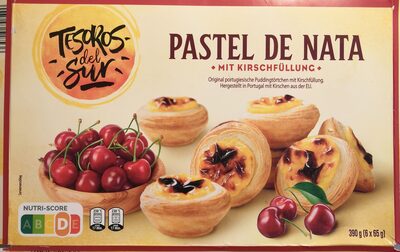
Pastel de Nata
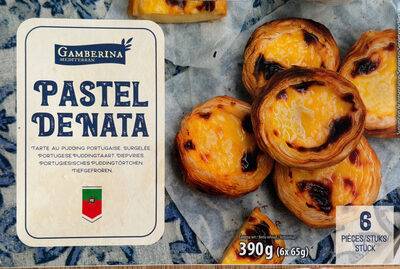
Pastel de Nata
Nutrition per 100 g
| Nutrient | Pastel de Nata | Pastel de Nata |
|---|---|---|
| Nutri-Score | d | d |
| NOVA group | 4 | 4 |
| Calories | 258 kcal | 296 kcal |
| Fat | 11.7 g | 14.5 g |
| Saturated fat | 5.5 g | 7.6 g |
| Sugars | 14 g | 8.7 g |
| Salt | 0.6 g | 0.9 g |
| Fiber | 4 g | 1.4 g |
| Protein | 3.1 g | 4.9 g |
| Additives | 12 | 6 |
| Allergens | Eggs, Gluten, Milk | Eggs, Gluten, Lupin, Milk, Molluscs |
Green = better value for that nutrient (less sugar, fat, salt and calories; more fiber and protein).
Key differences
- Pastel de Nata has 13% fewer calories (258 kcal vs 296 kcal).
- Pastel de Nata has 19% less fat (11.7 g vs 14.5 g).
- Pastel de Nata has 28% less saturated fat (5.5 g vs 7.6 g).
- Pastel de Nata has 38% less sugar (8.7 g vs 14 g).
- Pastel de Nata has 65% more fiber (4 g vs 1.4 g).
- Pastel de Nata has 37% more protein (4.9 g vs 3.1 g).
- Only Pastel de Nata lists: Lupin, Molluscs.
Ingredients
Pastel de Nata
Wasser, Weizenmehl, 12,5 % Kirschfüllung (Wasser, 4,4 % Kirsche, Zucker, modifizierte Stärke, Säureregulatoren: Milchsäure, Natriumcitrat; Aroma, färbende Pflanzenkonzentrate: Karotte, Blaubeere; Verdickungsmittel: Gellan; Konservierungsstoff: Kaliumsorbat), Zucker, Margarine (Palmöl, Rapsöl, ganz gehärtetes Rapsöl, Wasser, Speisesalz, Emulgatoren: Lecithine, Mono - und Diglyceride von Speisefettsäuren, Polyglycerinester von Speisefettsäuren; Antioxidationsmittel: Fettsäureester der Ascorbinsäure, stark tocopherolhaltige Extrakte; Aroma, Säureregulator: Citronensäure; Farbstoff: Carotin), Eigelb, Glukosesirup, Vollei, Milchpulver, Maisstärke, modifizierte Stärke, Speisesalz, Margarine (Palmöl, Sonnenblumenöl, Wasser, Speisesalz, Emulgatoren: Mono - und Diglyceride von Speisefettsäuren, Citronensäureester von Mono - und Diglyceriden von Speisefettsäuren, Lecithine; Aroma, Konservierungsstoff: Kaliumsorbat; Säureregulator: Citronensäure; Farbstoff: Carotin), natürliches Aroma. Kann Spuren von Fisch, Soja, Schalenfrüchten, Sellerie, Senf, Sesam, Sulfit, Lupine, Weichtieren, Erdnüssen und Schalentieren enthalten.
Pastel de Nata
Wasser, Weizenmehl, Zucker, Margarine [pflanzliche Öle (Sonnenblume, Palm), Wasser, Salz, Säuerungsmittel: Citronensäure; Konservierungsstoff: Sorbinsäure; Emulgatoren: Mono - und Diglyceride von Speisefettsäuren, Lecithine, Ascorbyl palmit - at; Vitamin E, Farbstoff: Carotin; Aromen], Eigelb, Vollei, Glukosesirup, Milchpulver, Maisstärke, modifizierte Stärke, natürliche Aromen. Kann Spuren von Fisch, Erdnüssen, Soja, Schalenfrüchten, Sellerie, Senf, Sesam, Sulfit, Lupine, Schalentieren und Weichtieren enthalten.
FAQ
Which is healthier: Pastel de Nata or Pastel de Nata?
Overall, Pastel de Nata has the better nutritional profile on the measures we compare. We compare Nutri-Score, processing level and seven nutrients per 100 g. Your own needs (for example low sugar or high protein) may make a different choice better for you.
Which has fewer calories?
Pastel de Nata has fewer calories: 258 kcal versus 296 kcal per 100 g.
Which has less sugar?
Pastel de Nata has less sugar: 8.7 g versus 14 g per 100 g.