
Ha Cao vs Shrimp Dim Sum
Overall, Shrimp Dim Sum has the better nutritional profile on the measures we compare. It wins on 4 of our comparison points versus 3.
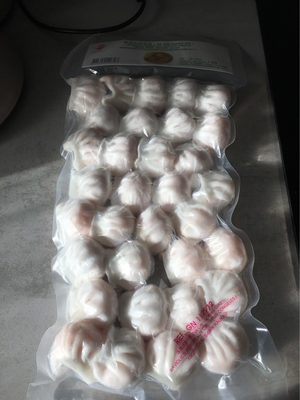
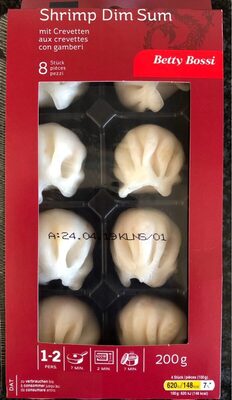
Nutrition per 100 g
| Nutrient | Ha Cao | Shrimp Dim Sum |
|---|---|---|
| Nutri-Score | — | b |
| NOVA group | 4 | 3 |
| Calories | 166 kcal | 148 kcal |
| Fat | 5.7 g | 2 g |
| Saturated fat | 0.5 g | 1 g |
| Sugars | 1.6 g | 2.5 g |
| Salt | 2.5 g | 0.7 g |
| Fiber | 0.4 g | 0.5 g |
| Protein | 9.8 g | 7 g |
| Additives | 1 | 0 |
| Allergens | Crustaceans, Gluten, Sesame seeds, Soybeans | Crustaceans, Sesame seeds, Soybeans |
Green = better value for that nutrient (less sugar, fat, salt and calories; more fiber and protein).
Key differences
- Shrimp Dim Sum has 11% fewer calories (148 kcal vs 166 kcal).
- Shrimp Dim Sum has 65% less fat (2 g vs 5.7 g).
- Ha Cao has 48% less saturated fat (0.5 g vs 1 g).
- Ha Cao has 36% less sugar (1.6 g vs 2.5 g).
- Shrimp Dim Sum has 72% less salt (0.7 g vs 2.5 g).
- Ha Cao has 29% more protein (9.8 g vs 7 g).
- Shrimp Dim Sum is less processed (lower NOVA group).
- Only Ha Cao lists: Gluten.
Ingredients
Ha Cao
CREVETTES 37,6% , EAU, AMIDON DE BLE, POUSSES DE BAMBOU, FECULE DE POMME DE TERRE, HUILE DE SOJA, FECULE DE TAPIOCA, SUCRE, EXHAUSTEUR DE GOUT (E621), SEL, BLANC D'?UF EN POUDRE, HUILE DE SESAME, POIVRE BLANC. PREPARATION : SANS DECONGELATION PREALABLE, CUIRE A LA VAPEUR ENVIRON 8-10 MINUTES.
Shrimp Dim Sum
crevettes blanches 33% (Penaeus vannamei, élevées au Vietnam), eau, amidons (maïs, manioc), légumes 12% (pousses de bambou, oignons, oignons botte), châtignes d'eau, farine de riz, huiles végétales (sésame, soja), sucre, ail, sel de cuisine, poivre
FAQ
Which is healthier: Ha Cao or Shrimp Dim Sum?
Overall, Shrimp Dim Sum has the better nutritional profile on the measures we compare. We compare Nutri-Score, processing level and seven nutrients per 100 g. Your own needs (for example low sugar or high protein) may make a different choice better for you.
Which has fewer calories?
Shrimp Dim Sum has fewer calories: 148 kcal versus 166 kcal per 100 g.
Which has less sugar?
Ha Cao has less sugar: 1.6 g versus 2.5 g per 100 g.