
Fita crackers 30g vs Rosemary Crackers
Overall, Rosemary Crackers has the better nutritional profile on the measures we compare. It wins on 6 of our comparison points versus 1.
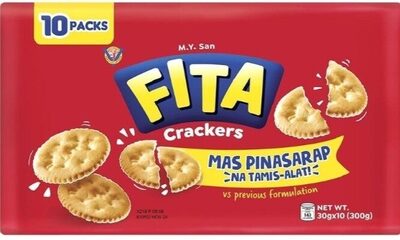
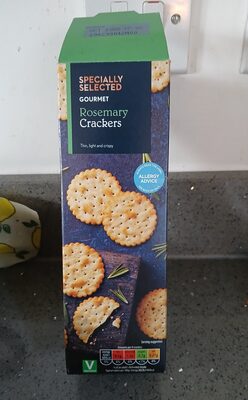
Nutrition per 100 g
| Nutrient | Fita crackers 30g | Rosemary Crackers |
|---|---|---|
| Nutri-Score | e | d |
| NOVA group | 3 | 4 |
| Calories | 487 kcal | 482 kcal |
| Fat | 20 g | 19.4 g |
| Saturated fat | 13.3 g | 6.1 g |
| Sugars | 23.3 g | 3.3 g |
| Salt | 1.3 g | 1.3 g |
| Fiber | 0 g | 3.2 g |
| Protein | 6.7 g | 9 g |
| Additives | 7 | 0 |
| Allergens | Gluten, Milk | Gluten, Milk |
Green = better value for that nutrient (less sugar, fat, salt and calories; more fiber and protein).
Key differences
- Rosemary Crackers has 54% less saturated fat (6.1 g vs 13.3 g).
- Rosemary Crackers has 86% less sugar (3.3 g vs 23.3 g).
- Rosemary Crackers has 100% more fiber (3.2 g vs 0 g).
- Rosemary Crackers has 26% more protein (9 g vs 6.7 g).
- Rosemary Crackers has the better Nutri-Score.
- Fita crackers 30g is less processed (lower NOVA group).
Ingredients
Fita crackers 30g
Flour, coconut oil, vegetable shortening, palm oil, vitamin E, sugar, raising agents (ammonium bicarbonate, sodium bicarbonate, monocalcium phosphate), salt, malt extract, enzymes (protease).
Rosemary Crackers
Wheat Flour (Wheat Flour, Calcium Carbonate, Niacin, Iron, Thiamin), Palm Oil, High Oleic Sunflower Oil, Sea Salt, Garlic Powder, GROUND ROSEMARY (1%), Autolysed Yeast, Dextrose, Onion Powder, Sugar, Whey Powder (Milk), Partially Inverted Refiners Syrup, Flavouring, Dried Yeast, Black Pepper.
FAQ
Which is healthier: Fita crackers 30g or Rosemary Crackers?
Overall, Rosemary Crackers has the better nutritional profile on the measures we compare. We compare Nutri-Score, processing level and seven nutrients per 100 g. Your own needs (for example low sugar or high protein) may make a different choice better for you.
Which has fewer calories?
Rosemary Crackers has fewer calories: 482 kcal versus 487 kcal per 100 g.
Which has less sugar?
Rosemary Crackers has less sugar: 3.3 g versus 23.3 g per 100 g.