
Roasted Chicken Base vs Vegetable
Neither product is clearly better overall — it depends on what matters most to you.
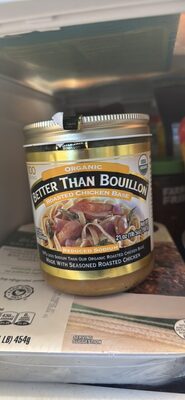
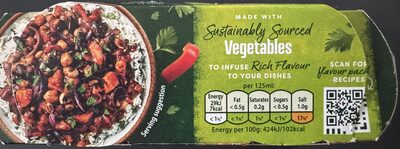
Nutrition per 100 g
| Nutrient | Roasted Chicken Base | Vegetable |
|---|---|---|
| Nutri-Score | — | e |
| NOVA group | 4 | 4 |
| Calories | 250 kcal | 100 kcal |
| Fat | 0 g | 5.3 g |
| Saturated fat | 0 g | 2.7 g |
| Sugars | 16.7 g | 4.1 g |
| Salt | 14.6 g | 14.4 g |
| Fiber | 0 g | 1.3 g |
| Protein | 16.7 g | 6.2 g |
| Additives | 0 | 2 |
| Allergens | None listed | Celery |
Green = better value for that nutrient (less sugar, fat, salt and calories; more fiber and protein).
Key differences
- Vegetable has 60% fewer calories (100 kcal vs 250 kcal).
- Roasted Chicken Base has no fat, while Vegetable has 5.3 g.
- Roasted Chicken Base has no saturated fat, while Vegetable has 2.7 g.
- Vegetable has 75% less sugar (4.1 g vs 16.7 g).
- Vegetable has 100% more fiber (1.3 g vs 0 g).
- Roasted Chicken Base has 63% more protein (16.7 g vs 6.2 g).
- Only Vegetable lists: Celery.
Ingredients
Roasted Chicken Base
Roasted chicken, maltodextrin, salt, chicken stock, cane sugar, food starch, yeast extract, flavoring, turmeric, natural flavors.
Vegetable
concentrated vegetable stock (65%) (water, leek (1,2%), carrots (1%), celery, red pepper, onion, celeriac), salt, yeast extract, palm fat, sugar, potassium chloride, gelling agents (xanthan gum, locust bean gum), flavourings, spices (celery seeds, lovage root, nutmeg, pepper), parsley, maltodextrin, caramel syrup.
FAQ
Which is healthier: Roasted Chicken Base or Vegetable?
Neither product is clearly better overall — it depends on what matters most to you. We compare Nutri-Score, processing level and seven nutrients per 100 g. Your own needs (for example low sugar or high protein) may make a different choice better for you.
Which has fewer calories?
Vegetable has fewer calories: 100 kcal versus 250 kcal per 100 g.
Which has less sugar?
Vegetable has less sugar: 4.1 g versus 16.7 g per 100 g.