
Raisin Bran vs Nestum Cereais Pro
Neither product is clearly better overall — it depends on what matters most to you.
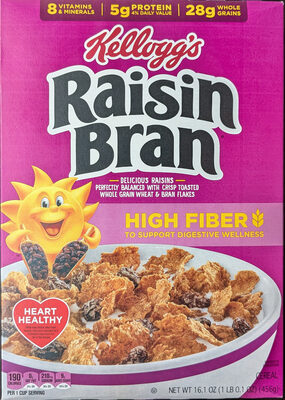
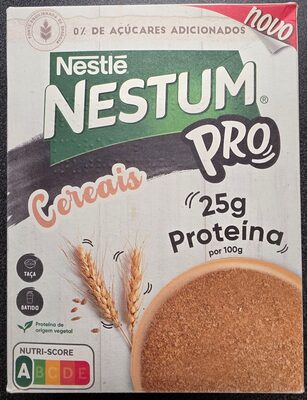
Nutrition per 100 g
| Nutrient | Raisin Bran | Nestum Cereais Pro |
|---|---|---|
| Nutri-Score | d | a |
| NOVA group | 3 | 4 |
| Calories | 322 kcal | 392 kcal |
| Fat | 1.7 g | 3 g |
| Saturated fat | 0 g | 0.5 g |
| Sugars | 28.8 g | 10.5 g |
| Salt | 0.9 g | 0.5 g |
| Fiber | 11.9 g | 8.5 g |
| Protein | 8.5 g | 25 g |
| Additives | 0 | 0 |
| Allergens | Gluten | Gluten |
Green = better value for that nutrient (less sugar, fat, salt and calories; more fiber and protein).
Key differences
- Raisin Bran has 18% fewer calories (322 kcal vs 392 kcal).
- Raisin Bran has 44% less fat (1.7 g vs 3 g).
- Raisin Bran has no saturated fat, while Nestum Cereais Pro has 0.5 g.
- Nestum Cereais Pro has 64% less sugar (10.5 g vs 28.8 g).
- Nestum Cereais Pro has 41% less salt (0.5 g vs 0.9 g).
- Raisin Bran has 28% more fiber (11.9 g vs 8.5 g).
- Nestum Cereais Pro has 66% more protein (25 g vs 8.5 g).
- Nestum Cereais Pro has the better Nutri-Score.
- Raisin Bran is less processed (lower NOVA group).
Ingredients
Raisin Bran
Whole grain wheat, raisins, wheat bran, sugar, brown sugar syrup. Contains 2% or less of malt flavor, salt. CONTAINS WHEAT INGREDIENTS.
Nestum Cereais Pro
Farinha de cereais e de proteína de ervilha Ingredientes: Farinha de TRIGO parcialmente hidrolisada (78,1%), farinha de proteína de ervilha (15,8%), inulina, farinha de gérmen de semente de alfarroba, carbonato de cálcio, vitaminas (C, niacina, ácido pantoténico, tiamina, B6, riboflavina, ácido fólico, B12), ferro reduzido, aroma natural.
FAQ
Which is healthier: Raisin Bran or Nestum Cereais Pro?
Neither product is clearly better overall — it depends on what matters most to you. We compare Nutri-Score, processing level and seven nutrients per 100 g. Your own needs (for example low sugar or high protein) may make a different choice better for you.
Which has fewer calories?
Raisin Bran has fewer calories: 322 kcal versus 392 kcal per 100 g.
Which has less sugar?
Nestum Cereais Pro has less sugar: 10.5 g versus 28.8 g per 100 g.