
Original Sesame Sticks vs Fibres
Overall, Fibres has the better nutritional profile on the measures we compare. It wins on 9 of our comparison points versus 1.
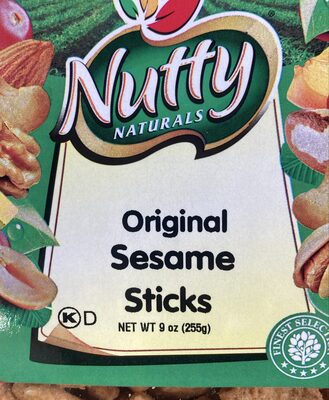
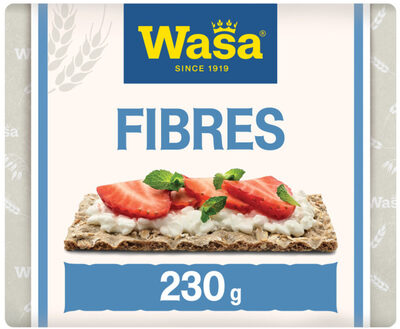
Nutrition per 100 g
| Nutrient | Original Sesame Sticks | Fibres |
|---|---|---|
| Nutri-Score | e | a |
| NOVA group | 4 | 3 |
| Calories | 571 kcal | 333 kcal |
| Fat | 39.3 g | 5 g |
| Saturated fat | 3.6 g | 1 g |
| Sugars | 0 g | 2 g |
| Salt | 3.8 g | 1.2 g |
| Fiber | 7.1 g | 26 g |
| Protein | 10.7 g | 12 g |
| Additives | 0 | 0 |
| Allergens | Gluten, Sesame seeds, Soybeans | Gluten, Sesame seeds |
Green = better value for that nutrient (less sugar, fat, salt and calories; more fiber and protein).
Key differences
- Fibres has 42% fewer calories (333 kcal vs 571 kcal).
- Fibres has 87% less fat (5 g vs 39.3 g).
- Fibres has 72% less saturated fat (1 g vs 3.6 g).
- Original Sesame Sticks has no sugar, while Fibres has 2 g.
- Fibres has 68% less salt (1.2 g vs 3.8 g).
- Fibres has 73% more fiber (26 g vs 7.1 g).
- Fibres has 11% more protein (12 g vs 10.7 g).
- Fibres has the better Nutri-Score.
- Fibres is less processed (lower NOVA group).
- Only Original Sesame Sticks lists: Soybeans.
Ingredients
Original Sesame Sticks
Enriched wheat flour (unbleached wheat flour, malted barley flour, niacin, iron (reduced iron), thiamine mononitrate, riboflavin, folic acid), soybean oil, sesame seeds, bulgur wheat, salt, beet powder (color), turmeric (color).
Fibres
Farine complète de SEIGLE 59 g*, son de BLÉ 27 g*, flocons d'AVOINE 12 g*, GRAINES DE SÉSAME 7,0 g*, germe de BLÉ, sel. *en g pour 100 g de produit fini. Peut contenir des traces de LUPIN, LAIT, MOUTARDE et SOJA.
FAQ
Which is healthier: Original Sesame Sticks or Fibres?
Overall, Fibres has the better nutritional profile on the measures we compare. We compare Nutri-Score, processing level and seven nutrients per 100 g. Your own needs (for example low sugar or high protein) may make a different choice better for you.
Which has fewer calories?
Fibres has fewer calories: 333 kcal versus 571 kcal per 100 g.
Which has less sugar?
Original Sesame Sticks has less sugar: 0 g versus 2 g per 100 g.