
Nouilles en nid vs Soba Wok Style
Overall, Nouilles en nid has the better nutritional profile on the measures we compare. It wins on 7 of our comparison points versus 0.
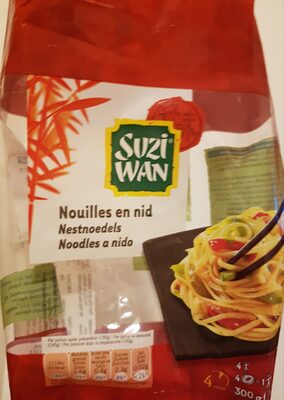
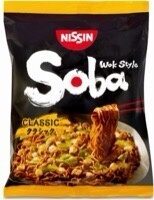
Nutrition per 100 g
| Nutrient | Nouilles en nid | Soba Wok Style |
|---|---|---|
| Nutri-Score | a | — |
| NOVA group | 1 | 4 |
| Calories | 135 kcal | 198 kcal |
| Fat | 0.8 g | 8.5 g |
| Saturated fat | 0.2 g | 4 g |
| Sugars | 1.2 g | 2.8 g |
| Salt | 0 g | 1.2 g |
| Fiber | 1.2 g | — |
| Protein | 5 g | 4.2 g |
| Additives | 0 | 8 |
| Allergens | Eggs, Gluten | Gluten, Soybeans |
Green = better value for that nutrient (less sugar, fat, salt and calories; more fiber and protein).
Key differences
- Nouilles en nid has 32% fewer calories (135 kcal vs 198 kcal).
- Nouilles en nid has 91% less fat (0.8 g vs 8.5 g).
- Nouilles en nid has 95% less saturated fat (0.2 g vs 4 g).
- Nouilles en nid has 57% less sugar (1.2 g vs 2.8 g).
- Nouilles en nid has 99% less salt (0 g vs 1.2 g).
- Nouilles en nid has 16% more protein (5 g vs 4.2 g).
- Nouilles en nid is less processed (lower NOVA group).
- Only Nouilles en nid lists: Eggs.
- Only Soba Wok Style lists: Soybeans.
Ingredients
Nouilles en nid
Semoule de _blé_ dur, _œufs_. Peut contenir: soja, moutarde, lupin.
Soba Wok Style
noodles 82,8% [wheat flour, palm oil, salt, flour processing agents (e500, e451), e501 stabilizer, e412 thickener, antioxidant e306], seasoning sauce 16,4% [sugar, water, rapeseed oil, soja sauce (water, soybeans, salt, wheat), taste enhancers (e621,e635), e150c dye, dextrose, molasses, vinegar, salt, spices, hydrolyzed vegetable proteins, tomato powder, acidic corrector green onion,
FAQ
Which is healthier: Nouilles en nid or Soba Wok Style?
Overall, Nouilles en nid has the better nutritional profile on the measures we compare. We compare Nutri-Score, processing level and seven nutrients per 100 g. Your own needs (for example low sugar or high protein) may make a different choice better for you.
Which has fewer calories?
Nouilles en nid has fewer calories: 135 kcal versus 198 kcal per 100 g.
Which has less sugar?
Nouilles en nid has less sugar: 1.2 g versus 2.8 g per 100 g.