
Mono- and diglycerides (E471)
Updated October 19, 2026
Mono- and diglycerides (E471) are the most widely used emulsifier in packaged food — fat molecules rebuilt so that one part grips water and the other grips oil. Regulators treat them as low-toxicity: your body digests them like any other fat, FDA affirms them as GRAS, and neither EFSA nor JECFA set a numerical daily limit. What puts them above "no concern" is a large French cohort that linked higher intake to cardiovascular and cancer risk, and EU limits on process contaminants that can come along with them.
Quick facts
- Also known as
- Mono and diglycerides of fatty acids, E471
- E-number
- E471
- Function
- Emulsifiers & thickeners
- US status
- Affirmed GRAS as a direct food ingredient (21 CFR 184.1505); use at levels not exceeding good manufacturing practice
- EU status
- Permitted as E 471; specifications tightened by Regulation (EU) 2023/1428, including limits for 3-MCPD and glycidyl esters
- Acceptable daily intake
- No numerical ADI needed (EFSA, 2017); JECFA: "not limited"
- Found in
- 62,759 products (26,479 sold in the US)
- Foodmetria concern level
- Moderate concern How we rate additives
What is Mono- and diglycerides?
Ordinary dietary fat is a triglyceride: a glycerol backbone carrying three fatty acids. Take one or two of those fatty acids off, and you get a monoglyceride or a diglyceride — a molecule with an exposed, water-loving end and a fat-loving tail. That is the whole trick: E471 is dietary fat rearranged into a surfactant.
FDA's definition is a mixture of glyceryl mono- and diesters with minor amounts of triesters, made by reacting glycerin with fatty acids or with whole triglycerides in the presence of an alkaline catalyst, then purified to at least 90% glycerides by weight. The fatty acids most often present are lauric, linoleic, myristic, oleic, palmitic and stearic.
The starting material is "fats, oils, or fat-forming acids from edible sources" — the regulation does not require the source to be stated, which is why a label reading "mono- and diglycerides" tells you nothing about whether it came from a plant or an animal.
On a label it appears as mono- and diglycerides, mono and diglycerides of fatty acids or E471. Close relatives with their own E numbers (E472a–e: acetic, lactic, citric, tartaric and diacetyl tartaric esters) are chemically modified versions of the same thing.
Why is Mono- and diglycerides used in food?
E471 is the default emulsifier of industrial baking and dairy because it is cheap, tasteless and does several jobs at once:
- Bread and buns. It interacts with starch to slow staling, so sliced bread stays soft for days rather than hours, and it strengthens dough so it survives machine handling.
- Ice cream. It controls how fat is distributed and whipped, giving the dry, scoopable texture industrial ice cream is expected to have.
- Margarine and spreads. It keeps water droplets evenly dispersed so the product does not weep.
- Coffee whiteners, whipped toppings and desserts. It stops oil and water from separating in the package.
- Chewing gum, confectionery and cake mixes. It works as a texturizer and release agent.
In the US there is no numerical cap — 21 CFR 184.1505 allows use at levels not exceeding current good manufacturing practice, for the long list of technical functions it names.
Is Mono- and diglycerides safe? What the research says
What happens to it in the body. This is the key to the regulatory picture. EFSA's 2017 re-evaluation concluded it is very likely that digestive lipases hydrolyse mono- and diglycerides into glycerol and fatty acids — the same breakdown products as any dietary fat, both of which EFSA had already assessed without concern. So in metabolic terms E471 is food, not a foreign chemical. The Panel found no adverse effects in short-term, subchronic, chronic, reproductive or developmental studies, no carcinogenic or tumour-promoting potential and no genotoxicity concern, and concluded that no numerical ADI was needed. The WHO/FAO expert committee (JECFA) reached "not limited" back in 1973.
Exposure is also modest in nutritional terms: EFSA's refined assessment, which covered 31 of the 84 food categories where E471 is authorised, found it contributed on average 0.8–3.5% of recommended daily fat intake. A follow-up opinion in 2021 covered infant formula, comparing mono- and diacylglycerol intake from breast milk with intake from formula, found them to be of the same order of magnitude, and raised no safety concern for that use.
What the human cohort studies found. This is where the picture gets more complicated, and it is why this page is not "low concern". The French NutriNet-Santé cohort has tracked emulsifier intake against disease in tens of thousands of adults:
- Cardiovascular disease (BMJ, 2023; 95,442 adults, median 7.4 years, 1,995 events): higher intake of mono- and diglycerides of fatty acids was associated with higher risk — hazard ratio 1.07 (95% CI 1.04–1.11) per standard deviation of intake for cardiovascular disease overall and 1.08 (1.03–1.14) for coronary heart disease. Note one limitation carefully: the published figure covers E471 together with the E472 esters, not E471 on its own.
- Cancer (PLOS Medicine, 2024; about 92,000 adults, mean 6.7 years, 2,604 cancers): comparing highest with lowest intake, E471 specifically was associated with overall cancer risk 1.15 (1.04–1.27), breast cancer 1.24 (1.03–1.51) and prostate cancer 1.46 (1.09–1.97). Unlike several other findings in that paper, the E471 associations held up across the authors' sensitivity analyses. No emulsifier was associated with colorectal cancer.
These are observational studies. They can show that people who ate more of these emulsifiers had more disease; they cannot show that the emulsifiers caused it. The cohort is mostly female, better educated and more health-conscious than the general population, intake was estimated from food records with no biological marker to check it against, and emulsifier intake travels with ultra-processed food intake in general — which is itself linked to the same diseases. The authors say plainly that the findings need replication. Equally, this is not a fringe result: it is a large cohort, published in two major journals, and it is the main reason emulsifiers are now an active research area.
Process contaminants. Because E471 is made from refined oils, it can carry traces of the contaminants refining produces — 3-MCPD esters and glycidyl esters. EFSA flagged this in 2021, and the EU acted: Regulation (EU) 2023/1428 added explicit limits to the E471 specifications, 0.75 mg/kg for 3-MCPD and its esters in foods for infants and young children (2.5 mg/kg elsewhere) and 5 mg/kg for glycidyl esters expressed as glycidol, along with lower heavy-metal limits and a 0.2% cap on erucic acid in children's foods. Separately, 3-MCPD esters and glycidyl esters appear on FDA's own list of chemicals under post-market review, at the risk-management-action stage — as contaminants of refined oils generally, not as a review of E471 itself. The practical reading is that the emulsifier is treated as benign while the refining by-products get the scrutiny.
Bottom line: mono- and diglycerides are digested as fat and no regulator considers them unsafe. They sit at moderate concern because they are the emulsifier most consistently flagged in the largest human cohort studies, and because the manufacturing route brings contaminants that regulators have had to put numbers on. Nothing here argues against a slice of bread; it argues for watching this research.
Mono- and diglycerides regulation: US vs EU
| Region | Status |
|---|---|
| United States | Affirmed GRAS as a direct food ingredient (21 CFR 184.1505) for dough strengthening, emulsifying, stabilising and related functions, at levels not exceeding current good manufacturing practice. Not on FDA's post-market review list as of October 2026. |
| European Union | Permitted as E 471. EFSA (2017): no numerical ADI needed. Specifications tightened by Regulation (EU) 2023/1428 from July 30, 2023: limits for 3-MCPD and its esters, glycidyl esters and erucic acid, and heavy metals at 0.1 mg/kg each. |
| United Kingdom | Permitted as E 471 (mono- and diglycerides of fatty acids), listed among emulsifiers, stabilisers, thickeners and gelling agents. |
| WHO / FAO (JECFA) | ADI "not limited" for mono- and diglycerides (INS 471), latest evaluation 1973. |
In the United States, mono- and diglycerides are affirmed GRAS as a direct human food ingredient under 21 CFR 184.1505, for a long list of technical functions, at levels not exceeding current good manufacturing practice. They are not themselves on FDA's list of chemicals under post-market review (list page updated October 2, 2026) — though 3-MCPD esters and glycidyl esters, which can occur as refining contaminants in the oils E471 is made from, are on that list at the risk-management-action stage.
In the European Union and United Kingdom they are authorised as E 471. EFSA's 2017 re-evaluation found no need for a numerical ADI, and its 2021 follow-up cleared use in infant formula while recommending tighter purity limits. The EU implemented those in Commission Regulation (EU) 2023/1428 (adopted July 7, 2023, in force from July 30, 2023), which set limits for 3-MCPD and its esters, glycidyl esters and erucic acid, lowered heavy-metal limits to 0.1 mg/kg each, and required the glycerol used in manufacture to meet the E 422 specifications.
Who should limit or avoid Mono- and diglycerides?
- Vegans, and people keeping halal or kosher. US rules allow mono- and diglycerides to be made from fats "from edible sources" without naming the source, so the label alone cannot tell you whether the fatty acids came from a plant or an animal. Products that care about this usually say "vegetable mono- and diglycerides"; otherwise the manufacturer is the only way to find out.
- People managing cardiovascular risk. The cohort findings are associations, not proof, and the effect sizes are small. But E471 is concentrated in exactly the foods — industrial bread, pastry, frozen dessert, whipped topping — where there is usually a less processed option.
- Parents choosing infant formula. EFSA assessed this specifically in 2021 and found no safety concern for infants under 16 weeks; the EU has since set tighter contaminant limits for the additive used in children's foods.
- Anyone reducing ultra-processed food. E471 is probably the single most reliable marker of industrial formulation on a label: if it is there, the product was built in a factory rather than a kitchen.
Foods that commonly contain Mono- and diglycerides
Share of published products in each category whose ingredient list includes Mono- and diglycerides.
Popular products with Mono- and diglycerides
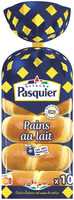 c NOVA 4
 NOVA 4
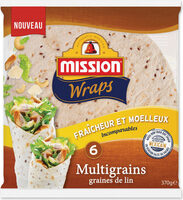 a NOVA 4
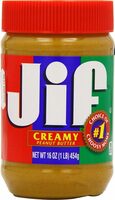 c NOVA 4
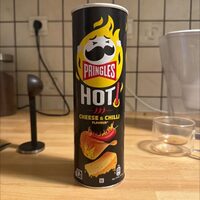 c NOVA 4
 c NOVA 4
 e NOVA 4
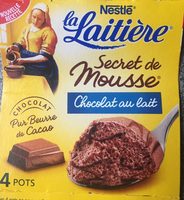 d NOVA 4
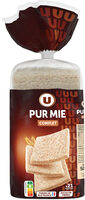 a NOVA 4
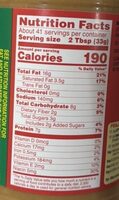 c NOVA 4
Mono- and diglycerides-free alternatives
Popular products from the same categories that don't list Mono- and diglycerides and score Nutri-Score A–C.
 a NOVA 4
 c NOVA 4
 c NOVA 4
 c NOVA 4
 a NOVA 4
How to spot Mono- and diglycerides on a label
Look for any of these names in the ingredient list:
Related additives
Frequently asked questions
Are mono- and diglycerides bad for you?
Your body digests them into glycerol and fatty acids, the same products as any dietary fat, and no regulator sets a daily limit. The reason to pay attention is observational: in the large French NutriNet-Sante cohort, higher intake was associated with cardiovascular risk and, for E471 specifically, with overall, breast and prostate cancer risk. Associations are not proof of cause.
Are mono- and diglycerides vegan?
Not necessarily, and the label will not tell you. US rules allow them to be made from fats, oils or fat-forming acids "from edible sources", without requiring the source to be declared. Look for "vegetable mono- and diglycerides" or ask the manufacturer.
Are mono- and diglycerides trans fats?
They are emulsifiers made from fats, and like any fat they can contain saturated, unsaturated and in principle trans fatty acids depending on the oil used. We do not make claims about how they are counted on the Nutrition Facts panel, because we have not verified those labeling rules against the regulation.
Why are mono- and diglycerides in bread?
They slow staling by interacting with starch and strengthen dough so it survives industrial mixing and handling, which is how packaged sliced bread stays soft for days.
How much E471 is safe per day?
Neither EFSA nor JECFA set a number: EFSA concluded no numerical acceptable daily intake was needed, and JECFA lists it as "not limited". For scale, EFSA estimated that E471 contributes on average 0.8-3.5% of recommended daily fat intake.
Do mono- and diglycerides affect gut bacteria?
Most of the gut-microbiome research on emulsifiers has focused on carboxymethylcellulose and polysorbate 80, which have been tested directly in animals and, for carboxymethylcellulose, in a small human trial. For E471 the human evidence is the cohort data on heart disease and cancer, not microbiome measurements.
What foods contain mono- and diglycerides?
Packaged bread and buns, cakes and pastries, ice cream and frozen desserts, margarine and spreads, coffee whiteners, whipped toppings and chewing gum. See the products and categories above for what is in our database.
Sources & references
- 21 CFR 184.1505 — Mono- and diglycerides (affirmed GRAS)
- EFSA (2017). Re-evaluation of mono- and di-glycerides of fatty acids (E 471) as food additives. EFSA Journal 15(11):5045
- EFSA (2021). Opinion on the re-evaluation of mono- and diglycerides of fatty acids (E 471) as food additive in foods for infants below 16 weeks of age and follow-up of their re-evaluation for all population groups. EFSA Journal 19(11):6885
- Commission Regulation (EU) 2023/1428 of 7 July 2023 amending the specifications for mono- and diglycerides of fatty acids (E 471)
- JECFA — Mono- and diglycerides (INS 471), evaluation summary (IPCS INCHEM)
- Sellem L. et al. (2023). Food additive emulsifiers and risk of cardiovascular disease in the NutriNet-Sante cohort: prospective cohort study. BMJ 382:e076058
- Sellem L. et al. (2024). Food additive emulsifiers and cancer risk: results from the French prospective NutriNet-Sante cohort. PLOS Medicine 21(2):e1004338
- U.S. FDA — List of Select Chemicals in the Food Supply Under FDA Review
Product data: Open Food Facts (ODbL), updated daily. Additive information is for general education and is not medical advice. Always check the package label. Our methodology.