
Xanthan gum (E415)
Updated September 28, 2026
Xanthan gum (E415) is a thickener made by fermenting sugar with the bacterium Xanthomonas campestris. It is one of the least controversial additives on a label: regulators found no need to set a daily limit, and the main effect at large amounts is bloating or a laxative effect. The one real caution is for premature infants, who should not be given xanthan gum-based feed thickeners.
Quick facts
- Also known as
- Xanthan, E415
- E-number
- E415
- Function
- Emulsifiers & thickeners
- US status
- Approved food additive (21 CFR 172.695), permitted as a thickener, stabilizer and emulsifier
- EU status
- Permitted as E415
- Acceptable daily intake
- No numerical limit: EFSA concluded a numerical ADI is not needed; JECFA lists the ADI as "not specified"
- Found in
- 69,317 products (37,284 sold in the US)
- Foodmetria concern level
- Low concern How we rate additives
What is Xanthan gum?
Xanthan gum is a polysaccharide — a long chain of sugar molecules — produced by feeding sugar to the bacterium Xanthomonas campestris and letting it ferment. The broth is then purified with isopropyl alcohol and dried into a cream-colored powder, which is sold as the sodium, potassium or calcium salt.
A tiny amount does a lot: a fraction of a percent by weight turns a thin liquid into something that pours slowly and holds together. US rules cap residual isopropyl alcohol at 750 parts per million and require the powder to be at least 1.5% pyruvic acid, which is the chemical signature that it really is xanthan gum.
On a label it appears simply as xanthan gum, or as E415 outside the US.
Why is Xanthan gum used in food?
Xanthan gum solves several problems at once, which is why it turns up in so many different aisles:
- It thickens without heat. Salad dressings, sauces and syrups get body straight from the bottle.
- It keeps things mixed. Oil and water separate; xanthan gum slows that down, so dressings and drinks don't need shaking.
- It replaces gluten. In gluten-free bread and baked goods it provides the stretch and structure that gluten normally gives. This is its single biggest use in the US.
- It replaces fat. Low-fat dairy and dressings use it to bring back the thick mouthfeel that removing fat takes away.
It also holds ice cream smooth and stops cocoa powder from settling out of chocolate milk. FDA lists it as a stabilizer, emulsifier, thickener, suspending agent, bodying agent and foam enhancer — an unusually long list for one ingredient.
Is Xanthan gum safe? What the research says
What regulators say. FDA permits xanthan gum as a food additive with no numerical limit on how much a food may contain. EFSA re-evaluated it in 2017 and concluded that there is no need for a numerical acceptable daily intake and no safety concern for the general population at realistic intakes. The WHO/FAO expert committee (JECFA) reached the same practical conclusion decades earlier, listing the ADI as "not specified" — its lowest-concern category.
What happens in the body. Xanthan gum is not meaningfully absorbed. It passes through the small intestine intact and is partly fermented by gut bacteria in the colon, behaving much like a soluble fiber. That is also why it has essentially no digestible calories.
Digestive effects. In a human study reviewed by EFSA, repeated intake of about 214 mg per kg of body weight per day — roughly 15 g for a 70 kg adult, far more than any normal diet delivers — was well tolerated. Some people reported abdominal discomfort, which the panel described as undesirable but not a health effect. In practice, the amounts in food are a fraction of a gram, and any bloating or loose stools come from supplement-sized doses, not from salad dressing.
Premature infants: the one real caution. In May 2011 the FDA warned against giving SimplyThick, a xanthan gum-based feed thickener, to premature infants, after 17 reports of necrotizing enterocolitis — a serious inflammation of the intestine — including five deaths. The warning was later broadened beyond premature infants. This concerns thickening products added to breast milk or formula for infants with swallowing problems, not xanthan gum in ordinary packaged food. EFSA's 2017 re-evaluation also explicitly does not cover infants under 12 weeks.
Bottom line: for children and adults eating normal food, xanthan gum is among the best-characterized and least worrying additives on an ingredient list. The caution is specific and narrow: infant feed thickeners.
Xanthan gum regulation: US vs EU
| Region | Status |
|---|---|
| United States | Approved food additive (21 CFR 172.695) as a thickener, stabilizer, emulsifier, suspending agent, bodying agent and foam enhancer. No use limit; purity specifications apply. Not on FDA's post-market review list. |
| United States (infant feeds) | FDA advised in May 2011 against giving the xanthan gum-based thickener SimplyThick to premature infants after reports of necrotizing enterocolitis; the caution was later broadened to infants generally. |
| European Union | Permitted as E415. EFSA's 2017 re-evaluation set no numerical ADI and found no safety concern for the general population; it does not cover infants under 12 weeks. |
| International (JECFA) | ADI "not specified" — the WHO/FAO category used when an additive is of such low toxicity that a numerical limit is unnecessary. |
Xanthan gum is permitted on both sides of the Atlantic with no numerical daily limit. In the US it is an approved food additive under 21 CFR 172.695, which sets identity and purity specifications rather than use limits. In the EU it is authorized as E415. It is not on FDA's list of chemicals under post-market review, and no US state has restricted it.
The only regulatory action specific to xanthan gum concerns infant feed thickeners: FDA's 2011 advisory against using SimplyThick in premature infants, later extended to infants generally. Products for thickening infant feeds should be used only under medical supervision.
Who should limit or avoid Xanthan gum?
- Premature and young infants. Do not use xanthan gum-based feed thickeners without a doctor's direction — this is the one setting where a real harm signal exists.
- People with IBS or a sensitive gut. Xanthan gum ferments in the colon. Most people notice nothing at food-level amounts, but if you use it by the spoonful for home baking, start small.
- People taking it as a supplement. Large doses act as a laxative. There is no reason to take xanthan gum on its own.
- Everyone else. Xanthan gum is vegan, gluten-free and kosher/halal-friendly in most certified forms. If you are avoiding it, the practical question is usually not the gum itself but what it signals: it appears most often in highly processed products.
Foods that commonly contain Xanthan gum
Share of published products in each category whose ingredient list includes Xanthan gum.
Popular products with Xanthan gum
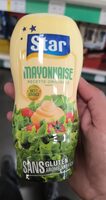 d NOVA 4
  c NOVA 4
 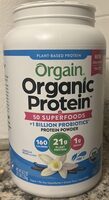 NOVA 4
 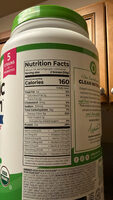 NOVA 4
 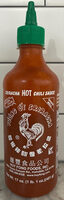 a NOVA 4
  d NOVA 4
  a NOVA 4
  NOVA 4
  d NOVA 4
  d NOVA 4
 Xanthan gum-free alternatives
Popular products from the same categories that don't list Xanthan gum and score Nutri-Score A–C.
 c
c  c NOVA 3
  b NOVA 3
  a NOVA 3
  a NOVA 3
 How to spot Xanthan gum on a label
Look for any of these names in the ingredient list:
Related additives
Frequently asked questions
Is xanthan gum bad for you?
For people eating ordinary food, no. FDA allows it without a limit, EFSA concluded no numerical daily intake is needed, and JECFA lists its ADI as "not specified". The main effect at very large doses is bloating or a laxative effect.
Is xanthan gum gluten-free?
Yes. Xanthan gum is a polysaccharide made by bacterial fermentation and contains no gluten — which is why it is the standard gluten-free baking ingredient. A product labeled "gluten-free" in the US must contain less than 20 ppm gluten under FDA rules.
Is xanthan gum keto-friendly?
Effectively yes. It is not absorbed and is partly fermented in the colon like soluble fiber, so it contributes almost no digestible carbohydrate, and recipes use only a fraction of a gram.
Does xanthan gum cause digestive problems?
Only at amounts much larger than food contains. In the human study EFSA reviewed, about 15 g a day for a 70 kg adult was tolerated, with some reports of abdominal discomfort. A serving of dressing contains a small fraction of that. People with IBS may still prefer to go easy on it in home baking.
Why should premature babies avoid xanthan gum?
In 2011 FDA warned against feeding the xanthan gum-based thickener SimplyThick to premature infants after 17 reports of necrotizing enterocolitis, including five deaths. Feed thickeners for infants should be used only on medical advice. This does not apply to xanthan gum in regular packaged food.
Is xanthan gum vegan?
Yes, it is produced by bacterial fermentation of sugar, with no animal ingredients. Some manufacturers ferment on a dairy- or soy-derived substrate, so people with severe allergies who want certainty can check with the brand.
What can I use instead of xanthan gum?
For thickening: guar gum, locust bean gum, cornstarch, arrowroot or ground chia/flax. For gluten-free baking structure, psyllium husk is the most common substitute, though textures differ.
Sources & references
- 21 CFR 172.695 — Xanthan gum
- EFSA (2017). Re-evaluation of xanthan gum (E 415) as a food additive. EFSA Journal 15(7):4909
- JECFA — Xanthan gum (WHO Food Additives Series 21, monograph 619)
- CDC Health Alert Network — FDA Warns Not to Feed SimplyThick to Premature Infants (May 27, 2011)
- 21 CFR 101.91 — Gluten-free labeling of food
- U.S. FDA — List of Select Chemicals in the Food Supply Under FDA Review
Product data: Open Food Facts (ODbL), updated daily. Additive information is for general education and is not medical advice. Always check the package label. Our methodology.