
Carrageenan (E407)
Updated September 18, 2026
Carrageenan (E407) is a thickener extracted from red seaweed, used in plant-based milks, ice cream, deli meats and dairy desserts. Regulators in the US and EU consider it safe at current levels. Concerns about gut inflammation come mostly from animal and cell studies, and are often confused with "degraded carrageenan", a different substance that is not allowed in food.
Quick facts
- Also known as
- Irish moss extract, Processed eucheuma seaweed, E407, E407a
- E-number
- E407
- Function
- Emulsifiers & thickeners
- US status
- Approved food additive (21 CFR 172.620); allowed in USDA Organic foods
- EU status
- Permitted as E407 / E407a; temporary ADI pending more data
- Acceptable daily intake
- 75 mg per kg of body weight per day, temporary (EFSA 2018)
- Found in
- 41,520 products (18,737 sold in the US)
- Foodmetria concern level
- Low concern How we rate additives
What is Carrageenan?
Carrageenan is a natural carbohydrate extracted from certain species of red seaweed, traditionally Irish moss (Chondrus crispus) and today mostly Eucheuma seaweeds farmed in Southeast Asia. Irish moss has long been used to thicken traditional puddings. In the EU a less refined form, processed Eucheuma seaweed, has its own code: E407a.
It is important not to confuse it with degraded carrageenan (poligeenan), which is made by treating carrageenan with strong acid at high temperature. Poligeenan has a much smaller molecule, is classified by IARC as possibly carcinogenic, and is not permitted in food.
Why is Carrageenan used in food?
Carrageenan keeps foods smooth and stable. It stops cocoa from settling in chocolate milk, keeps plant-based milks from separating, gives ice cream and dairy desserts a creamy texture, and helps deli meats hold moisture. It works at very low doses and is plant-based, which makes it popular in vegan products.
Is Carrageenan safe? What the research says
What regulators say. The FDA permits carrageenan as an emulsifier, stabilizer and thickener. EFSA re-evaluated it in 2018 and set a temporary acceptable daily intake of 75 mg/kg of body weight. It is temporary not because harm was found, but because EFSA said the data on chemistry, exposure and toxicity had gaps that needed to be filled within five years.
The inflammation question. Concerns come mainly from laboratory and animal studies suggesting carrageenan may trigger inflammation in the gut. Evidence in people is thin: a small pilot trial in patients with ulcerative colitis (Bhattacharyya et al., 2017) reported more relapses in those given carrageenan, but it included very few participants and has been criticized for its design. Much of the alarm online also mixes up food-grade carrageenan with degraded carrageenan.
The organic debate. In 2016 the USDA's National Organic Standards Board voted to remove carrageenan from the list of substances allowed in organic foods, mainly because it believed organic alternatives existed. In 2018 the USDA kept it on the list, noting that regulators had repeatedly found it safe and that substitutes did not do the same job.
Bottom line: at normal intakes carrageenan is considered safe for the general population. People with inflammatory bowel disease who suspect it affects them may reasonably avoid it and discuss this with their doctor.
Carrageenan regulation: US vs EU
| Region | Status |
|---|---|
| United States | Approved (21 CFR 172.620) in the amount needed as an emulsifier, stabilizer or thickener. Allowed in USDA Organic foods. |
| European Union | Permitted as E407 and E407a. Temporary ADI 75 mg/kg (EFSA 2018) while more data are collected. |
| Degraded carrageenan (poligeenan) | Not permitted in food. Classified by IARC as possibly carcinogenic (Group 2B). |
Carrageenan is permitted in the US, the EU, Canada, Australia and most other markets. In the US it must be listed by name as "carrageenan." Degraded carrageenan (poligeenan) is not an approved food ingredient anywhere.
Who should limit or avoid Carrageenan?
- People with inflammatory bowel disease (ulcerative colitis, Crohn's disease) who notice symptoms — the evidence is limited, but avoiding it is low-cost. Talk to your gastroenterologist.
- People with a sensitive gut who want to test whether it makes a difference.
- Carrageenan is vegan and gluten-free.
Foods that commonly contain Carrageenan
Share of published products in each category whose ingredient list includes Carrageenan.
Popular products with Carrageenan
 d NOVA 4
  NOVA 4
  NOVA 4
  NOVA 4
  e NOVA 4
 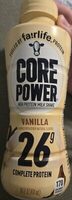 NOVA 4
 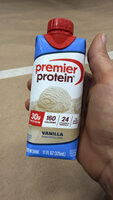 NOVA 4
 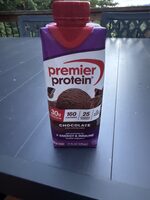 NOVA 4
 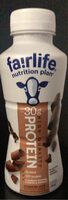 b NOVA 4
 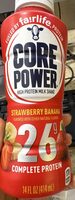 NOVA 4
 Carrageenan-free alternatives
Popular products from the same categories that don't list Carrageenan and score Nutri-Score A–C.
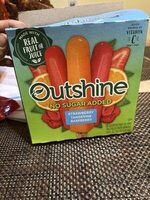 a NOVA 4
  c NOVA 4
 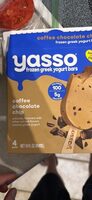 c NOVA 4
  c NOVA 4
 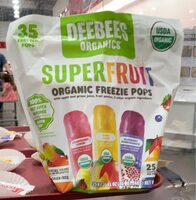 a NOVA 4
 How to spot Carrageenan on a label
Look for any of these names in the ingredient list:
Related additives
Frequently asked questions
Is carrageenan bad for you?
For most people, no. The FDA and EFSA consider it safe at current levels. Concerns about gut inflammation come mainly from animal and laboratory studies; human evidence is limited.
Does carrageenan cause cancer?
Food-grade carrageenan is not classified as a carcinogen. The cancer concern applies to degraded carrageenan (poligeenan), a different substance that is not allowed in food.
Is carrageenan safe for people with IBD?
The evidence is limited. A small pilot study in ulcerative colitis suggested more relapses with carrageenan, but it was very small. If you have IBD and suspect it affects you, avoiding it is reasonable — discuss it with your doctor.
Why is carrageenan in almond milk?
It keeps the drink smooth and stops ingredients from separating. Some brands use gellan gum instead, or simply ask you to shake the carton.
Is carrageenan vegan?
Yes. It comes from seaweed, which makes it a common plant-based alternative to gelatin.
Is carrageenan allowed in organic food?
Yes. The USDA kept carrageenan on the list of substances allowed in organic foods in 2018, despite a 2016 advisory board vote to remove it.
What is a substitute for carrageenan?
Gellan gum, guar gum, locust bean gum, xanthan gum and pectin are common alternatives, depending on the product.
Sources & references
- 21 CFR 172.620 — Carrageenan
- EFSA (2018). Re-evaluation of carrageenan (E 407) and processed Eucheuma seaweed (E 407a) as food additives. EFSA Journal 16(4):5238
- Food Safety News (April 2018). Latest organic controversy involves carrageenan as an additive
- Bhattacharyya S. et al. (2017). A randomized trial of the effects of the no-carrageenan diet on ulcerative colitis disease activity. Nutrition and Healthy Aging 4(2):181–192
- IARC Monographs, Volume 31 (1983) and Supplement 7 (1987): carrageenan (native — Group 3; degraded — Group 2B)
- McKim J.M. et al. (2019). A critical review of "A randomized trial of the effects of the no-carrageenan diet on ulcerative colitis disease activity". Nutrition and Healthy Aging
Product data: Open Food Facts (ODbL), updated daily. Additive information is for general education and is not medical advice. Always check the package label. Our methodology.