
Locust bean gum (carob bean gum, E410)
Updated November 2, 2026
Locust bean gum, also sold as carob bean gum, is a thickener ground from the seed of the carob tree. It is one of the least controversial additives in the food supply: it passes through the gut largely undigested, EFSA and the WHO/FAO expert committee both concluded that no numerical daily limit is needed, and JECFA reaffirmed that view as recently as 2025. The single caveat regulators raised concerns infants and young children on foods for special medical purposes, not ordinary food.
Quick facts
- Also known as
- Carob bean gum, Carob gum, E410
- E-number
- E410
- Function
- Emulsifiers & thickeners
- US status
- Affirmed GRAS (21 CFR 184.1343) with maximum levels by food category, from 0.15% in baked goods to 0.8% in cheeses
- EU status
- Permitted as E410. Revised purity specifications apply from August 18, 2026
- Acceptable daily intake
- Not specified — no numerical limit needed (JECFA 1981, reaffirmed 2016 and 2025; EFSA, 2017)
- Found in
- 21,310 products (15,773 sold in the US)
- Foodmetria concern level
- Low concern How we rate additives
What is Locust bean gum?
Locust bean gum is a ground seed, not a synthesised chemical. US regulation describes it as "primarily the macerated endosperm of the seed of the locust (carob) bean tree," with smaller amounts of seed coat and germ, from Ceratonia siliqua — a leguminous evergreen of the Mediterranean.
A few things follow from that description:
- It comes from the seed, which is a different part of the plant from the carob pod. That is worth knowing because "carob" on a label can mean either, and they are not interchangeable.
- The useful part is the endosperm, a galactomannan — a long-chain carbohydrate that holds water and builds viscosity.
- Because it is seed flour rather than an extract, it carries a small amount of protein with it, which is why the European specification sets a protein limit.
You will see it under several names, all the same thing: locust bean gum, carob bean gum, carob gum, E410. It is a legume product, so it is plant-based, and it contains no gluten.
Why is Locust bean gum used in food?
Locust bean gum is a workhorse texture ingredient. It thickens cold liquids, holds water so that ice crystals stay small, and stops mixtures from separating on the shelf.
Its most visible uses:
- Ice cream and frozen desserts — the classic application. By binding water it keeps ice crystals fine, which is the difference between a smooth scoop and a gritty one, and it slows the damage done by a partial thaw in a home freezer.
- Cream cheese, processed cheese and yogurt — body and spreadability, and resistance to weeping.
- Sauces, soups and dressings — viscosity without a cooked-starch flavour.
- Baked goods and fillings — water retention and a softer crumb for longer.
- Plant-based milks and beverages — mouthfeel and suspension.
US regulation caps it by category, and the ceilings are informative in themselves: 0.8 percent in cheeses, 0.75 percent in gelatins, puddings and fillings and in commercial jams and jellies, 0.25 percent in non-alcoholic beverages, 0.15 percent in baked goods and baking mixes, and 0.5 percent elsewhere. These are small numbers — a gum that works at a fraction of a percent.
It is almost always used in combination with other gums, because the mixtures behave better than any one of them alone. EU rules even recognise this directly: for milk-based drinks for young children, the permitted gums are capped as a combination rather than individually, with levels reduced proportionally when several are used together.
Is Locust bean gum safe? What the research says
What regulators say. This additive has one of the cleanest files on this site, and it was just reconfirmed.
The WHO/FAO expert committee (JECFA) has assigned locust bean gum an ADI of "not specified" three times — at its 25th meeting in 1981, again at its 82nd meeting in 2016, and most recently at its 100th meeting in 2025. "Not specified" is the category for substances of such low toxicity that putting a number on them would serve no purpose. A reaffirmation in 2025 matters: it means the conclusion reflects current data, not a decision made four decades ago and left alone.
EFSA re-evaluated E410 in a 2017 opinion and reached the same place: "no need for a numerical ADI." Its findings, in brief:
- The gum is "practically undigested, not absorbed intact, but significantly fermented by enteric bacteria in humans" — it is not taken into the body as such; the gut microbiota break it down.
- In 90-day rodent studies and in carcinogenicity studies, no adverse effects were reported at the highest doses tested.
- No concern for genotoxicity, and none for reproductive or developmental toxicity.
- On a refined estimate of actual exposure from reported uses, no safety concern for the general population.
The one flagged group. EFSA added a specific caveat: infants and young children consuming foods for special medical purposes may be more susceptible to gastrointestinal effects, because of the underlying condition those foods are prescribed for — and the panel concluded that the available data did not allow it to adequately assess safety in that narrow setting.
That caveat is worth reading precisely. It is not a statement about locust bean gum in ice cream, and it is not a finding of harm. It says that in a small group of medically fragile infants fed a specialised product, the evidence base was too thin for the panel to sign off. It is the same shape of conclusion that appears on several of our thickener pages, and the practical audience for it is clinicians, not shoppers.
What there is no evidence for. We found no regulatory basis for claims that locust bean gum damages the gut lining, disrupts the microbiome in a harmful way or causes allergic reactions in the general population, so this page does not make them. The fermentation EFSA describes is the ordinary fate of a soluble fibre; in large amounts any fermentable thickener can cause gas or loose stools, which is a dose effect common to the whole class rather than something distinctive to this one.
Locust bean gum regulation: US vs EU
| Region | Status |
|---|---|
| United States | Affirmed GRAS as a stabiliser and thickener (21 CFR 184.1343), with maximum levels by food category: 0.8% in cheeses, 0.75% in gelatins, puddings and fillings and in commercial jams and jellies, 0.5% in other categories, 0.25% in non-alcoholic beverages and 0.15% in baked goods and baking mixes. Not on FDA's post-market review list. |
| European Union | Permitted as E410. Commission Regulation (EU) 2026/196 of January 28, 2026, applying from August 18, 2026, lowered toxic element limits, revised microbiological criteria and changed specification wording. No use was withdrawn or added. |
| European Union — infants and young children | EFSA (2017) concluded that the available data did not allow an adequate assessment of safety in foods for special medical purposes for infants and young children, who may be more susceptible to gastrointestinal effects. Specific authorised uses in such products remain in place. |
| United Kingdom | Permitted as E410, listed as "locust bean gum; carob gum." |
| JECFA (WHO/FAO) | ADI "not specified" — assigned in 1981 (25th meeting), reaffirmed in 2016 (82nd meeting) and again in 2025 (100th meeting). |
Locust bean gum is permitted in the US, the EU and the UK, with no ban, phase-out or state restriction anywhere we checked. It is not on FDA's list of chemicals under post-market review, whose table was last updated in May 2026.
United States. Affirmed GRAS as a stabiliser and thickener, with the per-category maximum levels listed above.
European Union — new specifications since August 2026. Commission Regulation (EU) 2026/196, dated January 28, 2026, took effect on August 18, 2026 and revised both the EU additive list and the specifications for a group of gums: carrageenan (E 407), locust bean gum (E 410), guar gum (E 412), gum arabic (E 414), xanthan gum (E 415), pectins (E 440) and starch sodium octenyl succinate (E 1450).
For locust bean gum the changes are housekeeping rather than restriction:
- lower maximum limits for toxic elements,
- revised microbiological criteria aligned with good manufacturing practice,
- and a terminology change from "solution/soluble" to "dispersion/dispersible."
No use of E 410 was withdrawn or added. Additives already on the market before August 18, 2026 that met the previous specifications may be used until stocks run out, and foods made with them may be sold to their use-by date. Specific permitted uses in foods for special medical purposes remain in place.
The same regulation did restrict a close relative: guar gum (E 412) lost its authorisation for infant formula and for foods for special medical purposes intended for infants. That is the useful contrast here. Two very similar galactomannan gums went through the same European review and came out differently, which is a reminder that these decisions turn on the specific dossier rather than on the category.
Outside Europe, JECFA's position is unchanged and was reaffirmed in 2025.
Who should limit or avoid Locust bean gum?
- Parents using specialised infant products. The only group regulators singled out. EFSA flagged infants and young children on foods for special medical purposes as potentially more susceptible to gastrointestinal effects and said the data did not allow a full assessment in that setting. If your child is on a prescribed formula or thickened feed, that is a conversation for the clinician who prescribed it — not a reason to read labels on ordinary food differently.
- Anyone with a sensitive gut. Locust bean gum is a fermentable carbohydrate, so in quantity it can cause gas or loosening, as any soluble fibre can. The amounts in food are small — a fraction of a percent — but if you react to thickeners generally, this is one of them.
- Vegans, and people avoiding gluten. Both fine. It is ground legume seed: plant-based, with no gluten.
- People with legume allergies. Carob is a legume, and the gum is seed flour that carries a little protein, which is why the European specification limits protein content. We found no regulatory statement identifying locust bean gum as a significant allergen, so this page does not claim one — but if you have a diagnosed legume allergy, it is a reasonable thing to raise with your allergist rather than guess at.
- Anyone comparing gums on a label. Locust bean gum, guar gum, xanthan gum and carrageenan often appear together, and they do related jobs. Among them, locust bean gum has the quietest regulatory record: no numerical limit anywhere, a 2025 JECFA reaffirmation, and no withdrawn uses in the 2026 European update.
Foods that commonly contain Locust bean gum
Share of published products in each category whose ingredient list includes Locust bean gum.
Popular products with Locust bean gum
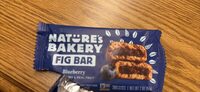 d NOVA 4
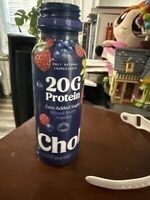 b NOVA 4
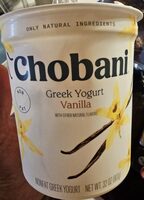 a NOVA 4
 d NOVA 4
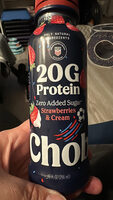 c NOVA 4
 d NOVA 4
 b NOVA 4
 b NOVA 4
 NOVA 4
 a NOVA 4
Locust bean gum-free alternatives
Popular products from the same categories that don't list Locust bean gum and score Nutri-Score A–C.
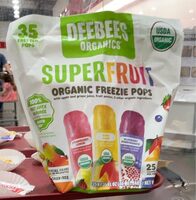 a NOVA 4
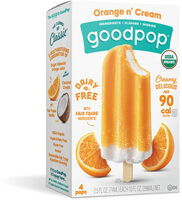 a NOVA 4
 c NOVA 4
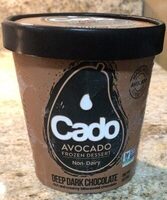 c NOVA 4
 b NOVA 4
How to spot Locust bean gum on a label
Look for any of these names in the ingredient list:
Related additives
Frequently asked questions
Is locust bean gum bad for you?
Regulators consider it low concern. EFSA concluded in 2017 that no numerical daily limit is needed, found no concern for genotoxicity or reproductive toxicity, and reported no adverse effects in rodent studies at the highest doses tested. The WHO/FAO expert committee reached the same conclusion and reaffirmed it in 2025. It is largely undigested and is fermented by gut bacteria instead of being absorbed.
What is locust bean gum made from?
The seed of the carob tree, Ceratonia siliqua. US regulation describes it as primarily the macerated endosperm of the seed, with smaller amounts of seed coat and germ. It comes from the seed, not from the pod that carob powder is made from — a distinction worth knowing when a label just says "carob."
Is locust bean gum vegan and gluten-free?
Yes to both. It is a ground legume seed with no animal input at any stage and no gluten. It is also not a dairy ingredient, despite being most familiar from ice cream and cream cheese.
Is locust bean gum the same as guar gum?
They are close relatives — both galactomannan gums from legume seeds — and they are often used together. But they are regulated separately and their files have now diverged: Commission Regulation (EU) 2026/196 withdrew guar gum's authorisation for infant formula and for foods for special medical purposes for infants, while leaving every authorised use of locust bean gum in place.
Does locust bean gum cause digestive problems?
It is a fermentable carbohydrate, so in large amounts it can cause gas or loose stools, as soluble fibres do generally. At the levels used in food — a fraction of a percent, capped by category in the US — that is unlikely. The one group EFSA singled out is infants and young children on foods for special medical purposes, who may be more susceptible because of their underlying condition.
How much locust bean gum is safe per day?
No number has been set, and that is deliberate. Both EFSA and JECFA concluded a numerical acceptable daily intake is unnecessary, because no adverse effect was found even at the highest doses tested. US regulation controls it by capping the percentage in each food category rather than by a daily intake figure.
What foods contain locust bean gum?
Ice cream and frozen desserts above all, plus cream cheese, processed cheese, yogurt, sauces and soups, dressings, baked goods and fillings, jams, and plant-based milks. It is one of the most widely used thickeners in our database. See the products and categories above for what is in it.
Sources & references
- 21 CFR 184.1343 — Locust (carob) bean gum (affirmed GRAS, with maximum levels by category)
- EFSA (2017). Re-evaluation of locust bean gum (E 410) as a food additive. EFSA Journal 15(1):4646
- EFSA — opinion record for the re-evaluation of locust bean gum (E 410)
- JECFA — Locust bean gum, evaluations database (ADI "not specified," 1981, 2016 and 2025)
- AGRINFO — Food additives: thickening agents and stabilisers (summary of Commission Regulation (EU) 2026/196)
- CIRS Group — EU Regulation 2026/196 food additive rules now apply
- UK Government — Approved additives and E numbers
- U.S. FDA — List of Select Chemicals in the Food Supply Under FDA Review
Product data: Open Food Facts (ODbL), updated daily. Additive information is for general education and is not medical advice. Always check the package label. Our methodology.