
Guar gum (E412)
Updated October 19, 2026
Guar gum (E412) is a soluble fibre ground from the seeds of the guar bean and used in tiny amounts to thicken ice cream, sauces and gluten-free baking. Regulators treat it as low risk: FDA affirms it as GRAS with per-category limits, EFSA concluded in 2017 that no numerical daily limit is needed, and JECFA lists its ADI as "not specified". In large concentrated doses — as in the diet pills FDA removed from the market in 1992 — it is a different story.
Quick facts
- Also known as
- Guaran, E412
- E-number
- E412
- Function
- Emulsifiers & thickeners
- US status
- Affirmed GRAS (21 CFR 184.1339) with maximum use levels by food category; not permitted in over-the-counter weight-control drug products
- EU status
- Permitted as E 412; no numerical ADI needed
- Acceptable daily intake
- No numerical ADI needed (EFSA, 2017); JECFA: "not specified" (1975)
- Found in
- 58,705 products (26,948 sold in the US)
- Foodmetria concern level
- Low concern How we rate additives
What is Guar gum?
Guar gum is a soluble fibre, not a synthesised chemical. FDA's definition describes it as a naturally occurring substance obtained by soaking and crushing the seeds (endosperm) of the guar plant, Cyamopsis tetragonoloba or Cyamopsis psoraloides — a drought-tolerant legume grown mostly in India and Pakistan.
Chemically it is a galactomannan: a long chain of mannose sugars with galactose branches. That structure is why it works at such low doses. Guar gum absorbs water and tangles into a network that thickens a liquid at well under 1% — several times more effective by weight than starch — and it does this in cold liquids, without heating.
On a label it appears as guar gum, guaran or E412.
Why is Guar gum used in food?
Manufacturers use guar gum where a product needs body, suspension or freeze-thaw stability without added fat:
- Ice cream and frozen desserts. It slows the growth of ice crystals, which is what keeps ice cream smooth after a few days in the freezer.
- Sauces, gravies, dressings and soups. It thickens without flour and keeps the mixture from separating in the jar.
- Gluten-free and keto baking. Without gluten there is nothing to hold a crumb together; guar gum (often with xanthan gum) does part of that job.
- Plant milks and yoghurts. It keeps solids suspended instead of settling into a layer at the bottom.
- Low-fat products. Much of the mouthfeel that fat provides can be mimicked by a thickener at a fraction of the calories.
US limits are set per food category under 21 CFR 184.1339 — for example 0.35% in baked goods, 0.6% in milk products, 1.2% in breakfast cereals and gravies, 2.0% in fats and oils and in processed vegetables, and 0.5% in everything else.
Is Guar gum safe? What the research says
What regulators say. FDA affirms guar gum as generally recognized as safe (GRAS) for use within the per-category limits above. The WHO/FAO expert committee (JECFA) evaluated it at its 19th meeting in 1975 and set the ADI as "not specified" — the category for substances of such low toxicity that putting a number on them adds nothing.
EFSA re-evaluated E 412 in 2017 and agreed: the Panel concluded that "there is no need for a numerical ADI for guar gum" and found no safety concern for the general population at its refined exposure estimate. No adverse effects were reported in the subchronic and carcinogenicity studies even at the highest doses tested, so there is no numerical NOAEL to quote — the studies simply did not find a ceiling. Guar gum is also not on FDA's list of chemicals under post-market review (checked October 2026).
The part that does need a caveat: dose and form. Guar gum's whole function is to swell in water, and that property behaves very differently in a dessert than in a compressed tablet. FDA's rules reflect this. Under 21 CFR 310.545, guar gum is listed among the ingredients in over-the-counter weight-control drug products that are regarded as new drugs: such a product cannot be sold without an approved application, with the compliance date set at February 10, 1992. In other words, the only place US law actually restricts guar gum is concentrated diet pills — not food.
Digestive comfort. Because it is a fermentable soluble fibre, guar gum can cause gas, bloating or loose stools in some people, particularly in larger amounts such as in supplements or heavily thickened drinks. EFSA's 2017 opinion explicitly recommended monitoring post-marketing reports of abdominal discomfort. This is a tolerance issue, not a toxicity one.
Infants and young children. This is the one place where the assessment has moved. In 2017 EFSA said the data were insufficient for infants and young children consuming foods for special medical purposes; in its 2024 follow-up the Panel concluded that the available data are not sufficient to support the safe use of guar gum in food for infants and young children in those categories, partly because the key animal study was rated as having a high risk of bias. The same opinion recommended lowering the EU limits for arsenic, lead, mercury and cadmium in guar gum and adding microbiological criteria. None of this applies to ordinary foods for the general population — but it is the reason a careful page should not say "safe for everyone, full stop".
The observational research. In the French NutriNet-Santé cohort analysis of emulsifiers and cancer (about 92,000 adults, mean follow-up 6.7 years), higher guar gum intake was associated with prostate cancer risk, hazard ratio 1.39 (95% CI 1.04–1.87). Two things matter about that number. It comes from an observational study, which can show associations but not causes; and the authors themselves placed it among the associations that were not robust across their sensitivity analyses, unlike the findings for mono- and diglycerides and carrageenans. It is worth knowing that the question has been asked, and it is not evidence that guar gum causes cancer.
Bottom line: in the amounts used in food, guar gum is one of the better-documented low-risk additives, and it is a fibre rather than a synthetic chemical. The real-world issues are digestive tolerance, concentrated supplement doses, and an open data gap for infant foods.
Guar gum regulation: US vs EU
| Region | Status |
|---|---|
| United States | Affirmed GRAS (21 CFR 184.1339) with maximum levels by food category, from 0.35% in baked goods to 2.0% in fats and oils. Not on FDA's post-market review list as of October 2026. |
| United States (drug products) | Under 21 CFR 310.545(a)(20), over-the-counter weight-control products containing guar gum are regarded as new drugs and require an approved application; compliance date February 10, 1992. |
| European Union | Permitted as E 412. EFSA (2017): no numerical ADI needed, no safety concern for the general population. EFSA (2024): data insufficient to support use in foods for infants and young children for special medical purposes. |
| United Kingdom | Permitted as E 412 (guar gum), listed among emulsifiers, stabilisers, thickeners and gelling agents. |
| WHO / FAO (JECFA) | ADI "not specified" (19th meeting, 1975). |
Guar gum is permitted as a food additive in every major jurisdiction, with no numerical daily limit anywhere.
In the United States it is affirmed GRAS under 21 CFR 184.1339, with maximum use levels set per food category. Separately, 21 CFR 310.545 treats over-the-counter weight-control products containing guar gum as unapproved new drugs — a restriction on diet pills, not on food. It is not on FDA's post-market review list.
In the European Union and United Kingdom it is authorised as E 412. EFSA's 2024 follow-up opinion concluded that the data do not support its use in foods for infants and young children for special medical purposes, and recommended tighter contaminant limits in the EU specifications.
Who should limit or avoid Guar gum?
- People with sensitive digestion or on a low-FODMAP diet. Soluble, fermentable fibre can cause gas and bloating. Food-level amounts are small, but thickened drinks, meal-replacement shakes and fibre supplements can add up.
- Anyone taking guar gum as a supplement. The one place US law restricts it is concentrated weight-control products, and a swelling fibre in tablet form is not the same exposure as a spoonful of ice cream.
- Parents of infants on specialised formulas. EFSA concluded in 2024 that the data do not support guar gum's use in foods for infants and young children for special medical purposes. If your child is on such a product, that is a question for the prescribing clinician.
- People avoiding ultra-processed food. Guar gum itself is a plant fibre, but it signals a manufactured product.
Foods that commonly contain Guar gum
Share of published products in each category whose ingredient list includes Guar gum.
Popular products with Guar gum
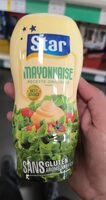 e NOVA 4
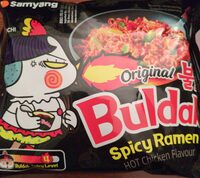 NOVA 4
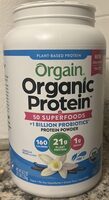 NOVA 4
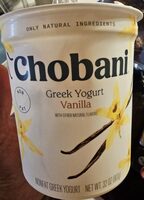 a NOVA 4
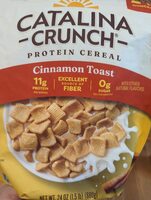 c NOVA 4
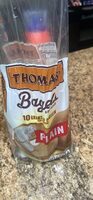 c NOVA 4
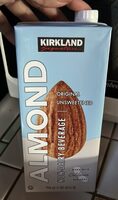 b NOVA 4
 d NOVA 4
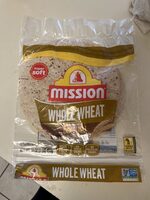 c NOVA 4
 d NOVA 4
Guar gum-free alternatives
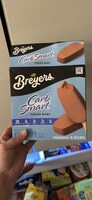
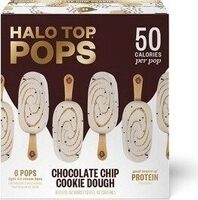
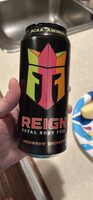
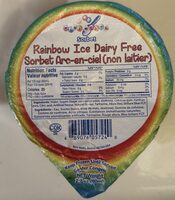
Popular products from the same categories that don't list Guar gum and score Nutri-Score A–C.
 c NOVA 4
 b NOVA 4
 b NOVA 4
 b NOVA 4
 c NOVA 4
How to spot Guar gum on a label
Look for any of these names in the ingredient list:
Related additives
Frequently asked questions
Is guar gum bad for you?
In the amounts used in food, regulators do not treat it as a risk: FDA affirms it as GRAS, EFSA concluded in 2017 that no numerical daily limit is needed, and JECFA lists its ADI as "not specified". Large concentrated doses are a different matter — FDA made over-the-counter weight-control products containing guar gum unapprovable new drugs in 1992.
Why was guar gum banned in diet pills?
Under 21 CFR 310.545, an over-the-counter weight-control product containing guar gum is regarded as a new drug and cannot be sold without an approved application, with a compliance date of February 10, 1992. FDA's regulation does not state the reasoning in the text itself, and food uses were not affected.
Does guar gum cause bloating or gas?
It can. Guar gum is a fermentable soluble fibre, so some people get gas, bloating or loose stools, mostly from larger amounts in supplements or thickened drinks. EFSA recommended monitoring reports of abdominal discomfort. Food-level amounts are under 1%.
Is guar gum gluten-free and keto-friendly?
Guar gum comes from a legume seed, not a grain, so it contains no gluten, and it is used in tiny amounts that contribute almost nothing digestible — which is why it is standard in both gluten-free and keto baking.
Is guar gum vegan?
Yes. It is ground from the seeds of the guar bean, with no animal-derived input.
How much guar gum is safe per day?
No regulator has set a number: EFSA concluded a numerical acceptable daily intake is unnecessary and JECFA lists it as "not specified". US rules cap it per food category instead — for instance 0.35% in baked goods and 0.6% in milk products.
What foods contain guar gum?
Ice cream and frozen desserts, sauces, dressings and soups, plant milks and yoghurts, gluten-free baked goods and low-fat products. See the products and categories above for what is in our database.
Sources & references
- 21 CFR 184.1339 — Guar gum (affirmed GRAS)
- 21 CFR 310.545 — Drug products containing certain active ingredients offered over-the-counter for certain uses
- EFSA (2017). Re-evaluation of guar gum (E 412) as a food additive. EFSA Journal 15(2):4669
- EFSA (2024). Re-evaluation of guar gum (E 412) as a food additive in foods for infants below 16 weeks of age and follow-up of its re-evaluation for all population groups. EFSA Journal 22(5):e8748
- JECFA — Guar gum (INS 412), WHO food additives database
- Sellem L. et al. (2024). Food additive emulsifiers and cancer risk: results from the French prospective NutriNet-Sante cohort. PLOS Medicine 21(2):e1004338
- UK Government — Approved additives and E numbers
Product data: Open Food Facts (ODbL), updated daily. Additive information is for general education and is not medical advice. Always check the package label. Our methodology.