
BHT (Butylated hydroxytoluene, E321)
Updated October 12, 2026
BHT is a synthetic antioxidant that stops the fats in packaged food from going rancid. Unlike its close relative BHA, it carries no cancer classification — IARC puts it in Group 3, not classifiable. Its European safety limit is low, 0.25 mg per kg of body weight a day, and EFSA found that children in the highest-consuming group exceed it in a couple of countries. FDA opened a fresh safety review of BHT in May 2026.
Quick facts
- Also known as
- Butylated hydroxytoluene, E321
- E-number
- E321
- Function
- Antioxidants
- US status
- GRAS as an antioxidant when total antioxidants stay at or below 0.02% of a food's fat or oil content (21 CFR 182.3173), plus named uses with their own limits (21 CFR 172.115); under FDA post-market review since August 2025
- EU status
- Permitted as E 321
- Acceptable daily intake
- 0.25 mg per kg of body weight per day (EFSA); 0.3 mg per kg (JECFA, 1995)
- Found in
- 6,221 products (5,266 sold in the US)
- Foodmetria concern level
- Moderate concern How we rate additives
What is BHT?
BHT — butylated hydroxytoluene — is a synthetic antioxidant, chemically a close cousin of BHA. It dissolves in fat rather than water, works at tiny concentrations, and US specifications require it to be at least 99% pure.
On labels it reads BHT or butylated hydroxytoluene, and in Europe E 321. It frequently appears alongside BHA, and American rules treat the pair as one: their combined total is what the limit applies to.
Why is BHT used in food?
BHT is there to delay rancidity. It is used in shortenings and frying oils, dry breakfast cereals, dehydrated potato products, snack foods and chewing gum base, and it is also permitted in food packaging — notably in the waxed paper and plastic liners of cereal boxes, where it protects the fat in the food through the packaging rather than being mixed into it.
In the US the general rule caps all antioxidants together at 0.02% of the food's fat or oil content, with tighter product-specific limits: 50 ppm in dry breakfast cereals, 10 ppm in potato granules, 200 ppm in emulsion stabilisers for shortenings.
Is BHT safe? What the research says
Cancer classification. IARC evaluated BHT in 1986 and placed it in Group 3 — not classifiable as to its carcinogenicity to humans. It found only limited evidence in experimental animals and could make no evaluation at all for humans. BHT is not on California's Proposition 65 list. This is the clearest practical difference between BHT and BHA, which does carry a Group 2B classification.
Where the limit comes from, and why it is low. EFSA's acceptable daily intake is 0.25 mg/kg of body weight a day — one of the lower ADIs among common additives. It comes from a no-effect level of 25 mg/kg in two two-generation rat studies, with a 100-fold safety margin. EFSA checked that this level also sits below the dose associated with liver tumours in male rats (a benchmark dose of 247 mg/kg), and concluded that BHT "is not of concern with respect to genotoxicity" and that any carcinogenic effect would have a threshold — a dose below which nothing happens.
The limit has moved in both directions over the years. The EU's earlier scientific committee set 0.05 mg/kg in 1987; JECFA set 0.3 mg/kg in 1996 after running a temporary 0.125 mg/kg through the late 1980s. EFSA's 0.25 mg/kg reflects newer reproductive-toxicity data, not a new hazard.
Exposure is the real issue. EFSA found that adults are unlikely to exceed the ADI, at average or high intakes. For children at the 95th percentile of consumption, however, the ADI is exceeded in some European countries — Finland and the Netherlands specifically. That is what keeps BHT from being a straightforwardly low-concern additive: the margin between ordinary use and the limit is thin for the heaviest-consuming children.
What FDA is doing now. On May 12, 2026 FDA finalised its post-market chemical assessment programme and simultaneously opened reassessments of BHT and azodicarbonamide. The BHT request for information, published May 13, asked for current uses and safety data in both food and food packaging; the comment period was extended and closed August 31, 2026. FDA's commissioner said the agency "will act swiftly based on our findings." Nothing has been concluded yet.
Bottom line: BHT is not a cancer-classified substance, and regulators consider it safe at ordinary intakes. The honest caveat is about children who eat a lot of the products it is in, where European estimates put intake at or above the limit.
BHT regulation: US vs EU
| Region | Status |
|---|---|
| United States | GRAS as an antioxidant up to 0.02% of the fat or oil content (21 CFR 182.3173), plus named uses with their own limits (21 CFR 172.115), and permitted in some food packaging. Under FDA post-market review at the Review of Information stage since August 2025; request for information closed August 31, 2026. |
| California | Not listed under Proposition 65. |
| European Union | Permitted as E 321, with an acceptable daily intake of 0.25 mg/kg of body weight. |
| United Kingdom | Permitted as E 321 on the official approved-additives list. |
BHT is legal across the US as a GRAS antioxidant and under specific food additive regulations, and it is permitted in the EU and the UK as E 321. No US state has banned it.
It sits on FDA's list of chemicals under post-market review at the Review of Information stage, opened August 2025, with the formal request for information published May 13, 2026 (docket FDA-2026-N-2526). FDA reopened the comment period for 30 days after requests from interested parties; the new deadline was August 31, 2026. A review of information is the first stage of FDA's process — it gathers data and does not itself imply a safety problem.
Check the latest status: FDA's assessment is open and could change BHT's regulatory position.
In context: which additives are really banned in Europe but allowed in the US.
Who should limit or avoid BHT?
- Children who eat a lot of the products BHT is in. EFSA's estimates put high-consuming children at or above the acceptable daily intake in some countries. Varying cereals and snacks is a simpler fix than reading every label.
- Anyone cutting down on ultra-processed food. BHT is a marker of long-shelf-life packaged goods, so it tends to disappear from the diet along with the category.
- People avoiding it on principle can usually find a direct substitute: many cereal and snack brands have moved to tocopherols or rosemary extract and say so on the pack.
Foods that commonly contain BHT
Share of published products in each category whose ingredient list includes BHT.
Popular products with BHT
 a NOVA 1
 c NOVA 4
 b NOVA 4
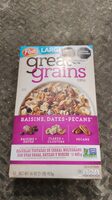 c NOVA 3
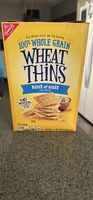 c NOVA 3
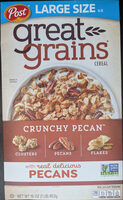 c NOVA 4
 NOVA 4
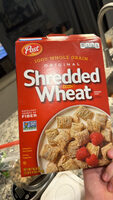 a NOVA 1
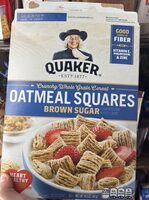 c NOVA 4
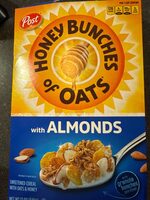 d NOVA 4
BHT-free alternatives
Popular products from the same categories that don't list BHT and score Nutri-Score A–C.
 c NOVA 4
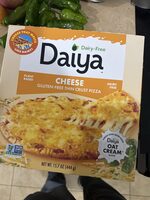 c NOVA 4
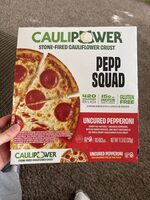 c NOVA 4
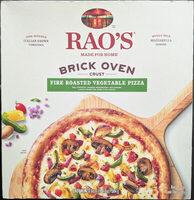 b NOVA 4
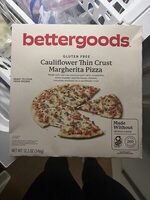 a NOVA 4
How to spot BHT on a label
Look for any of these names in the ingredient list:
Related additives
Frequently asked questions
Is BHT banned in Europe?
No. BHT is permitted in the EU and the UK as E 321. What differs from the US is the limit: EFSA set an acceptable daily intake of 0.25 mg per kg of body weight, and found that the highest-consuming children exceed it in some countries.
Does BHT cause cancer?
IARC places BHT in Group 3 — not classifiable as to its carcinogenicity to humans — having found only limited evidence in animals and no basis for a human evaluation. BHT is not on California's Proposition 65 list. EFSA concluded it is not genotoxic.
Is BHT worse than BHA?
On cancer classifications, no — the reverse. BHA is listed as possibly carcinogenic by IARC and as reasonably anticipated to be a human carcinogen by the US National Toxicology Program; BHT is not classified by either. BHT does have the lower acceptable daily intake of the two, so exposure matters more for it.
How much BHT is safe per day?
EFSA's acceptable daily intake is 0.25 mg per kg of body weight: about 7.5 mg for a 30 kg (66 lb) child and 17.5 mg for a 70 kg (154 lb) adult. JECFA uses 0.3 mg/kg. US labels do not state the amount.
What foods contain BHT?
Dry breakfast cereals, shortenings and frying oils, snack foods, chewing gum base and dehydrated potato products. It is also used in cereal-box liners and other packaging, where it is not listed in the ingredients because it is not an ingredient. See the products and categories above for what is in our database.
Is BHT vegan and gluten-free?
BHT is synthetic and neither animal- nor grain-derived, so it is generally considered both. Whether the food around it is, is a separate question.
What is used instead of BHT?
Mixed tocopherols (a vitamin E form), ascorbyl palmitate and rosemary extract. They cost more and protect for less time, which is one reason products using them often carry shorter shelf lives.
Sources & references
- 21 CFR 182.3173 — Butylated hydroxytoluene (GRAS)
- 21 CFR 172.115 — BHT
- U.S. FDA (May 12, 2026). FDA Finalizes Food Chemical Safety Post-Market Assessment Program, Launches Reassessment of BHT, ADA
- U.S. FDA (July 29, 2026). FDA Reopens Public Comment Period for Request for Information on Butylated Hydroxytoluene
- U.S. FDA — List of Select Chemicals in the Food Supply Under FDA Review
- EFSA. Scientific Opinion on the re-evaluation of butylated hydroxytoluene BHT (E 321) as a food additive. EFSA Journal 2588
- JECFA — Butylated hydroxytoluene, evaluation summary (ADI 0–0.3 mg/kg bw, 1995)
- IARC Monographs Vol. 40 (1986) — Butylated hydroxytoluene; classified Group 3 in Supplement 7 (1987)
- UK Government — Approved additives and E numbers
Product data: Open Food Facts (ODbL), updated daily. Additive information is for general education and is not medical advice. Always check the package label. Our methodology.