
BHA (Butylated hydroxyanisole, E320)
Updated October 12, 2026
BHA is a synthetic antioxidant that keeps fats and oils in packaged food from going rancid. It is listed by IARC as possibly carcinogenic to humans and by the US National Toxicology Program as reasonably anticipated to be a human carcinogen — both on the strength of tumours in the rodent forestomach, an organ humans do not have. EFSA considers it safe up to 1.0 mg per kg of body weight a day, and FDA began a fresh safety assessment of it in 2026.
Quick facts
- Also known as
- Butylated hydroxyanisole, E320
- E-number
- E320
- Function
- Antioxidants
- US status
- GRAS as an antioxidant when total antioxidants stay at or below 0.02% of a food's fat or oil content (21 CFR 182.3169), plus named uses with their own limits (21 CFR 172.110); under FDA post-market scientific assessment since August 2025
- EU status
- Permitted as E 320
- Acceptable daily intake
- 1.0 mg per kg of body weight per day (EFSA, 2011); 0.5 mg per kg (JECFA, 1988)
- Found in
- 4,141 products (3,203 sold in the US)
- Foodmetria concern level
- Moderate concern How we rate additives
What is BHA?
BHA — butylated hydroxyanisole — is a synthetic antioxidant. It is a waxy solid that melts just above 48 °C, dissolves in fats rather than water, and is added in tiny amounts to anything whose fat can go rancid. US specifications require it to assay at least 98.5% pure.
On labels it appears as BHA or butylated hydroxyanisole, in Europe as E 320. You will often see it next to BHT, since the two are frequently used together and share a single legal limit.
Why is BHA used in food?
Fats and oils react with oxygen and turn stale — the flat, cardboard taste of an old box of crackers. BHA interrupts that reaction, so it is used in shortenings and frying oils, dry breakfast cereals, snack foods, chewing gum base, dehydrated potato products and active dry yeast. It is also authorised in some food packaging, where it protects the packaging material itself and can migrate into the food in small amounts.
The usual general limit in the US is strict in an unusual way: the total of all antioxidants must not exceed 0.02% of the food's fat or oil content — a limit on the fat, not on the food. Specific products have their own caps, from 2 ppm in a prepared drink mix to 1,000 ppm in active dry yeast.
Is BHA safe? What the research says
What the cancer classifications are based on. IARC evaluated BHA in 1986 and placed it in Group 2B, possibly carcinogenic to humans: sufficient evidence in experimental animals, and no human data at all. The US National Toxicology Program lists it as reasonably anticipated to be a human carcinogen, first listed in 1991. Both rest on the same finding: high dietary doses produced benign and malignant tumours of the forestomach in rats, male mice and hamsters. NTP also notes that the human epidemiology is inadequate to evaluate, and that a Dutch case-control study found no added stomach cancer risk at ordinary dietary intakes.
The forestomach is the crux. Rodents have one; humans do not. When EFSA re-evaluated BHA in 2011 it concluded that forestomach hyperplasia in rodents "may no longer be relevant for human risk assessment," and it found no concern for genotoxicity.
Where the limit comes from. EFSA set an acceptable daily intake of 1.0 mg/kg of body weight, raising the older 0.5 mg/kg figure. The new limit comes from a no-effect level of 100 mg/kg in a study of rat pups — growth retardation, higher mortality and behavioural effects — with a 100-fold safety margin. EFSA judged that this also covers the forestomach findings. The WHO/FAO expert committee (JECFA) still uses 0.5 mg/kg, set in 1988. EFSA's refined intake estimates were generally below the ADI at current use levels.
What FDA is doing now. In February 2026 FDA opened a formal request for information on BHA — uses, use levels, dietary exposure, migration from packaging, biomonitoring and unpublished safety studies — as part of its post-market chemical review programme. FDA notes that it previously concluded the authorised uses were safe, but that "new information may require reconsideration of the regulatory status." No conclusion has been published.
Bottom line: the cancer listings are real and not a myth, but they describe a tumour site humans lack, at doses far above dietary exposure. Regulators on both sides of the Atlantic still consider ordinary intake safe, and FDA is re-examining that judgement with fresh data.
BHA regulation: US vs EU
| Region | Status |
|---|---|
| United States | GRAS as an antioxidant up to 0.02% of the fat or oil content (21 CFR 182.3169), plus named uses with their own limits (21 CFR 172.110). Under FDA post-market review at the Scientific Assessment stage since August 2025; request for information closed April 13, 2026. |
| California | Listed under Proposition 65 as a carcinogen since January 1, 1990 (no significant risk level: 4,000 µg/day). Warning requirement, not a ban. |
| West Virginia | HB 2354 bans BHA and propylparaben, with seven dyes, from retail sale from January 1, 2028 — blocked by a preliminary injunction issued December 23, 2025. The school-meals provision does not cover BHA. |
| European Union | Permitted as E 320. |
| United Kingdom | Permitted as E 320 on the official approved-additives list. |
BHA remains legal throughout the US. It sits on FDA's list of chemicals under post-market review at the Scientific Assessment stage, begun in August 2025, and the agency's request for information closed in April 2026.
California's Proposition 65 has listed BHA as a carcinogen since January 1, 1990, on the strength of the IARC classification; the state's no-significant-risk level is 4,000 micrograms a day. Prop 65 is a warning law, not a ban.
West Virginia is the only state with a ban on the books. HB 2354 bars BHA and propylparaben, alongside seven synthetic dyes, from food manufactured for sale or sold in the state from January 1, 2028 — but that provision of the law was blocked by a preliminary injunction on December 23, 2025 in International Association of Color Manufacturers v. West Virginia Department of Health, which found it likely unconstitutionally vague. The separate school-meals part of HB 2354, which covers only the dyes, was not blocked and has been in force since August 1, 2025.
In the EU and the UK, BHA is permitted as E 320. Check the latest status: the FDA review and the West Virginia litigation are both unresolved.
In context: which additives are really banned in Europe but allowed in the US.
Who should limit or avoid BHA?
- Anyone cutting down on ultra-processed food. BHA shows up in shelf-stable, fat-containing products — snack mixes, frosted cereals, instant mashed potato, chewing gum — so avoiding it usually means eating less of that category rather than hunting for one ingredient.
- People who prefer to steer clear of Prop 65-listed substances. That is a reasonable preference; it does not require believing BHA is dangerous at dietary doses.
- Shoppers in West Virginia may see reformulated products ahead of the 2028 date if the injunction is lifted.
Foods that commonly contain BHA
Share of published products in each category whose ingredient list includes BHA.
Popular products with BHA
 e NOVA 4
 NOVA 4
 e NOVA 4
 c NOVA 4
 e NOVA 4
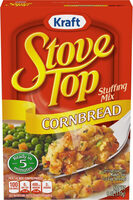 e NOVA 4
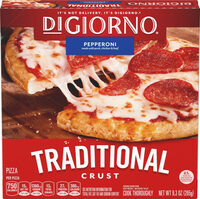 d NOVA 4
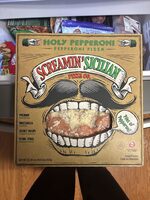 d NOVA 4
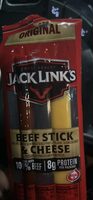 e NOVA 4
 d NOVA 4
BHA-free alternatives
Popular products from the same categories that don't list BHA and score Nutri-Score A–C.
 c NOVA 4
 c NOVA 4
 c NOVA 4
 b NOVA 4
 a NOVA 4
How to spot BHA on a label
Look for any of these names in the ingredient list:
Related additives
Frequently asked questions
Is BHA banned anywhere?
Not federally in the US, and not in the EU or the UK, where it is permitted as E 320. West Virginia passed a statewide ban due to start January 1, 2028, but a federal court blocked that provision in December 2025 and the case is unresolved.
Does BHA cause cancer?
IARC calls it possibly carcinogenic to humans (Group 2B) and the US National Toxicology Program lists it as reasonably anticipated to be a human carcinogen. Both are based on tumours in the forestomach of rats, mice and hamsters at high doses. Humans have no forestomach, and EFSA concluded in 2011 that this finding may no longer be relevant to human risk. Human studies are too limited to draw a conclusion.
What is the difference between BHA and BHT?
They are different chemicals doing the same job, and US rules give them a shared limit. BHA carries a cancer classification from IARC and NTP; BHT does not — IARC places BHT in Group 3, not classifiable. BHT has the lower acceptable daily intake of the two in Europe.
How much BHA is safe per day?
EFSA's acceptable daily intake is 1.0 mg per kg of body weight: about 30 mg for a 30 kg (66 lb) child and 70 mg for a 70 kg (154 lb) adult. JECFA uses the older 0.5 mg/kg. Labels do not state the amount, only that BHA is present.
What foods contain BHA?
Shortenings and frying oils, dry breakfast cereals, snack foods and snack mixes, chewing gum, instant and dehydrated potato products, dry drink and dessert mixes, and active dry yeast. See the products and categories above for what is in our database.
Is BHA vegan and gluten-free?
BHA is synthetic and not animal-derived or grain-derived, so it is generally considered both vegan and gluten-free. The food it is in is a separate question.
What is a natural alternative to BHA?
Mixed tocopherols (a form of vitamin E), ascorbyl palmitate and rosemary extract are the antioxidants most often used instead. They generally cost more and protect for a shorter time, which is why they tend to appear in products with shorter stated shelf lives.
Sources & references
- 21 CFR 182.3169 — Butylated hydroxyanisole (GRAS)
- 21 CFR 172.110 — BHA
- Federal Register (February 11, 2026). Butylated Hydroxyanisole (BHA); Request for Information
- U.S. FDA — List of Select Chemicals in the Food Supply Under FDA Review
- EFSA (2011). Scientific Opinion on the re-evaluation of butylated hydroxyanisole – BHA (E 320) as a food additive. EFSA Journal 9(10):2392
- JECFA — Butylated hydroxyanisole, evaluation summary (ADI 0–0.5 mg/kg bw, 1988)
- IARC Monographs Vol. 40 (1986), p. 123 — Butylated hydroxyanisole; classified Group 2B in Supplement 7 (1987)
- U.S. National Toxicology Program — Report on Carcinogens profile: Butylated Hydroxyanisole
- California OEHHA — Proposition 65: Butylated hydroxyanisole
- Covington (March 2025). West Virginia Passes Law Prohibiting the Use of Seven Food Dye Ingredients
- National Agricultural Law Center — Preliminary Injunction Halts Enforcement of West Virginia's Food Dye Ban
- UK Government — Approved additives and E numbers
Product data: Open Food Facts (ODbL), updated daily. Additive information is for general education and is not medical advice. Always check the package label. Our methodology.