
TBHQ (tert-Butylhydroquinone, E319)
Updated September 28, 2026
TBHQ (tert-butylhydroquinone, E319) is a synthetic antioxidant that keeps fats and oils from going rancid, most often in fried snacks, instant noodles and packaged baked goods. It is approved in both the US and the EU — the widely repeated claim that Europe banned it is wrong. Its daily limit is low, and European regulators found children could pass it if every product used the maximum amount, though actual intakes stay below.
Quick facts
- Also known as
- Tertiary butylhydroquinone, tert-Butylhydroquinone, E319
- E-number
- E319
- Function
- Antioxidants
- US status
- Approved food additive (21 CFR 172.185); total antioxidants capped at 0.02% of the food's fat or oil content
- EU status
- Permitted as E319 — not banned
- Acceptable daily intake
- 0.7 mg per kg of body weight per day (JECFA 1998, confirmed by EFSA 2004)
- Found in
- 3,532 products (3,090 sold in the US)
- Foodmetria concern level
- Moderate concern How we rate additives
What is TBHQ?
TBHQ stands for tert-butylhydroquinone. It is a synthetic phenolic antioxidant, derived from petroleum chemistry, and it works by interrupting the chain reaction that turns fats rancid. A very small amount goes a long way, which is why the US limit is written as a percentage of a food's fat rather than of the food itself.
It is closely related to two older antioxidants, BHA and BHT, and is often used alongside them — and increasingly instead of them, since BHA and BHT have attracted more regulatory attention.
On a US label it appears as TBHQ or tertiary butylhydroquinone, usually followed by "(to preserve freshness)" or "(as a preservative)". Outside the US it is E319.
Why is TBHQ used in food?
Fat going rancid is what limits the shelf life of most fried and fat-containing packaged food. It produces stale, cardboard-like off-flavors long before the product is unsafe. TBHQ delays that, and it is more heat-stable than many alternatives, so it survives frying.
It turns up most often in fried snacks and chips, instant noodles and ramen, crackers and packaged baked goods, frozen and fast foods fried in treated oil, and the frying oils and shortenings themselves. It is also used in some margarines and nut products.
Because the limit is tied to fat content, high-fat fried products are where it appears and where intake concentrates.
Is TBHQ safe? What the research says
What regulators say. FDA permits TBHQ as a food additive and caps total antioxidant content — TBHQ alone or combined with BHA and BHT — at 0.02% of the food's fat or oil content. The WHO/FAO expert committee set an acceptable daily intake of 0.7 mg per kg of body weight in 1998, and EFSA confirmed that figure in 2004. For a 70 kg adult that is about 49 mg a day; for a 30 kg child, about 21 mg.
Is anyone close to the limit? EFSA looked at this in 2016. If every permitted food contained the maximum allowed amount, estimated intake would exceed the ADI for toddlers and children. When EFSA recalculated using the amounts manufacturers actually report using, the ADI was not exceeded in any population group. That is a reassuring result with a caveat attached: the margin depends on manufacturers staying well below the legal maximum, and the ADI itself is one of the lower ones in the additive world.
What the research shows. The safety database behind the ADI comes from standard animal toxicity studies. The findings that generate headlines are different and should be read as what they are:
- Immune effects — laboratory and animal studies. TBHQ activates a cellular pathway called Nrf2. Work published in 2018 found that it suppressed the activation and maturation of natural killer cells from mice at low concentrations, and related studies have reported effects on T cells and on the response to influenza in animals. These are in vitro and animal findings. They have not been shown to translate into weaker immunity or worse infections in people, and no regulator has acted on them.
- Cancer. TBHQ is not classified as a carcinogen by any regulatory body or by IARC.
Where TBHQ stands with FDA. Notably, TBHQ is not on FDA's list of chemicals in the food supply under post-market review, updated in July 2026 — although its relatives BHA and BHT both are. No petition to revoke TBHQ is pending.
Bottom line: TBHQ is permitted everywhere it matters, with no established human harm at dietary levels. What makes it worth knowing about is the combination of a low daily limit and a concentration in exactly the foods children eat a lot of. Reducing fried packaged snacks lowers TBHQ intake as a side effect of a change most people want to make anyway.
TBHQ regulation: US vs EU
| Region | Status |
|---|---|
| United States | Approved food additive (21 CFR 172.185). TBHQ alone or with BHA and/or BHT may not exceed 0.02% of the food's oil or fat content, including essential oil content. Not on FDA's post-market review list as of July 2026. |
| European Union | Permitted as E319 — not banned. Maximum permitted levels are set food by food, with an ADI of 0.7 mg/kg of body weight. |
| International (JECFA) | ADI 0.7 mg/kg of body weight, established in 1998 and confirmed by EFSA in 2004. |
TBHQ is not banned in Europe. This claim circulates widely and is simply incorrect: TBHQ is authorized in the EU as E319, with maximum permitted levels set food by food and an acceptable daily intake of 0.7 mg per kg of body weight. It belongs on a list of additives with a strict numerical limit, not on a list of additives Europe rejected.
In the US, TBHQ is an approved food additive under 21 CFR 172.185. The total antioxidant content of a food may not exceed 0.02% of its fat or oil content. It does not appear on FDA's July 2026 list of chemicals under post-market review, and no US state has restricted it.
The most recent regulatory assessment is EFSA's 2016 exposure statement, which found intakes within the ADI under realistic use but above it if maximum permitted levels were used throughout.
Who should limit or avoid TBHQ?
- Children, and parents of children who eat a lot of packaged snacks. Children are the group EFSA flagged in the maximum-use scenario, because the per-kilogram limit is small and fried snacks are a big share of their diet.
- Anyone eating fried packaged food daily. TBHQ tracks fried and fatty processed products almost perfectly, so intake is concentrated in a narrow set of foods.
- People with dye or preservative sensitivities. Individual reports of skin reactions exist, but there is no established TBHQ allergy syndrome.
- Not a vegan, halal or gluten concern. TBHQ is synthetic and contains no animal-derived material or gluten.
Foods that commonly contain TBHQ
Share of published products in each category whose ingredient list includes TBHQ.
Popular products with TBHQ
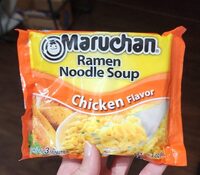 NOVA 4
 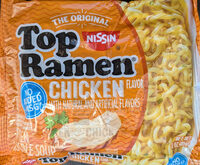 NOVA 4
  NOVA 4
 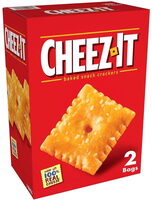 d NOVA 4
 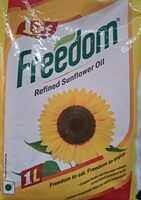 c NOVA 2
 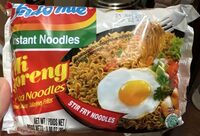 e NOVA 4
 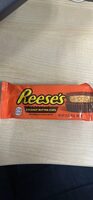 e NOVA 4
 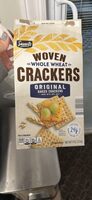 c NOVA 3
 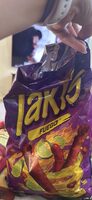 e NOVA 4
 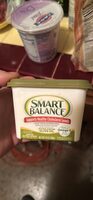 d NOVA 4
 TBHQ-free alternatives
Popular products from the same categories that don't list TBHQ and score Nutri-Score A–C.
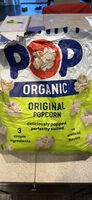 c NOVA 3
 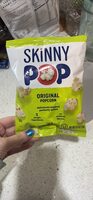 c NOVA 3
  a
a  c
c  a
a How to spot TBHQ on a label
Look for any of these names in the ingredient list:
Related additives
Frequently asked questions
Is TBHQ banned in Europe?
No. TBHQ is authorized in the EU as E319, with an acceptable daily intake of 0.7 mg per kg of body weight and maximum levels set for each type of food. The claim that Europe banned it is one of the most common food-additive myths.
How much TBHQ is safe per day?
The acceptable daily intake is 0.7 mg per kg of body weight: about 21 mg for a 30 kg (66 lb) child and 49 mg for a 70 kg (154 lb) adult. Labels do not state the amount, only that TBHQ is present.
Does TBHQ cause cancer?
No regulatory body and no IARC classification identifies TBHQ as a carcinogen.
Does TBHQ harm the immune system?
Laboratory and animal studies have found that TBHQ suppresses immune cells, including natural killer cells in mice, and affects the response to influenza in animals. These findings have not been shown to apply to people at dietary levels, and no regulator has acted on them.
Is TBHQ under review by the FDA?
No. TBHQ does not appear on FDA's list of select chemicals in the food supply under post-market review, updated in July 2026, though the related antioxidants BHA and BHT do.
What foods contain TBHQ?
Mostly fried snacks and chips, instant noodles, crackers and packaged baked goods, frying oils and shortenings, and some frozen and fast foods. See the products and categories above for what is in our database.
What is used instead of TBHQ?
Mixed tocopherols (vitamin E), rosemary extract, ascorbyl palmitate and citric acid are the usual natural-antioxidant replacements. They cost more and are generally less heat-stable, which is why they are more common in premium products.
Sources & references
- 21 CFR 172.185 — TBHQ (tert-butylhydroquinone)
- EFSA (2016). Statement on the refined exposure assessment of tertiary-butyl hydroquinone (E 319). EFSA Journal 14(1):4363
- U.S. FDA — List of Select Chemicals in the Food Supply Under FDA Review (updated July 29, 2026)
- Boss A.P. et al. (2018). The Nrf2 activator tBHQ inhibits the activation of primary murine natural killer cells. Food and Chemical Toxicology 121:231–236
Product data: Open Food Facts (ODbL), updated daily. Additive information is for general education and is not medical advice. Always check the package label. Our methodology.