
Beta-carotene (E160a)
Updated November 9, 2026
Beta-carotene (E160a) is the orange-yellow pigment of carrots and palm oil, used as a food colour and also counted as a source of vitamin A. In the US it may colour foods generally, and batches are exempt from certification. The unusual thing about it is that no regulator currently sets an acceptable daily intake: the WHO/FAO expert committee withdrew its old figure in 2019 and said it is "very unlikely" one can ever be set, because any group figure would have to protect heavy smokers — and in trials, beta-carotene supplements at 20 to 30 mg a day raised lung cancer risk in that group. EFSA's working line is that colour use is not a safety concern as long as total intake from additive and supplement use stays below 15 mg a day.
Quick facts
- Also known as
- Beta carotene (color), E160a
- E-number
- E160a
- Function
- Colors
- US status
- Color additive exempt from certification (21 CFR 73.95), permitted for coloring foods generally in amounts consistent with good manufacturing practice
- EU status
- Permitted as E160a (carotenes). EFSA set no ADI in 2012 and could not conclude on the safety in use of mixed carotenes
- Acceptable daily intake
- None in force. JECFA withdrew its group ADI of 0–5 mg/kg body weight in 2019 and considers it "very unlikely" that a group ADI can ever be set; EFSA set no ADI in 2012 and instead works to a boundary of 15 mg per day from additive and supplement use combined
- Found in
- 23,335 products (5,894 sold in the US)
- Foodmetria concern level
- Moderate concern How we rate additives
What is Beta-carotene?
Beta-carotene is a carotenoid — the pigment that makes carrots, sweet potatoes and palm oil orange. US regulation defines the colour additive with unusual breadth: it "is β-carotene prepared synthetically or obtained from natural sources." Both routes give the same molecule and the same regulatory treatment, and the label does not tell you which one you got.
The specifications in the US rule are tight: assay 96 to 101 percent, lead not more than 10 parts per million, arsenic not more than 3 parts per million, loss on drying and residue on ignition each not more than 0.2 percent.
In Europe the number E160a covers a family, and here the sub-numbering is genuinely confusing: EFSA's re-evaluation treats mixed carotenes (plant and algal carotenes, from palm fruit oil, carrots and algae) separately from beta-carotene as such (synthetic, or made by fermenting the fungus Blakeslea trispora), and the WHO/FAO expert committee numbers those two groups the other way round from EFSA. The UK's list sidesteps the problem by printing a single row, "Carotenes" — even though the same list splits E160b into bixin and norbixin. For that reason this page describes the forms in words rather than by sub-number.
Beta-carotene is also a nutrient, not only a colour. The NIH describes provitamin A carotenoids as "plant pigments that the body converts into vitamin A in the intestine," and the conversion is inefficient enough that 12 micrograms of dietary beta-carotene — or 2 micrograms from a supplement — count as 1 microgram of retinol activity equivalent.
Why is Beta-carotene used in food?
Colour, from pale yellow to deep orange. Beta-carotene is the standard way to put a butter-to-orange colour into margarine and spreads, cheese, soft drinks and juices, baked goods, confectionery and ice cream. Because it is fat-soluble in origin, it is supplied in formulations — suspensions, emulsions, beadlets — chosen to suit whatever it is going into.
Permitted broadly in the US, with two limits. The regulation allows it "for coloring foods generally, in amounts consistent with good manufacturing practice," with one exception: it may not be used to colour foods for which a standard of identity exists unless that standard authorises added colour. And it is exempt from certification — FDA does not test and release each batch, as it does for the synthetic "certified" dyes such as Red 40 and Yellow 5. That exemption has a practical consequence further down this page, because several recent state laws are written around certified colours.
It doubles as a vitamin A source. This is why beta-carotene appears in products where the colour is incidental, and why it is in multivitamins. The NIH's Food and Nutrition Board position is pointed: it "advises against the use of beta-carotene supplements for the general population, except as a provitamin A source to prevent vitamin A deficiency." That is a statement about supplements, not about colouring a drink.
Is Beta-carotene safe? What the research says
This is an additive where the honest summary is "no one has a number," and understanding why is more useful than any single figure.
The WHO/FAO committee withdrew its limit, and explained itself. For decades JECFA carried a group acceptable daily intake of 0–5 mg per kilogram of body weight covering synthetic beta-carotene and beta-carotene from Blakeslea trispora, derived from a no-effect level in rats. At its 87th meeting in 2019 the committee withdrew it, on two grounds. First, the rat is the wrong animal: beta-carotene has low bioavailability in rats compared with humans, so a rat no-effect level cannot support a human ADI. Second, and more fundamentally, a group ADI applies to the whole population, including heavy smokers — and the committee concluded it was "very unlikely that it will ever be possible to establish a group ADI," because the additional human data that would be needed cannot be gathered ethically in that group.
At its 102nd meeting, in Nanjing in June 2026, the committee came back to beta-carotenes for dietary exposure only. Its finding was that estimated exposures, based on typical use levels and individual consumption data, were higher at the upper end of the range than at the 2019 meeting, and that "in the absence of an ADI for β-carotenes, the toxicological relevance of this finding of the higher estimates of dietary exposure cannot be characterized." It repeated its earlier recommendation that the international standard's provisions for beta-carotenes be reviewed, focusing on the biggest contributors — "particularly water-based flavoured drinks and fine bakery wares."
EFSA reached a similar place in 2012 and drew a practical line. EFSA also set no ADI: "no ADIs for mixed carotenes and β-carotene can be established." But it gave a usable boundary instead. Use of synthetic beta-carotene and of mixed carotenes from palm fruit oil, carrots and algae as a food colour "is not of safety concern," EFSA said, provided intake from use as an additive and as a supplement together is "not more than the amount likely to be ingested from the regular consumption of the foods in which they occur naturally (5-10 mg/day)" — which would keep exposure "below 15 mg/day, the level of supplemental intake of β-carotene for which epidemiological studies did not reveal any increased cancer risk." In the same opinion the Panel added a caveat that this page counts as part of the rating: it "could not conclude on the safety in use of mixed carotenes."
The smoker studies, at the doses they actually used. This is the part that gets flattened in popular writing, so here are the numbers. EFSA's companion statement on heavy smokers notes two intervention trials in which smokers received beta-carotene at 20 mg a day, or 30 mg a day together with 25,000 IU of vitamin A as retinol, and showed "increased rather than decreased incidences of lung cancer." The NIH fact sheet gives the detail: in ATBC, 29,133 male smokers aged 50 to 69 took 20 mg a day for five to eight years and lung cancer risk rose 18 percent, with overall death rate up 8 percent; in CARET, 18,314 current and former heavy smokers — plus some men occupationally exposed to asbestos — took 30 mg of beta-carotene with retinyl palmitate for about six years before the trial was stopped, and lung cancer risk rose 28 percent, lung cancer death 46 percent, and all-cause mortality 17 percent. By contrast, epidemiological studies found no increased lung cancer incidence in heavy smokers at supplemental doses of 6 to 15 mg a day over five to seven years, and the NIH states that "among nonsmokers, beta-carotene and vitamin A supplements do not appear to affect the risk of cancer."
EFSA's conclusion sits directly on top of those figures: exposure from use as a food additive and as a supplement "at a level below 15 mg/day do not give rise to concerns about adverse health effects in the general population, including heavy smokers." In other words the harm was found at doses above that line, taken deliberately as pills, and the reassurance is explicitly extended to smokers below it.
Why this page is rated moderate rather than low. Not because there is evidence of harm from colouring food. Because there is no health-based guidance value anywhere; because the WHO/FAO committee said in 2026 that exposure has risen and it cannot evaluate what that means; and because EFSA was unable to conclude on the safety of one half of the E160a family. Those are documentation and exposure gaps, and they are the kind of gap that can be closed in either direction.
One benign effect worth knowing. Large long-term intakes turn the skin yellow-orange. The NIH calls carotenodermia "a harmless condition" and the most common effect of long-term excess beta-carotene, reversed by stopping. There is no upper intake level for beta-carotene; the one that exists, 3,000 micrograms RAE for adults, is for preformed vitamin A — retinol and retinyl esters — and does not apply here.
Beta-carotene regulation: US vs EU
| Region | Status |
|---|---|
| United States | Color additive listed at 21 CFR 73.95, "prepared synthetically or obtained from natural sources," permitted for coloring foods generally in amounts consistent with good manufacturing practice; may not color standardized foods unless the standard authorizes added color. Exempt from batch certification. Not on FDA's post-market review list. |
| European Union | Permitted as E160a. EFSA (2012) established no ADI, concluded that use as a food colour is not of safety concern provided intake from additive and supplement use stays within the amount from foods where carotenes occur naturally (5–10 mg/day, keeping exposure below 15 mg/day), and could not conclude on the safety in use of mixed carotenes. |
| United Kingdom | Permitted as E160a, listed simply as "Carotenes" with no sub-forms. |
| JECFA (WHO/FAO) | No ADI. The group ADI of 0–5 mg/kg body weight was withdrawn at the 87th meeting (2019), the committee holding it "very unlikely" that a group ADI can ever be established. The 102nd meeting (June 2026) considered dietary exposure only and found it higher at the upper end than in 2019. |
| US states | Not named in Texas SB 25 or Louisiana SB 14. Both lists cover FDA-certified food colors as a category, and beta-carotene is exempt from certification, so it is not caught by that entry. |
Beta-carotene is permitted as a colour everywhere we checked, with no ban, phase-out or state restriction. What is missing is not permission but a number.
- United States. Colour additive listed at 21 CFR 73.95, permitted for colouring foods generally in amounts consistent with good manufacturing practice, except in foods with a standard of identity that does not authorise added colour. Exempt from certification, because FDA considers certification "not necessary for the protection of the public health."
- European Union and United Kingdom. Permitted as E160a. EFSA's 2012 re-evaluation set no ADI, found colour use not of safety concern subject to the 15 mg/day boundary described above, and could not conclude on the safety in use of mixed carotenes.
- JECFA. No ADI. The group ADI of 0–5 mg/kg body weight was withdrawn at the 87th meeting in 2019; the 102nd meeting, in June 2026, considered dietary exposure only and recommended that international standards for beta-carotenes be reviewed.
- FDA post-market review. Not on FDA's list of chemicals under review, whose table carries an "as of May 12, 2026" date on a page last updated in October 2026.
- US state laws. Not named in Texas SB 25 or Louisiana SB 14, the two warning-label laws signed in June 2025. Both lists include a general entry for "certified food colors" by FDA — and beta-carotene is exempt from certification, so that entry does not reach it. Canthaxanthin, a different carotenoid, is on both lists.
The most likely future change to this page is a WHO review of the international use provisions, which the expert committee has now recommended twice.
Who should limit or avoid Beta-carotene?
- Heavy smokers and people with significant asbestos exposure. The one group with a documented reason to be careful — and the care is about supplements, not about coloured food. Trials at 20 and 30 mg a day found higher lung cancer rates in smokers; EFSA's position is that total intake from additive and supplement use below 15 mg a day raises no concern "in the general population, including heavy smokers." If you are in this group, the question to ask is what your multivitamin contains, not what is colouring your margarine.
- Anyone taking beta-carotene supplements. The NIH's Food and Nutrition Board advises against beta-carotene supplements for the general population except as a provitamin A source to prevent deficiency. That is a stronger statement than anything regulators say about the colour.
- Parents. Nothing specific. No regulator has flagged children in connection with beta-carotene as a colour, and no exposure figures for children are published in the documents we could read.
- People whose skin has turned orange. Carotenodermia is described by the NIH as harmless and reversible on stopping. It is a signal of a large sustained intake, usually from supplements or very carrot-heavy diets, rather than a sign of damage.
- Vegans and people keeping halal or kosher. US regulation permits beta-carotene made synthetically or from natural sources, with no requirement to say which, so the label cannot answer origin questions. Neither route involves an animal step; the commercial natural sources named in EFSA's assessment are palm fruit oil, carrots, algae and a fungus.
Foods that commonly contain Beta-carotene
Share of published products in each category whose ingredient list includes Beta-carotene.
Popular products with Beta-carotene
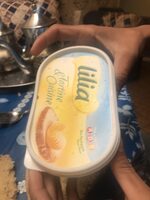 NOVA 4
 c NOVA 4
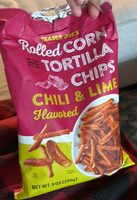 c NOVA 4
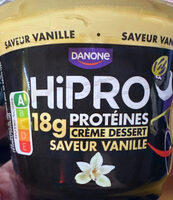 NOVA 4
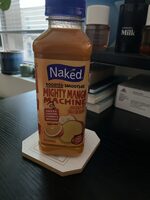 d NOVA 4
 e NOVA 4
 NOVA 4
 NOVA 4
 NOVA 4
 d NOVA 4
Beta-carotene-free alternatives
Popular products from the same categories that don't list Beta-carotene and score Nutri-Score A–C.
 c NOVA 4
 a NOVA 3
 a NOVA 4
 a NOVA 4
 c NOVA 4
How to spot Beta-carotene on a label
Look for any of these names in the ingredient list:
Related additives
Frequently asked questions
Is beta-carotene bad for you?
As a food colour, no regulator says so — EFSA concluded that use as a colour is not of safety concern provided total intake from additive and supplement use stays below about 15 mg a day. The harm that has been documented is different: beta-carotene supplements at 20 to 30 mg a day raised lung cancer risk in heavy smokers in two large trials. Among nonsmokers, the NIH states that beta-carotene supplements "do not appear to affect the risk of cancer."
Why is there no acceptable daily intake for beta-carotene?
Because the usual method does not work. The WHO/FAO expert committee withdrew its old figure of 0–5 mg/kg body weight in 2019 for two reasons: beta-carotene behaves too differently in rats to base a human limit on rat data, and any group figure would have to protect heavy smokers, for whom the needed human studies cannot ethically be done. The committee called it "very unlikely" that a group ADI can ever be set. EFSA also set no ADI and gave a practical 15 mg/day boundary instead.
Is beta-carotene the same as vitamin A?
No — it is a precursor. The NIH describes provitamin A carotenoids as plant pigments the body converts into vitamin A in the intestine, and the conversion is inefficient: 12 micrograms of dietary beta-carotene, or 2 micrograms from a supplement, count as 1 microgram of retinol activity equivalent. The tolerable upper intake level of 3,000 micrograms RAE for adults applies to preformed vitamin A, retinol and retinyl esters — not to beta-carotene, which has no upper level.
Will beta-carotene turn my skin orange?
A sustained large intake can. The NIH calls this carotenodermia, "a harmless condition in which the skin becomes yellow-orange," describes it as the most common effect of long-term excess beta-carotene, and notes that it reverses when the intake stops. It is associated with supplements or very carrot-heavy diets rather than with coloured foods.
Is beta-carotene natural or synthetic?
It can be either, and the label will not say. US regulation defines the colour additive as beta-carotene "prepared synthetically or obtained from natural sources" and requires no declaration of which. The natural sources named in EFSA's assessment are palm fruit oil, carrots and algae, and one form is made by fermenting a fungus. The molecule is the same in every case.
Is beta-carotene banned anywhere, or covered by the new state laws?
Not that we could find. It is permitted in the US, the EU and the UK, and it is not on FDA's post-market review list. It is also not named in the Texas or Louisiana warning-label laws of 2025. Those laws cover FDA-certified food colors as a category, and beta-carotene is exempt from certification, so that category does not include it.
What foods contain added beta-carotene?
Margarine and spreads, cheese and processed cheese, soft drinks and juice drinks, baked goods and cake mixes, confectionery, ice cream and desserts, and multivitamins where it is there as a vitamin A source rather than for colour. See the products and categories above for what is in our database.
Sources & references
- 21 CFR 73.95 — β-Carotene (color additive exempt from certification)
- EFSA (2012) — Scientific Opinion on the re-evaluation of mixed carotenes (E 160a (i)) and beta-carotene (E 160a (ii)) as a food additive
- EFSA (2012) — Statement on the safety of β-carotene use in heavy smokers, EFSA Journal 2012;10(12):2953
- JECFA (WHO database) — beta-Carotene (synthetic): group ADI withdrawn at the 87th meeting (2019)
- JECFA (WHO database) — Carotenes, mixed
- JECFA — Summary and conclusions of the 102nd meeting, Nanjing, 9–18 June 2026
- NIH Office of Dietary Supplements — Vitamin A and Carotenoids, Health Professional Fact Sheet
- UK Government — Approved additives and E numbers
- U.S. FDA — List of Select Chemicals in the Food Supply Under FDA Review
Product data: Open Food Facts (ODbL), updated daily. Additive information is for general education and is not medical advice. Always check the package label. Our methodology.