
Annatto (E160b)
Updated October 5, 2026
Annatto (E160b) is a yellow-to-orange color extracted from the seeds of the achiote tree. It colors cheddar, butter, snacks and cereals, and it is one of the main natural replacements for synthetic dyes. Regulators consider it safe; the one open question is norbixin intake at the very top of the range, not the color itself.
Quick facts
- Also known as
- Annatto extract, Bixin, Norbixin, E160b
- E-number
- E160b
- Function
- Colors
- US status
- Approved color additive, exempt from batch certification (21 CFR 73.30); not part of the FDA dye phase-out
- EU status
- Permitted, since 2020 as two separate additives: E 160b(i) annatto bixin and E 160b(ii) annatto norbixin
- Acceptable daily intake
- 6 mg bixin and 0.3 mg norbixin per kg of body weight per day (EFSA, 2016); JECFA: 12 mg bixin and 0.6 mg norbixin/kg
- Found in
- 17,297 products (11,773 sold in the US)
- Foodmetria concern level
- Low concern How we rate additives
What is Annatto?
Annatto is made from the seeds of Bixa orellana, the achiote tree of tropical America. The seeds have a brick-red coating that is extracted with oil, an alkaline solution or an approved food-grade solvent, and the result ranges from butter-yellow to deep orange depending on how it is processed.
Two different pigments come out of the same seed, and the distinction now matters legally:
- Bixin — oil-soluble, the form used in butter, cheese, margarine and oily snack coatings.
- Norbixin — the water-soluble form, produced by treating bixin with alkali, used in cheese, drinks, cereals and ice cream.
In 2020 the EU split the old single additive E160b into E 160b(i) annatto bixin and E 160b(ii) annatto norbixin, authorized five specific extract types and dropped three older ones for lack of data. The US has no such split: 21 CFR 73.30 covers "annatto extract" as one additive, exempt from batch certification.
Why is Annatto used in food?
Annatto is the reason most American cheddar is orange. Cheese made from summer milk is naturally more yellow than winter cheese, and from the 17th century onward producers added coloring to even the difference out; the convention stuck, and annatto became the standard. It does the same job in butter, margarine and processed cheese.
Beyond cheese it is used wherever a yellow-orange is wanted from a plant source — snack seasonings, cereals, baked goods, smoked fish, rice dishes. Because it carries a "natural" label claim and is cheap for a natural color, it is one of the first things manufacturers reach for when replacing Yellow 5 and Yellow 6. It is less light-stable than the synthetic dyes and shifts shade with pH, which is why reformulated products often look slightly different.
Is Annatto safe? What the research says
What regulators say. FDA permits annatto extract for coloring foods generally, under good manufacturing practice, and concluded that certifying individual batches is not needed to protect public health. EFSA re-evaluated it in 2016 and set two separate acceptable daily intakes: 6 mg of bixin per kg of body weight per day and 0.3 mg of norbixin per kg of body weight per day. Both came from 90-day toxicity studies, and the panel found no evidence of mutagenic, carcinogenic or reproductive toxicity for the extracts it assessed. The WHO/FAO expert committee set higher figures in 2006: 12 mg/kg for bixin and 0.6 mg/kg for norbixin.
The one real caveat is norbixin exposure. EFSA's exposure modelling found bixin intakes below the ADI for every population group and every scenario. For norbixin, the picture was tighter: intakes stayed within the limit for current uses, but an exceedance appeared at the 95th percentile in some population groups when the industry's requested extension of uses was modelled. The EU's response in 2020 was to separate the two additives and set use conditions for each rather than to restrict the color. The practical reading: the question is about how widely norbixin gets used, not about an effect found in people.
Allergy. Reactions to annatto have been reported as individual clinical cases, and annatto is sometimes named in popular lists of ingredients to avoid for that reason. The published evidence is thin — case reports rather than prevalence studies — and EFSA's 2016 opinion did not identify allergenicity as a basis for its conclusions. If you have reacted to a food colored with annatto, that is worth pursuing with an allergist; it is not a reason for the general population to avoid it.
Children's behavior. Annatto is not one of the colors in the EU's warning-label requirement, and it was not part of the 2007 Southampton study. The claim that it affects children's behavior the way synthetic dyes may is not supported by the evidence base that produced those rules.
Bottom line: annatto is one of the better-documented natural colors, with established intake limits and no toxicity signal. The concern level here is low, with the norbixin exposure question noted rather than ignored.
Annatto regulation: US vs EU
| Region | Status |
|---|---|
| United States | Permitted and exempt from batch certification (21 CFR 73.30). The color additive's own label must show that the color is derived from annatto seed. Not on the FDA dye phase-out tracker and not on FDA's post-market review list. |
| European Union | Permitted as two separate additives since Regulation (EU) 2020/771: E 160b(i) annatto bixin and E 160b(ii) annatto norbixin, with five authorized extract types; transition period ended January 2, 2021. |
| United Kingdom | Permitted under the same two entries as retained EU law. |
| Codex / JECFA | ADIs of 0–12 mg/kg bw for bixin and 0–0.6 mg/kg bw for norbixin and its sodium and potassium salts (2006). |
Annatto is approved on both sides of the Atlantic and is not part of the US move away from synthetic dyes. It does not appear on FDA's tracker of petroleum-based dyes being phased out, nor on FDA's list of chemicals under post-market review, nor in the state dye laws, which cover certified synthetic colors.
In the US it sits in 21 CFR part 73 — the colors exempt from certification — alongside paprika, turmeric, beta-carotene and the newly approved natural blues. The only labeling requirement specific to it applies to the color additive itself, whose label must show that the color comes from annatto seed; in a food ingredient list it normally appears as "annatto," "annatto extract" or "color added."
In the EU, the 2020 reform replaced the single E160b with two entries, E 160b(i) annatto bixin and E 160b(ii) annatto norbixin, each with its own authorized extract types and use conditions. Products made under the old rules could be sold until stocks ran out after the transition date of January 2, 2021.
Who should limit or avoid Annatto?
- People who have reacted to annatto-colored foods. Reports exist and are taken seriously individually, even though the overall evidence is limited to case reports. Testing with an allergist is more useful than elimination by guesswork.
- Anyone avoiding added color in cheese and dairy. White cheddar is the same cheese without annatto; "uncolored" or "white" on the label is doing exactly that job.
- People choosing products reformulated away from synthetic dyes. Annatto is frequently what replaces Yellow 5 and Yellow 6, so a dye-free claim often means annatto is present. That is a deliberate trade and worth knowing about.
- Vegans and vegetarians. Annatto is plant-derived and suitable for both.
Foods that commonly contain Annatto
Share of published products in each category whose ingredient list includes Annatto.
Popular products with Annatto
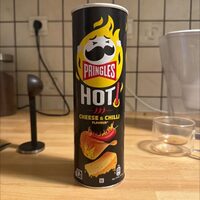 c NOVA 4
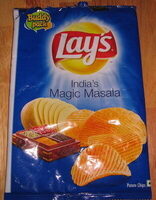 e NOVA 4
 d NOVA 4
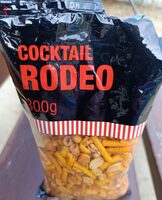 e NOVA 4
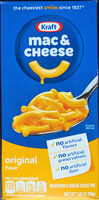 e NOVA 4
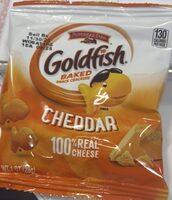 d NOVA 4
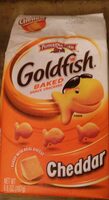 d NOVA 4
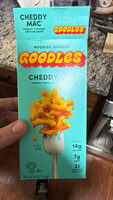 a NOVA 4
 e NOVA 4
 d NOVA 4
Annatto-free alternatives
Popular products from the same categories that don't list Annatto and score Nutri-Score A–C.
 b NOVA 4
 b NOVA 3
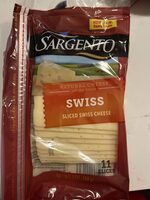 c NOVA 3
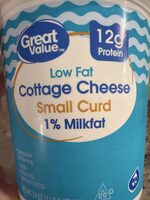 b NOVA 4
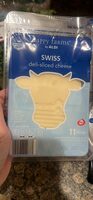 c NOVA 3
How to spot Annatto on a label
Look for any of these names in the ingredient list:
Related additives
Frequently asked questions
What is annatto made from?
The seeds of Bixa orellana, the achiote tree. The red seed coating is extracted with oil, alkali or an approved food-grade solvent. It is plant-derived, so it is vegan and vegetarian.
Why is cheddar cheese orange?
Because annatto is added. Cheese made from summer milk is naturally yellower than winter cheese, and producers started coloring it to make the product look consistent year-round. White cheddar is the same cheese without the color.
Is annatto safe?
Regulators consider it safe. EFSA set acceptable daily intakes of 6 mg of bixin and 0.3 mg of norbixin per kg of body weight in 2016 and found no mutagenic, carcinogenic or reproductive toxicity. The one flag was norbixin intake at the 95th percentile if its permitted uses were widened.
Can annatto cause allergies?
Individual allergic reactions to annatto have been reported in the clinical literature, but there is no good prevalence data, and EFSA's 2016 review did not treat allergenicity as a basis for its conclusions. If you suspect a reaction, see an allergist rather than assuming.
Is annatto banned in Europe?
No. It is permitted in the EU and the UK. Since 2020 it has been regulated as two additives, E 160b(i) bixin and E 160b(ii) norbixin, with separate conditions of use for each.
How much annatto is safe per day?
EFSA's limits are 6 mg of bixin per kg of body weight — about 180 mg for a 30 kg (66 lb) child and 420 mg for a 70 kg (154 lb) adult — and 0.3 mg of norbixin per kg, about 9 mg and 21 mg respectively. Labels do not state the amount used.
Is annatto a better choice than Yellow 5 or Yellow 6?
It avoids the issues specific to the synthetic dyes: annatto is not in the FDA phase-out, not on FDA's review list, and not covered by the EU warning label about children's activity and attention. It is not a health food, though — it is still a cosmetic ingredient in a processed product.
Sources & references
- 21 CFR 73.30 — Annatto extract
- EFSA (2016). Scientific Opinion on the safety of annatto extracts (E 160b) as a food additive. EFSA Journal 14(8):4544
- Commission Regulation (EU) 2020/771 of 11 June 2020 (splitting E 160b into annatto bixin and annatto norbixin)
- JECFA — Annatto extracts, evaluation summary (bixin 0–12 mg/kg bw; norbixin 0–0.6 mg/kg bw, 2006)
- 21 CFR part 73, subpart A — color additives exempt from certification for food use
- U.S. FDA — Tracking Food Industry Pledges to Remove Petroleum Based Food Dyes
Product data: Open Food Facts (ODbL), updated daily. Additive information is for general education and is not medical advice. Always check the package label. Our methodology.