
Blue 1 (Brilliant Blue FCF, E133)
Updated October 5, 2026
Blue 1 (Brilliant Blue FCF, E133) is a synthetic blue dye used in candy, frosting, sports drinks and ice cream. EFSA and the WHO expert committee both set its acceptable daily intake at 6 mg per kg of body weight and consider normal use safe. It is one of six dyes FDA has asked manufacturers to drop by the end of 2027, and four natural blue replacements are now approved in the US.
Quick facts
- Also known as
- FD&C Blue No. 1, Blue 1 Lake, Brilliant Blue FCF, E133
- E-number
- E133
- Function
- Colors
- US status
- Approved color additive (FD&C Blue No. 1), batch-certified; FDA asks manufacturers to phase it out voluntarily, with a target of the end of 2027
- EU status
- Permitted as E133; no warning label is required
- Acceptable daily intake
- 6 mg per kg of body weight per day (EFSA 2010, JECFA 2017)
- Found in
- 23,626 products (20,003 sold in the US)
- Foodmetria concern level
- Moderate concern How we rate additives
What is Blue 1?
Blue 1 is a synthetic triarylmethane dye made from petroleum-derived chemicals. It gives the bright, slightly greenish blue you see in candy shells, blue frosting, sports drinks and novelty ice cream, and it is sold as FD&C Blue No. 1 in the US and Brilliant Blue FCF (E133) in Europe.
It is a different chemical family from Red 40, Yellow 5 and Yellow 6, which are azo dyes. Like them, Blue 1 comes as a water-soluble powder and as an insoluble "lake" for coatings, and US law requires FDA to certify every batch before sale (21 CFR 74.101 and part 80).
Why is Blue 1 used in food?
Blue is the hardest color to get from food. Very few plants give a stable blue pigment, and the ones that do lose it quickly in acid or heat. Blue 1 is intense, cheap and stable, and it mixes with yellow dyes to make the greens used in candy and drinks — which is why a product can contain Blue 1 and look green rather than blue.
That is now changing. FDA has approved four natural blue color additives for food, all exempt from batch certification: butterfly pea flower extract, galdieria extract blue, gardenia (genipin) blue and jagua (genipin-glycine) blue (21 CFR 73.69, 73.167, 73.168 and 73.225). They are more expensive and more sensitive to pH and heat, but for the first time there is a real menu of replacements.
Is Blue 1 safe? What the research says
What regulators say. FDA lists Blue 1 as a permitted color additive for foods generally. EFSA re-evaluated it in 2010 and set an acceptable daily intake of 6 mg per kg of body weight per day, derived from a no-effect level of 631 mg/kg in a long-term rat study with a 100-fold safety margin. That was a reduction from the earlier limit of 10 mg/kg. The WHO/FAO expert committee reached the same figure in 2017, working from the same rat study — so unusually for a food dye, the two main bodies now agree on the number.
Exposure. EFSA's answer depended on how the estimate was made. Using actual reported use levels, intakes stayed below the ADI for everyone. Using the cruder method based on permitted maximum levels, intake for children at the 95th percentile came out above the ADI. The practical reading: typical use is well inside the limit, and the plausible worry is children who eat a lot of brightly colored products, not the general population.
The enteral-feeding reports. Blue 1 has a genuine safety history that is often quoted out of context. For about thirty years, hospitals added the dye to tube-feeding formula so staff could spot aspiration. In a public health advisory on September 29, 2003, FDA reported 20 cases of blue discoloration and serious complications, including 12 deaths, mostly in patients who had sepsis and a compromised gut barrier, and told practitioners to stop the practice. In that same advisory FDA noted that for the dye's ordinary use as a food color, "there have been no reports of toxicity associated with this general use." These were critically ill patients receiving dye directly into the gut, not people eating colored candy — the distinction matters.
Children's behavior. Blue 1 was not one of the colors in the 2007 Southampton study, and the EU does not require a warning label for E133. The broader review by California's OEHHA in 2021 did conclude that synthetic food dyes as a class can cause or worsen neurobehavioral problems in some children; Blue 1 was among the dyes considered.
Cancer. No regulatory body classifies Blue 1 as a carcinogen.
Bottom line: within normal intakes, both EFSA and JECFA consider Blue 1 safe, and its most serious documented harm came from a hospital practice that no longer exists. The reason to avoid it is usually the company it keeps — heavily processed, brightly colored products.
Blue 1 regulation: US vs EU
| Region | Status |
|---|---|
| United States | Permitted (21 CFR 74.101); every batch, including lakes, must be FDA-certified and the dye must be named in the ingredient list. Targeted for voluntary industry phase-out (FDA target: end of 2027) and listed under FDA post-market review with the status "risk management action." |
| California | AB 2316 bars Blue 1 and five other dyes from food served or sold in public schools from December 31, 2027. |
| West Virginia | HB 2354 restricts seven dyes including Blue 1 in school nutrition programs (in effect since August 1, 2025); the statewide retail ban due January 1, 2028 is paused by a preliminary injunction issued December 23, 2025, now on appeal. |
| Texas | SB 25 would require a warning label on foods containing certified colors for labels developed from January 1, 2027; enforcement of that requirement was preliminarily enjoined on February 11, 2026 and the state appealed on March 5, 2026. |
| European Union | Permitted as E133. No warning label is required — E133 is not one of the six colours covered by the children's activity and attention statement. |
| United Kingdom | Permitted as E133 under the same rules. |
Blue 1 is not banned in the United States. On April 22, 2025, HHS and FDA announced a plan to work with industry to remove six petroleum-based dyes, Blue 1 among them, from the US food supply; FDA's tracker, updated September 15, 2026, gives the target as the end of 2027. The phase-out is voluntary and the authorization stands. Blue 1 also appears on FDA's list of chemicals under post-market review with the status "risk management action."
In the states: California's AB 2316 bars six dyes including Blue 1 from food served or sold in public schools from December 31, 2027. West Virginia's HB 2354 restricts seven dyes including Blue 1 in school nutrition programs, in effect since August 1, 2025; its statewide retail ban, due January 1, 2028, is paused by a preliminary injunction from December 2025, now on appeal. Texas SB 25 would require a warning label on foods containing certified colors from January 1, 2027, but a federal court blocked enforcement of that section in February 2026 and the state has appealed.
In the EU, Blue 1 is permitted as E133 and — unlike Yellow 5, Yellow 6 and Red 40 — carries no warning label, because it was not part of the Southampton mixtures that prompted that requirement. Check the latest status: the US picture is changing quickly.
In context: which additives are really banned in Europe but allowed in the US.
Who should limit or avoid Blue 1?
- Children who eat a lot of brightly colored products. This is the one group EFSA's cruder exposure estimate flagged as possibly going over the ADI. It is an argument for fewer dyed snacks rather than for alarm.
- People who have had allergic-type reactions to food dyes. Reactions to Blue 1 are rare but reported; if dyed foods have caused you hives or swelling, reading labels for "Blue 1" and "Blue 1 Lake" is the practical step.
- Patients fed by feeding tube, and their caregivers. Blue dye should not be added to enteral formula. FDA advised against it in 2003 and the practice has been abandoned.
- Anyone cutting back on ultra-processed food. Blue 1 is almost exclusively found in highly processed products, so avoiding it usually improves the overall diet as a side effect.
Foods that commonly contain Blue 1
Share of published products in each category whose ingredient list includes Blue 1.
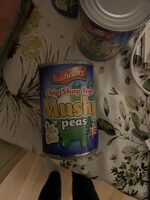
Popular products with Blue 1
 e NOVA 4
 NOVA 4
 c NOVA 4
 NOVA 4
 d NOVA 4
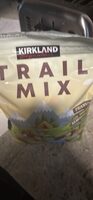 d NOVA 4
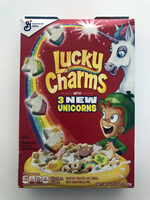 d NOVA 4
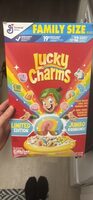 d NOVA 4
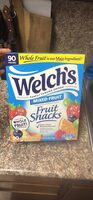 d NOVA 4
 a NOVA 4
Blue 1-free alternatives
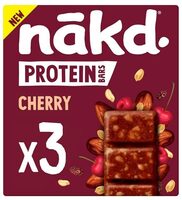
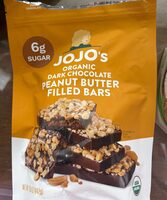
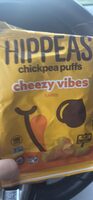
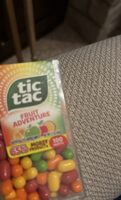
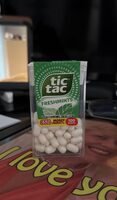
Popular products from the same categories that don't list Blue 1 and score Nutri-Score A–C.
 c NOVA 4
 c NOVA 4
 c NOVA 4
 a NOVA 4
 a NOVA 4
Popular foods without Blue 1
Shortlists by category, checked against each product's ingredient list.
How to spot Blue 1 on a label
Look for any of these names in the ingredient list:
Related additives
Frequently asked questions
Is Blue 1 banned in Europe?
No. It is permitted in the EU and the UK as E133. It also does not need the warning label that Red 40, Yellow 5 and Yellow 6 carry there, because Blue 1 was not one of the colours tested in the 2007 Southampton study.
Is Blue 1 being banned in the US?
Not banned. FDA asked manufacturers to stop using it voluntarily, with a target of the end of 2027, and it is on FDA's post-market review list. Some states restrict it in school food, and Texas would require a warning label from 2027 if its law survives a court challenge.
Did Blue 1 cause deaths?
Not as a food color. In 2003 FDA reported 20 cases, including 12 deaths, among hospital patients whose tube-feeding formula had been tinted with Blue 1 — mostly people with sepsis and a damaged gut barrier. FDA told practitioners to stop and noted that no toxicity had been reported from the dye's ordinary use in food.
Is Blue 1 bad for kids?
Regulators consider it safe within the acceptable daily intake. EFSA's conservative exposure estimate did find that children at the 95th percentile of intake could exceed the limit, and California's OEHHA concluded in 2021 that synthetic dyes can worsen neurobehavioral problems in some children. Fewer dyed snacks is the sensible response.
How much Blue 1 is safe per day?
The ADI is 6 mg per kg of body weight — about 180 mg for a 30 kg (66 lb) child and 420 mg for a 70 kg (154 lb) adult. US labels do not say how much dye is present, only that it is there.
Is Blue 1 vegan?
Blue 1 is synthetic and not animal-derived, so it is generally considered vegan. Some vegans avoid it because synthetic dyes have been tested on animals. Note that a blue or green product may instead contain carmine-based shades mixed in, which are insect-derived.
What is a natural alternative to Blue 1?
FDA has approved four: butterfly pea flower extract, galdieria extract blue, gardenia (genipin) blue and jagua (genipin-glycine) blue. Spirulina extract gives a blue-green. All are less stable than the synthetic dye in acidic drinks and at high heat.
Sources & references
- 21 CFR 74.101 — FD&C Blue No. 1
- 21 CFR part 73, subpart A — color additives exempt from certification for food use (butterfly pea flower extract, galdieria extract blue, gardenia blue, jagua blue)
- EFSA (2010). Scientific Opinion on the re-evaluation of Brilliant Blue FCF (E 133) as a food additive. EFSA Journal 8(11):1853
- JECFA — Brilliant Blue FCF, evaluation summary (ADI 0–6 mg/kg bw, 84th meeting, 2017)
- U.S. FDA (September 29, 2003). Public Health Advisory: Reports of Blue Discoloration and Death in Patients Receiving Enteral Feedings Tinted With the Dye FD&C Blue No. 1
- U.S. FDA — Tracking Food Industry Pledges to Remove Petroleum Based Food Dyes
- U.S. FDA — List of Select Chemicals in the Food Supply Under FDA Review
- California OEHHA (2021). Health Effects Assessment: Potential Neurobehavioral Effects of Synthetic Food Dyes in Children
- HHS (April 22, 2025). HHS, FDA to Phase Out Petroleum-Based Synthetic Dyes in Nation's Food Supply
- Beveridge & Diamond — Food Litigation Watch: State Ingredient Warnings, Color Additive Bans, and "Ultra-Processed" Claims
Product data: Open Food Facts (ODbL), updated daily. Additive information is for general education and is not medical advice. Always check the package label. Our methodology.