
Yellow 5 (Tartrazine, E102)
Updated September 21, 2026
Yellow 5, or tartrazine, is a synthetic lemon-yellow dye made from petroleum-derived chemicals and one of the most-used colors in US food. Regulators consider it safe within the acceptable daily intake, but it is the one dye US law requires to be named on the label, because a small number of people react to it; the EU requires a warning about children's attention, and FDA has asked manufacturers to phase it out.
Quick facts
- Also known as
- FD&C Yellow No. 5, Yellow 5 Lake, Tartrazine, E102
- E-number
- E102
- Function
- Colors
- US status
- Approved color additive (FD&C Yellow No. 5), batch-certified; must be named on the label; targeted for voluntary phase-out and under FDA post-market review
- EU status
- Permitted as E 102 with a mandatory warning label about children's activity and attention
- Acceptable daily intake
- 7.5 mg per kg of body weight per day (EFSA, 2009)
- Found in
- 24,072 products (22,563 sold in the US)
- Foodmetria concern level
- Moderate concern How we rate additives
What is Yellow 5?
Yellow 5 is an azo dye — a synthetic color built from petroleum-derived chemicals — that produces a clear lemon-to-canary yellow. In the US it is FD&C Yellow No. 5; in Europe and most of the rest of the world it is tartrazine (E 102).
Like other certified colors it comes in two forms: a water-soluble dye for drinks, gelatins and syrups, and an aluminum-bound lake (Yellow 5 Lake) for coatings, frostings and candy shells where the color must not bleed. Every batch sold in the US must pass FDA batch certification for purity.
One rule sets Yellow 5 apart from every other food color in the US: it cannot hide behind "artificial color." FDA regulations require it to be declared by name in the ingredient list — even in butter, cheese and ice cream, which are otherwise exempt from naming colors.
Why is Yellow 5 used in food?
Yellow 5 is cheap, extremely stable in light, heat and acid, and intensely colored, so a very small quantity produces a vivid, consistent shade. It shows up in soft drinks and sports drinks, candy, boxed macaroni and cheese, chips and snack foods, pickles, cake mixes, gelatin desserts, condiments and cereals — and it is frequently blended with Blue 1 to make green or with Red 40 to make orange.
The natural substitutes are turmeric (curcumin), annatto, beta-carotene and safflower. They cost more, can shift flavor, and fade faster — which is why reformulated products often look softer or more mustard-toned than the originals.
Is Yellow 5 safe? What the research says
What regulators say. FDA lists Yellow 5 as a permitted, batch-certified color additive. EFSA re-evaluated tartrazine in 2009 and concluded the data gave no reason to revise the acceptable daily intake of 7.5 mg per kg of body weight set by its predecessor committee.
Intolerance reactions. This is the distinctive issue with Yellow 5. EFSA's 2009 opinion concluded that tartrazine "appears to be able to elicit intolerance reactions in a small fraction of the exposed population," and — importantly — that sensitive individuals may react at doses within the ADI. Reported reactions are hives, swelling and in some cases asthma symptoms. This is why US drug labeling rules require prescription products containing Yellow 5 to warn that it may cause allergic-type reactions including bronchial asthma in susceptible people, noting that such sensitivity is uncommon but occurs more often in people who are also sensitive to aspirin. The same reasoning is behind the food-labeling requirement to name the dye.
Hyperactivity in children. Tartrazine was one of the seven additives in the 2007 Southampton study (McCann et al., The Lancet), where mixtures of synthetic colors plus sodium benzoate increased hyperactive behavior in some 3- and 8–9-year-old children. EFSA found the effects small, inconsistent between the two mixtures and age groups, and impossible to attribute to any single additive, so it did not change the ADI — but the EU did add a mandatory warning label to Yellow 5 and five other colors. In 2021 California's Office of Environmental Health Hazard Assessment reviewed the wider evidence and concluded synthetic dyes can cause or worsen neurobehavioral problems in some children.
Cancer. Yellow 5 is not classified as a carcinogen by FDA, EFSA or IARC. FDA's purity specifications and batch certification address concerns about contaminants in the dye itself.
Bottom line: for most people, normal amounts are considered safe by regulators. The people with a concrete reason to avoid it are the small group who react to it, and parents of children who seem sensitive to dyes — for whom a dye-free trial is a reasonable, low-risk experiment.
Yellow 5 regulation: US vs EU
| Region | Status |
|---|---|
| United States | Permitted (21 CFR 74.705); every batch must be FDA-certified and the dye must be named in the ingredient list. Targeted for voluntary industry phase-out (FDA target: end of 2027) and listed under FDA post-market review. |
| European Union | Permitted as E 102. Since 2010, foods containing it must say: "may have an adverse effect on activity and attention in children." |
| United Kingdom | Permitted with the same warning label; many manufacturers reformulated voluntarily. |
| California | AB 2316 bars Yellow 5 and five other dyes from food served or sold in public schools from December 31, 2027. |
| West Virginia | HB 2354 restricts seven dyes including Yellow 5 in school nutrition programs (in effect since August 1, 2025); the statewide retail ban due January 1, 2028 is blocked by a preliminary injunction issued December 23, 2025. |
| Texas | SB 25 requires a warning label on foods containing listed ingredients, for labels developed from January 1, 2027; enforcement against plaintiff trade associations was preliminarily enjoined in February 2026. |
| Canada | Permitted as tartrazine; must be named on the label. |
Yellow 5 is in the middle of the most active period of US color regulation in decades, but it is not banned. On April 22, 2025, HHS and FDA announced a plan to work with industry to remove six petroleum-based dyes — Yellow 5 among them — from the US food supply; FDA's own tracker, updated in September 2026, now gives the target as the end of 2027 and lists 28 companies and trade associations that have made commitments. The phase-out is voluntary: FDA has not revoked the authorization for Yellow 5, which also appears on FDA's list of chemicals under post-market review.
States have moved faster, and the courts have pushed back. West Virginia's HB 2354 bans seven dyes including Yellow 5 from retail sale beginning January 1, 2028, but a federal court blocked that part of the law in December 2025; the separate school-nutrition restriction has been in effect since August 1, 2025. California's AB 2316 bars six dyes including Yellow 5 from school food starting December 31, 2027. Texas SB 25 requires warning labels on products whose labels are developed from January 1, 2027, and a federal court limited its enforcement in February 2026. Check the latest status: this is changing quickly.
Who should limit or avoid Yellow 5?
- People who react to tartrazine. A small fraction of the population reports hives, swelling or asthma symptoms, and EFSA noted reactions can occur at doses within the ADI. Because US law requires Yellow 5 to be named, this group can actually avoid it reliably.
- People with aspirin sensitivity. US drug labeling notes that tartrazine sensitivity, while uncommon, is seen more often in this group.
- Children with ADHD or who seem to react to dyes. A short dye-free trial is low-risk and reasonable; discuss it with your pediatrician rather than making a permanent diagnosis from it.
- Anyone cutting back on ultra-processed food. Yellow 5 is concentrated in candy, soft drinks, snack foods and boxed mixes, so avoiding it tends to improve the overall diet as a side effect.
Foods that commonly contain Yellow 5
Share of published products in each category whose ingredient list includes Yellow 5.
Popular products with Yellow 5
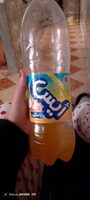 e NOVA 4
 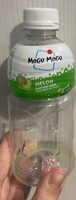 e NOVA 4
 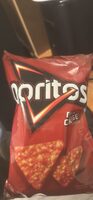 d NOVA 4
 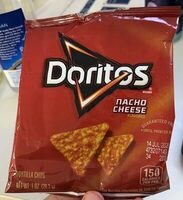 c NOVA 4
 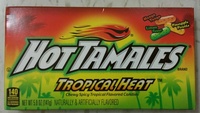 e NOVA 4
 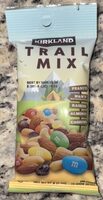 b NOVA 4
 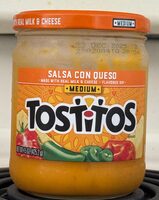 d NOVA 4
  d NOVA 4
 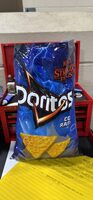 d NOVA 4
 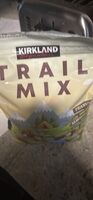 d NOVA 4
 Yellow 5-free alternatives
Popular products from the same categories that don't list Yellow 5 and score Nutri-Score A–C.
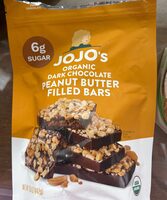 c NOVA 4
 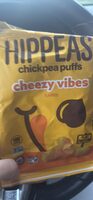 c NOVA 4
 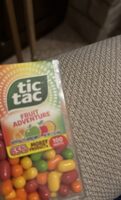 a NOVA 4
 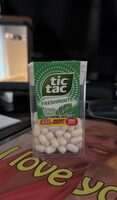 a NOVA 4
 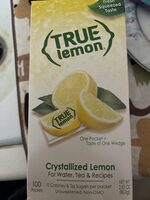 a NOVA 3
 How to spot Yellow 5 on a label
Look for any of these names in the ingredient list:
Related additives
Frequently asked questions
Is Yellow 5 banned in Europe?
No. It is permitted as E 102, but foods containing it must carry a warning that it "may have an adverse effect on activity and attention in children." Many European manufacturers switched to natural colors to avoid printing that line.
Why does the US label have to say "FD&C Yellow No. 5"?
Because a small number of people get allergic-type reactions to it. FDA requires the dye to be declared by name in the ingredient list — including in butter, cheese and ice cream, which do not otherwise have to name their colors — so that people who react to it can avoid it.
Is Yellow 5 bad for kids?
Regulators consider it safe within the acceptable daily intake. The 2007 Southampton trial found that mixtures of synthetic dyes plus sodium benzoate increased hyperactivity in some children, which is why the EU added a warning label. If you notice a reaction, a dye-free trial is a reasonable step.
Does Yellow 5 cause cancer or infertility?
No regulator classifies Yellow 5 as a carcinogen, and there is no confirmed effect on human fertility — that claim traces back to old animal studies that regulators reviewed and did not find sufficient to change the acceptable daily intake.
How much Yellow 5 is safe per day?
EFSA's ADI is 7.5 mg per kg of body weight: about 225 mg for a 30 kg (66 lb) child and 525 mg for a 70 kg (154 lb) adult. US labels name the dye but do not state the amount.
Is Yellow 5 vegan, halal and gluten-free?
Yellow 5 is synthetic and contains no animal ingredients or gluten, so it is generally considered vegan, halal and gluten-free. Some vegans avoid synthetic dyes because they have been tested on animals.
What is a natural alternative to Yellow 5?
Turmeric (curcumin), annatto, safflower, beta-carotene and, for deeper tones, paprika extract. They are less stable in light and can add their own flavor, which is why reformulated products often look paler.
Sources & references
- 21 CFR 74.705 — FD&C Yellow No. 5 (eCFR)
- 21 CFR 201.20 — Declaration of presence of FD&C Yellow No. 5 in certain drugs for human use (eCFR)
- EFSA (2009). Scientific Opinion on the re-evaluation of Tartrazine (E 102). EFSA Journal 7(11):1331
- McCann D. et al. (2007). Food additives and hyperactive behaviour in 3-year-old and 8/9-year-old children in the community. The Lancet 370:1560–1567
- California OEHHA (2021). Health Effects Assessment: Potential Neurobehavioral Effects of Synthetic Food Dyes in Children
- HHS (April 22, 2025). HHS, FDA to Phase Out Petroleum-Based Synthetic Dyes in Nation's Food Supply
- U.S. FDA — Tracking Food Industry Pledges to Remove Petroleum Based Food Dyes
- U.S. FDA — List of Select Chemicals in the Food Supply Under FDA Review
- National Agricultural Law Center — Preliminary Injunction Halts Enforcement of West Virginia's Food Dye Ban
Product data: Open Food Facts (ODbL), updated daily. Additive information is for general education and is not medical advice. Always check the package label. Our methodology.