
Skinless Chicken Fillet vs Tiras pollo
Neither product is clearly better overall — it depends on what matters most to you.
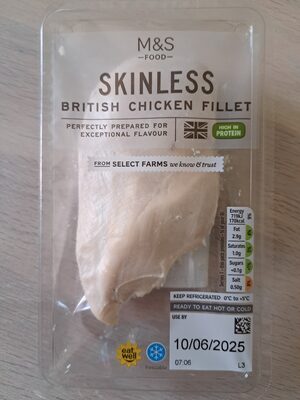
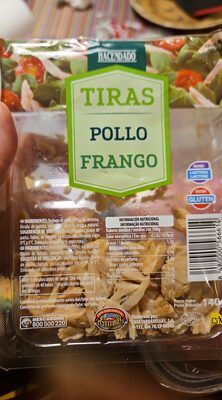
Nutrition per 100 g
| Nutrient | Skinless Chicken Fillet | Tiras pollo |
|---|---|---|
| Nutri-Score | — | b |
| NOVA group | — | 4 |
| Calories | 136 kcal | 107 kcal |
| Fat | 2.3 g | 1.2 g |
| Saturated fat | 0.8 g | 0.4 g |
| Sugars | 0.1 g | 0.6 g |
| Salt | 0.9 g | 1.8 g |
| Fiber | 0 g | 0 g |
| Protein | 28.8 g | 23.4 g |
| Additives | 0 | 0 |
| Allergens | None listed | None listed |
Green = better value for that nutrient (less sugar, fat, salt and calories; more fiber and protein).
Key differences
- Tiras pollo has 21% fewer calories (107 kcal vs 136 kcal).
- Tiras pollo has 48% less fat (1.2 g vs 2.3 g).
- Tiras pollo has 50% less saturated fat (0.4 g vs 0.8 g).
- Skinless Chicken Fillet has 83% less sugar (0.1 g vs 0.6 g).
- Skinless Chicken Fillet has 48% less salt (0.9 g vs 1.8 g).
- Skinless Chicken Fillet has 19% more protein (28.8 g vs 23.4 g).
Ingredients
Skinless Chicken Fillet
Chicken Breast (97%) Lemon Juice. Sea Salt - Chicken Stock. Deliciously healthy food eat, Best enjoyed as part of a healthy well lifestyle & a balanced varied diet. Protein contributes to the maintenance of muscle mass. Made in the UK with M&S assured chicken from farms in the UK SC4694 © M&S plc PO Box 3339 CH99 9QS UK M&S (Ireland) Ltd PO Box 13022 Dublin 2 Ireland GB HU216 TRAY Recycle FILM Do Not Recycle NOT FOR EU 125geM 2945 0572 S
Tiras pollo
Pechuga de pollo (99%), sal, dextrosa, fécula de patata, pimienta, perejil, aroma natural,
FAQ
Which is healthier: Skinless Chicken Fillet or Tiras pollo?
Neither product is clearly better overall — it depends on what matters most to you. We compare Nutri-Score, processing level and seven nutrients per 100 g. Your own needs (for example low sugar or high protein) may make a different choice better for you.
Which has fewer calories?
Tiras pollo has fewer calories: 107 kcal versus 136 kcal per 100 g.
Which has less sugar?
Skinless Chicken Fillet has less sugar: 0.1 g versus 0.6 g per 100 g.