
Sandwich jambon serrano vs Rosca Serrana
Overall, Sandwich jambon serrano has the better nutritional profile on the measures we compare. It wins on 6 of our comparison points versus 1.
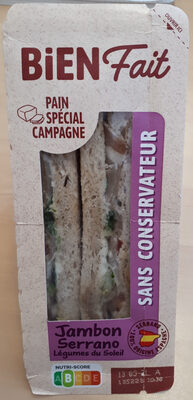
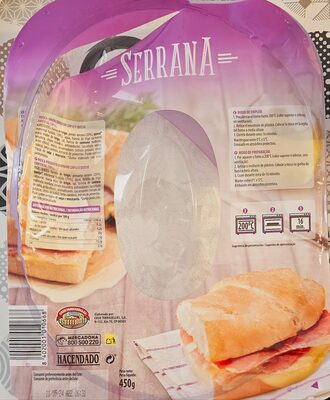
Nutrition per 100 g
| Nutrient | Sandwich jambon serrano | Rosca Serrana |
|---|---|---|
| Nutri-Score | c | d |
| NOVA group | — | 4 |
| Calories | 230 kcal | 259 kcal |
| Fat | 8.6 g | 8.2 g |
| Saturated fat | 1 g | 4.2 g |
| Sugars | 1 g | 1.5 g |
| Salt | 1.5 g | 2.1 g |
| Protein | 9.6 g | 15.5 g |
| Additives | 0 | 5 |
| Allergens | None listed | None listed |
Green = better value for that nutrient (less sugar, fat, salt and calories; more fiber and protein).
Key differences
- Sandwich jambon serrano has 11% fewer calories (230 kcal vs 259 kcal).
- Sandwich jambon serrano has 76% less saturated fat (1 g vs 4.2 g).
- Sandwich jambon serrano has 33% less sugar (1 g vs 1.5 g).
- Sandwich jambon serrano has 28% less salt (1.5 g vs 2.1 g).
- Rosca Serrana has 38% more protein (15.5 g vs 9.6 g).
- Sandwich jambon serrano has the better Nutri-Score.
Ingredients
Sandwich jambon serrano
Not available.
Rosca Serrana
Farinha de trigo, presunto serrano (20%), queijo* emmental fundido (19%), água, farinha de trigo sarraceno, massa mãe de trigo, sal, farinha de centeio malteada, levedura, citrato trissódico, antioxidantes (ascorbato de sódio, ácido cítrico), aromatizante, conservantes (nitrato de potássio, nitrito de sódio), beta-caroteno, extrato de pimentão. Pode conter vestígios de soja e mostarda. *Queijo produzido com leite pasteurizado.
FAQ
Which is healthier: Sandwich jambon serrano or Rosca Serrana?
Overall, Sandwich jambon serrano has the better nutritional profile on the measures we compare. We compare Nutri-Score, processing level and seven nutrients per 100 g. Your own needs (for example low sugar or high protein) may make a different choice better for you.
Which has fewer calories?
Sandwich jambon serrano has fewer calories: 230 kcal versus 259 kcal per 100 g.
Which has less sugar?
Sandwich jambon serrano has less sugar: 1 g versus 1.5 g per 100 g.