
Salty Mango vs Multivitamin
Neither product is clearly better overall — it depends on what matters most to you.
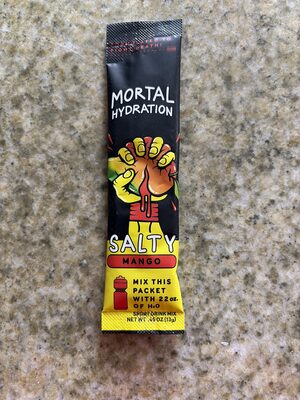
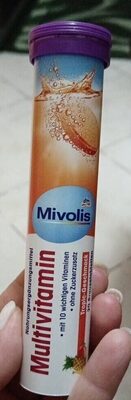
Nutrition per 100 g
| Nutrient | Salty Mango | Multivitamin |
|---|---|---|
| Nutri-Score | — | — |
| NOVA group | 4 | 4 |
| Calories | 281 kcal | 75 kcal |
| Fat | 0 g | 0.5 g |
| Saturated fat | 0 g | 0.3 g |
| Sugars | 50 g | 0.5 g |
| Salt | 14.4 g | 19.1 g |
| Fiber | 0 g | — |
| Protein | 0 g | 0.5 g |
| Additives | 3 | 6 |
| Allergens | None listed | None listed |
Green = better value for that nutrient (less sugar, fat, salt and calories; more fiber and protein).
Key differences
- Multivitamin has 73% fewer calories (75 kcal vs 281 kcal).
- Salty Mango has no fat, while Multivitamin has 0.5 g.
- Salty Mango has no saturated fat, while Multivitamin has 0.3 g.
- Multivitamin has 99% less sugar (0.5 g vs 50 g).
- Salty Mango has 25% less salt (14.4 g vs 19.1 g).
- Multivitamin has 100% more protein (0.5 g vs 0 g).
Ingredients
Salty Mango
evaporated cane syrup, dextrose, trisodium citrate, citric acid, natural flavors, salt, tripotassium citrate, calcium lactate pentahydrate, magnesium glycinate, stevia rebaudioside a, beta carotene
Multivitamin
Säuerungsmittel Citronensäure, Säureregulator Natriumhydrogencarbonat, Füllstoff Sorbit, Maisstärke, Aromen, L-Ascor - binsäure (Vitamin C), Rote-Bete-Pulver, Maltodextrin, Süßungsmittel Natriumcyclamat und Natriumsaccharin, DL-a-Tocopheryl - acetat (Vitamin E), Nicotinamid, Calcium-D-pantothenat, Pyridoxinhydrochlorid (Vitamin B6), Farbstoff Riboflavin, Riboflavin (Vita - min B2), Thiaminmononitrat (Vitamin B1), Pteroylmonoglutaminsäure (Folsäure), D-Biotin, Cyanocobalamin (Vitamin B12).
FAQ
Which is healthier: Salty Mango or Multivitamin?
Neither product is clearly better overall — it depends on what matters most to you. We compare Nutri-Score, processing level and seven nutrients per 100 g. Your own needs (for example low sugar or high protein) may make a different choice better for you.
Which has fewer calories?
Multivitamin has fewer calories: 75 kcal versus 281 kcal per 100 g.
Which has less sugar?
Multivitamin has less sugar: 0.5 g versus 50 g per 100 g.