
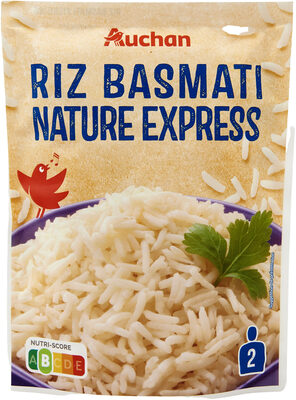
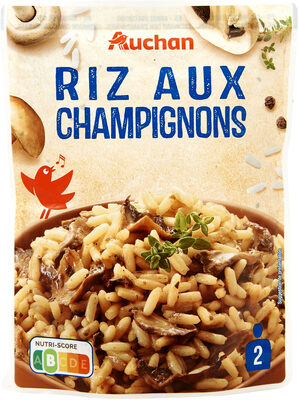
Riz basmati nature express vs Riz aux champignons
Overall, Riz basmati nature express has the better nutritional profile on the measures we compare. It wins on 5 of our comparison points versus 1.
Nutrition per 100 g
| Nutrient | Riz basmati nature express | Riz aux champignons |
|---|---|---|
| Nutri-Score | b | c |
| NOVA group | — | 4 |
| Calories | 159 kcal | 159 kcal |
| Fat | 2 g | 3.4 g |
| Saturated fat | 0.3 g | 0.4 g |
| Sugars | 0.5 g | 0.5 g |
| Salt | 0.4 g | 0.9 g |
| Fiber | 1.3 g | 1.7 g |
| Protein | 3.8 g | 3.2 g |
| Additives | 0 | 0 |
| Allergens | None listed | None listed |
Green = better value for that nutrient (less sugar, fat, salt and calories; more fiber and protein).
Key differences
- Riz basmati nature express has 41% less fat (2 g vs 3.4 g).
- Riz basmati nature express has 55% less salt (0.4 g vs 0.9 g).
- Riz aux champignons has 24% more fiber (1.7 g vs 1.3 g).
- Riz basmati nature express has 16% more protein (3.8 g vs 3.2 g).
- Riz basmati nature express has the better Nutri-Score.
Ingredients
Riz basmati nature express
Riz Basmati étuvé précuit 98% (eau, riz basmati étuvé), huile de tournesol, sel. Origine du riz Basmati, voir la lettre en fin du n° de lot : I pour Inde et P pour Pakistan.
Riz aux champignons
Riz précuit 61% (riz, eau), eau, champignons de Paris égouttés 8%, huile de colza, oignons, herbes aromatiques, sel, oignon grillé, bolets, arômes naturels, champignons de Paris en poudre. Traces éventuelles de crustacés, poissons, soja, céleri, moutarde, lait, céréales contenant du gluten. Pourcentages exprimés sur le total de la recette.
FAQ
Which is healthier: Riz basmati nature express or Riz aux champignons?
Overall, Riz basmati nature express has the better nutritional profile on the measures we compare. We compare Nutri-Score, processing level and seven nutrients per 100 g. Your own needs (for example low sugar or high protein) may make a different choice better for you.
Which has fewer calories?
Riz basmati nature express has fewer calories: 159 kcal versus 159 kcal per 100 g.
Which has less sugar?
Riz basmati nature express has less sugar: 0.5 g versus 0.5 g per 100 g.