
Korma spice paste vs Balti Paste 283G
Neither product is clearly better overall — it depends on what matters most to you.
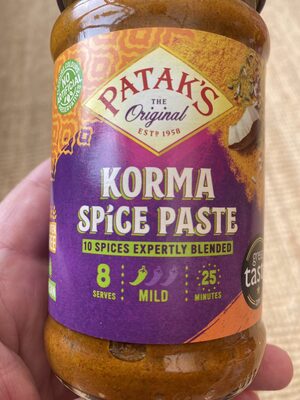
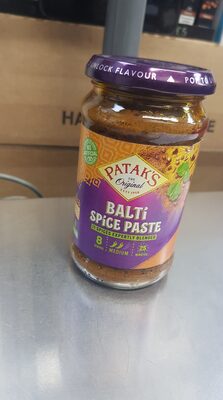
Nutrition per 100 g
| Nutrient | Korma spice paste | Balti Paste 283G |
|---|---|---|
| Nutri-Score | e | — |
| NOVA group | 3 | — |
| Calories | 229 kcal | 277 kcal |
| Fat | 15.5 g | 22.7 g |
| Saturated fat | 2.6 g | 1.6 g |
| Sugars | 9.2 g | 1.4 g |
| Salt | 4.8 g | 4.7 g |
| Fiber | 6 g | — |
| Protein | 3.1 g | 2.9 g |
| Additives | 1 | 2 |
| Allergens | Mustard | None listed |
Green = better value for that nutrient (less sugar, fat, salt and calories; more fiber and protein).
Key differences
- Korma spice paste has 17% fewer calories (229 kcal vs 277 kcal).
- Korma spice paste has 32% less fat (15.5 g vs 22.7 g).
- Balti Paste 283G has 38% less saturated fat (1.6 g vs 2.6 g).
- Balti Paste 283G has 85% less sugar (1.4 g vs 9.2 g).
- Only Korma spice paste lists: Mustard.
Ingredients
Korma spice paste
water, ground spices (12%) [coriander (4%), turmeric, spices, paprika, cumin, fenugreek], rapeseed oil (11%), sugar, oconcentrated tomato purée (5%), salt, maize flour, p ginger purée, garlic purée, 2desiccated coconut (3%), acid (acetic acid), dried ponion, mustard powder, dried coriander leaf,
Balti Paste 283G
water, rapeseed oil (20%), ground spices (16%) [cumin (3,5%), paprika (3,5%), turmeric, coriander, spices, fennel, maize flour, salt, acids (acetic acid, citric acid), tamarind, cracked black pepper, garlic powder (0,5%), cracked coriander seed, dried crushed red chilli, black kalonji seed, dried coriander leaf.
FAQ
Which is healthier: Korma spice paste or Balti Paste 283G?
Neither product is clearly better overall — it depends on what matters most to you. We compare Nutri-Score, processing level and seven nutrients per 100 g. Your own needs (for example low sugar or high protein) may make a different choice better for you.
Which has fewer calories?
Korma spice paste has fewer calories: 229 kcal versus 277 kcal per 100 g.
Which has less sugar?
Balti Paste 283G has less sugar: 1.4 g versus 9.2 g per 100 g.