
Farigraines vs Oaties
Overall, Farigraines has the better nutritional profile on the measures we compare. It wins on 3 of our comparison points versus 2.
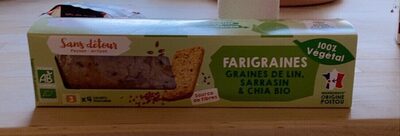
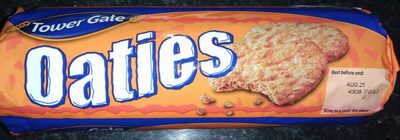
Nutrition per 100 g
| Nutrient | Farigraines | Oaties |
|---|---|---|
| Nutri-Score | d | d |
| NOVA group | 3 | 4 |
| Calories | 480 kcal | 476 kcal |
| Fat | 21 g | 20 g |
| Saturated fat | 2.2 g | 9 g |
| Sugars | 19 g | 22.8 g |
| Salt | 0.7 g | 0 g |
| Fiber | 5.3 g | 4.8 g |
| Protein | 6 g | 6.9 g |
| Additives | 2 | 1 |
| Allergens | Gluten | Gluten |
Green = better value for that nutrient (less sugar, fat, salt and calories; more fiber and protein).
Key differences
- Farigraines has 75% less saturated fat (2.2 g vs 9 g).
- Farigraines has 17% less sugar (19 g vs 22.8 g).
- Oaties has no salt, while Farigraines has 0.7 g.
- Oaties has 13% more protein (6.9 g vs 6 g).
- Farigraines is less processed (lower NOVA group).
Ingredients
Farigraines
Farine de blé** biscuitier T65 (origine Poitou), huile de tournesol** de 1ère pression à froid (origine Poitou), sucre de canne roux*, flocons d'avoine* (origine France), farine complète de seigle (origine Poitou), farine complète d'orge** (origine Poitou), graines de lin brun** (origine Poitou), graines de sarrasin** décortiquées (origine Poitou), jus de citron*, graines de chia**-Salvia hispanica - (origine Poitou), sel marin de l'Île de Ré (origine France), bicarbonate de sodium, graines de pavot** (origine Poitou)
Oaties
41% Oat Flakes, Sugar, Palm Oil, Wheat Flour (Wheat Flour, Calcium Carbonate, Iron, Niacin, Thiamin), Wholemeal Wheat Flour, Invert Sugar Syrup, Sodium Carbonates, Ammonium Carbonates, Salt, Flavouring. May also contain Milk.
FAQ
Which is healthier: Farigraines or Oaties?
Overall, Farigraines has the better nutritional profile on the measures we compare. We compare Nutri-Score, processing level and seven nutrients per 100 g. Your own needs (for example low sugar or high protein) may make a different choice better for you.
Which has fewer calories?
Oaties has fewer calories: 476 kcal versus 480 kcal per 100 g.
Which has less sugar?
Farigraines has less sugar: 19 g versus 22.8 g per 100 g.