
Crackers Protéiné vs Crackers Pocket
Overall, Crackers Protéiné has the better nutritional profile on the measures we compare. It wins on 6 of our comparison points versus 2.
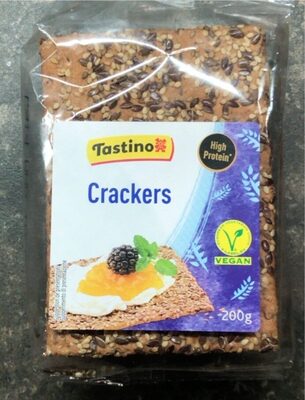

Nutrition per 100 g
| Nutrient | Crackers Protéiné | Crackers Pocket |
|---|---|---|
| Nutri-Score | c | e |
| NOVA group | 4 | 3 |
| Calories | 488 kcal | 476 kcal |
| Fat | 30.8 g | 21 g |
| Saturated fat | 3.5 g | 8.5 g |
| Sugars | 1 g | 3 g |
| Salt | 1.3 g | 1.5 g |
| Fiber | 13.9 g | 3.5 g |
| Protein | 34.4 g | 10 g |
| Additives | 0 | 0 |
| Allergens | Gluten, Sesame seeds, Soybeans | Soybeans |
Green = better value for that nutrient (less sugar, fat, salt and calories; more fiber and protein).
Key differences
- Crackers Pocket has 32% less fat (21 g vs 30.8 g).
- Crackers Protéiné has 59% less saturated fat (3.5 g vs 8.5 g).
- Crackers Protéiné has 67% less sugar (1 g vs 3 g).
- Crackers Protéiné has 75% more fiber (13.9 g vs 3.5 g).
- Crackers Protéiné has 71% more protein (34.4 g vs 10 g).
- Crackers Protéiné has the better Nutri-Score.
- Crackers Pocket is less processed (lower NOVA group).
- Only Crackers Protéiné lists: Gluten, Sesame seeds.
Ingredients
Crackers Protéiné
30% graines oléagineuses (graines de lin, graines de sésame, graines de tournesol), gluten de blé, 13% tourteau de soja, huile de colza, 6% protéines de soja, farine de blé complet, son de blé, levure, eau, farine de froment de gonflement, extrait de malt d'orge, sel, fibres de pomme, farine de malt de blé. Traces éventuelles de lait.
Crackers Pocket
maize starch, soya flour, palm oil, rice flour, potato starch, sugar, salt, yeast, may also contain sesame,
FAQ
Which is healthier: Crackers Protéiné or Crackers Pocket?
Overall, Crackers Protéiné has the better nutritional profile on the measures we compare. We compare Nutri-Score, processing level and seven nutrients per 100 g. Your own needs (for example low sugar or high protein) may make a different choice better for you.
Which has fewer calories?
Crackers Pocket has fewer calories: 476 kcal versus 488 kcal per 100 g.
Which has less sugar?
Crackers Protéiné has less sugar: 1 g versus 3 g per 100 g.