
Chow mein with dried seaweed laver vs Coconut And Chilli Ramen
Overall, Coconut And Chilli Ramen has the better nutritional profile on the measures we compare. It wins on 4 of our comparison points versus 2.
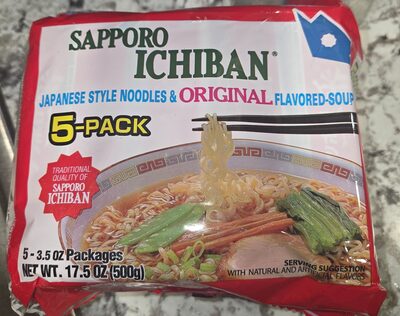
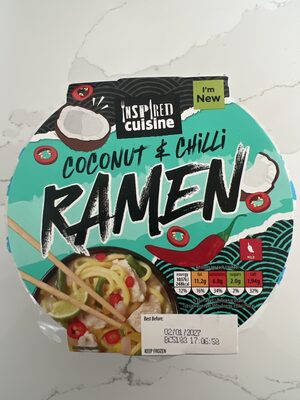
Nutrition per 100 g
| Nutrient | Chow mein with dried seaweed... | Coconut And Chilli Ramen |
|---|---|---|
| Nutri-Score | e | — |
| NOVA group | 4 | 4 |
| Calories | 500 kcal | 69 kcal |
| Fat | 24.5 g | 3.1 g |
| Saturated fat | 11.8 g | 1.9 g |
| Sugars | 3.9 g | 0.6 g |
| Salt | 4.7 g | — |
| Fiber | 2.9 g | 1.2 g |
| Protein | 8.8 g | 4.8 g |
| Additives | 14 | 0 |
| Allergens | Gluten, Soybeans, Sulphur dioxide and sulphites | Gluten, Soybeans |
Green = better value for that nutrient (less sugar, fat, salt and calories; more fiber and protein).
Key differences
- Coconut And Chilli Ramen has 86% fewer calories (69 kcal vs 500 kcal).
- Coconut And Chilli Ramen has 87% less fat (3.1 g vs 24.5 g).
- Coconut And Chilli Ramen has 84% less saturated fat (1.9 g vs 11.8 g).
- Coconut And Chilli Ramen has 86% less sugar (0.6 g vs 3.9 g).
- Chow mein with dried seaweed laver has 58% more fiber (2.9 g vs 1.2 g).
- Chow mein with dried seaweed laver has 46% more protein (8.8 g vs 4.8 g).
- Only Chow mein with dried seaweed laver lists: Sulphur dioxide and sulphites.
Ingredients
Chow mein with dried seaweed laver
Oriental noodles: enriched wheat flour (wheat flour, niacin, reduced iron, thiamine mononitrate, riboflavin, folic acid), palm oil (tbhq and citric acid added to protect flavor), salt, sodium carbonate, sugar, monosodium glutamate, tocopherols, potassium carbonate. powdered seasoning: sugar, salt, caramel color (contains sulfites), monosodium glutamate, worcestershire sauce powder ([distilled vinegar, molasses, corn syrup, salt, caramel color, garlic powder, sugar, spices, tamarind, natural flavor and sulfiting agents], maltodextrin, silicon dioxide), vinegar powder (modified corn starch, maltodextrin, vinegar solids), maltodextrin, soy sauce powder (soy sauce [water, wheat, soybeans, salt], maltodextrin, salt), sodium diacetate, citric acid, tomato powder, spices, calcium carbonate, corn oil, corn starch, annatto (for color), disodium inosinate, disodium guanylate, disodium succinate, artificial flavor. dried seaweed: laver.
Coconut And Chilli Ramen
COCONUT & CHILLI SAUCE (56%) [Water, Coconut Milk (Coconut Extract, Purified Water), Coconut Flakes, Soy Sauce (Water, Salt, Soybeans, Wheat Flour), Rapeseed Oil, Modified Maize Starch, Rice Wine (Water, Glutinous Rice, Wheat), Ginger Purée, Chicken Bouillon (Salt, Yeast Extract, Dried Glucose Syrup, Sugar, Flavouring, Onion Powder, Carrot Powder, Leek Powder, Rapeseed Oil, Sage Powder, Turmeric Powder, White Pepper, Garlic Powder), Crushed Chillies], COOKED CHICKEN BREAST (14%) (Chicken Breast, Salt), COOKED NOODLES (14%) (Water, Durum Wheat Semolina, Salt, Sunflower Oil, Turmeric Powder), Green Beans, Red Onions, Yellow Peppers. ALLERGY ADVICE:
FAQ
Which is healthier: Chow mein with dried seaweed laver or Coconut And Chilli Ramen?
Overall, Coconut And Chilli Ramen has the better nutritional profile on the measures we compare. We compare Nutri-Score, processing level and seven nutrients per 100 g. Your own needs (for example low sugar or high protein) may make a different choice better for you.
Which has fewer calories?
Coconut And Chilli Ramen has fewer calories: 69 kcal versus 500 kcal per 100 g.
Which has less sugar?
Coconut And Chilli Ramen has less sugar: 0.6 g versus 3.9 g per 100 g.