
Asian Dumplings in a Savory Hoisin Sauce vs King prawn gyoza
Neither product is clearly better overall — it depends on what matters most to you.
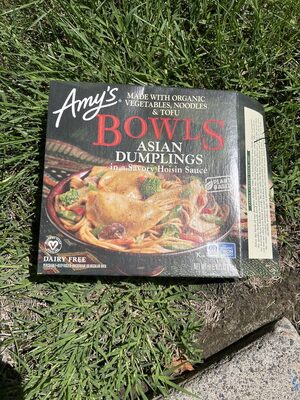
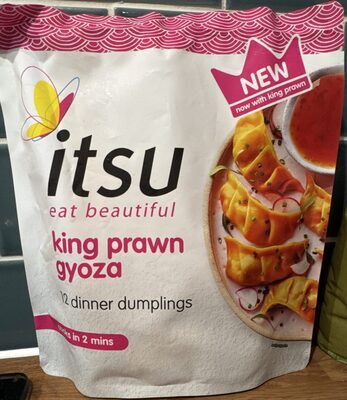
Nutrition per 100 g
| Nutrient | Asian Dumplings in a Savory... | King prawn gyoza |
|---|---|---|
| Nutri-Score | c | c |
| NOVA group | 3 | 4 |
| Calories | 149 kcal | 174 kcal |
| Fat | 5.4 g | 4.1 g |
| Saturated fat | 0.6 g | 1.3 g |
| Sugars | 4.2 g | 1.8 g |
| Salt | 1 g | 1 g |
| Fiber | 2.1 g | 1.9 g |
| Protein | 5.8 g | 7.9 g |
| Additives | 0 | 0 |
| Allergens | Celery, Gluten, Sesame seeds, Soybeans | Crustaceans, Gluten, Sesame seeds, Soybeans |
Green = better value for that nutrient (less sugar, fat, salt and calories; more fiber and protein).
Key differences
- Asian Dumplings in a Savory Hoisin Sauce has 14% fewer calories (149 kcal vs 174 kcal).
- King prawn gyoza has 24% less fat (4.1 g vs 5.4 g).
- Asian Dumplings in a Savory Hoisin Sauce has 52% less saturated fat (0.6 g vs 1.3 g).
- King prawn gyoza has 57% less sugar (1.8 g vs 4.2 g).
- King prawn gyoza has 26% more protein (7.9 g vs 5.8 g).
- Asian Dumplings in a Savory Hoisin Sauce is less processed (lower NOVA group).
- Only Asian Dumplings in a Savory Hoisin Sauce lists: Celery.
- Only King prawn gyoza lists: Crustaceans.
Ingredients
Asian Dumplings in a Savory Hoisin Sauce
organic pasta (organic semolina, organic whole durum wheat flour, water), organic vegetable dumplings (organic unbleached wheat flour, [filtered water, organic cabbage, organic carrots, organic onions, organic kale, organic tofu [filtered water, organic soybeans, magnesium chloride], organic mushrooms, organic tamari [water, organic soybeans, organic alcohol (to preserve freshness), salt], organic high oleic safflower and/or sunflower oil, organic celery, organic cornstarch, organic ginger puree [filtered water, organic ginger], organic garlic, organic toasted sesame seed oil, organic cilantro, organic brown rice vinegar [filtered water, organic brown rice, salt, koji spores), sea salt, organic black pepper), organic tofu (filtered water, organic soybeans, magnesium chloride), organic broccoli, organic green beans, organic tamari (water, organic soybeans, organic alcohol [to preserve freshness], salt), organic carrots, organic miso (organic soybeans, organic rice, sea salt, water, koji spores), organic mushrooms, expeller pressed high oleic safflower and/or sunflower oil, organic cane sugar, organic bell peppers, filtered water, organic cilantro, organic brown rice vinegar (filtered water, organic brown rice, salt, koji spores), organic garlic, spices, black pepper,
King prawn gyoza
gyoza filling (61%) (prawn¹ (Litopenaeus vannamei) (crustacean) (41%), cabbage (18%), onion (7%), wheat flour, carrot (4%), chives (3%), ginger, breadcrumb (wheat flour, yeast, sugar, salt), water chestnut, soya bean oil, red chilli (2%), sesame oil, soy sauce [water, soya beans, wheat, salt], garlic, sugar, salt, shallot, white pepper), gyoza skin (wheat flour, water, red chilli extract*, tapioca starch, wheat gluten, salt, soya bean oil). Allergy advice: for allergens, including cereals containing gluten, see ingredients in bold. May contain fish and mollusc. *Used to give the gyoza its orange colour. ¹Made with responsibly sourced prawns
FAQ
Which is healthier: Asian Dumplings in a Savory Hoisin Sauce or King prawn gyoza?
Neither product is clearly better overall — it depends on what matters most to you. We compare Nutri-Score, processing level and seven nutrients per 100 g. Your own needs (for example low sugar or high protein) may make a different choice better for you.
Which has fewer calories?
Asian Dumplings in a Savory Hoisin Sauce has fewer calories: 149 kcal versus 174 kcal per 100 g.
Which has less sugar?
King prawn gyoza has less sugar: 1.8 g versus 4.2 g per 100 g.