
Titanium dioxide (E171)
Updated September 18, 2026
Titanium dioxide (E171) is a white mineral pigment used to make candy coatings, frosting and some baked goods look bright white. The EU banned it in food in 2022 because EFSA could not rule out that its particles damage DNA. The FDA, Canada, the UK and Australia reviewed the same evidence and still allow it; a US petition to revoke it is pending.
Quick facts
- Also known as
- TiO2, Color (titanium dioxide), E171, CI 77891
- E-number
- E171
- Function
- Colors
- US status
- Approved color additive, up to 1% of the food by weight (21 CFR 73.575); a 2023 petition to revoke it is under FDA review
- EU status
- Banned as a food additive since 2022
- Acceptable daily intake
- None set by EFSA (genotoxicity could not be ruled out); "not specified" by JECFA
- Found in
- 10,712 products (8,511 sold in the US)
- Foodmetria concern level
- Moderate concern How we rate additives
What is Titanium dioxide?
Titanium dioxide is a naturally occurring mineral that is purified and ground into a fine white powder. The food grade (E171) is chemically the same compound used in paint, sunscreen and toothpaste, but it has its own purity rules for food.
A notable feature of food-grade titanium dioxide is its particle size: EFSA reported that up to about half of the particles in E171 can be nanoparticles (smaller than 100 nanometers). That detail is at the center of the safety debate.
Why is Titanium dioxide used in food?
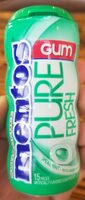
It is used purely for appearance. Titanium dioxide makes foods opaque and bright white, and it makes other colors on top of it look more vivid. You'll find it most often in candy shells and coated chocolates, frosting and cake decorations, chewing gum, coffee creamers and some dressings.
It has no taste and no nutritional role. Manufacturers who remove it switch to other whitening ingredients or accept a slightly less white product.
Is Titanium dioxide safe? What the research says
Why the EU banned it. In May 2021, EFSA's food additives panel concluded that titanium dioxide "can no longer be considered safe" as a food additive. Very little is absorbed from the gut, but particles can build up in the body, and the panel could not rule out genotoxicity — the ability to damage DNA. Because genotoxicity has no known safe threshold, EFSA did not set an acceptable daily intake. EFSA also said there was no conclusive proof of harm; the decision was precautionary.
Why other regulators disagree. The UK's Committee on Toxicity (2022), Health Canada (2022) and Food Standards Australia New Zealand reviewed EFSA's opinion and concluded the evidence does not show a health concern at dietary levels. In November 2023 the WHO/FAO expert committee (JECFA) reaffirmed an acceptable daily intake "not specified" — its lowest-concern category — finding no convincing evidence of genotoxicity from dietary exposure, while noting gaps in the data on nanoparticles.
Where that leaves you. No study has shown that titanium dioxide in food causes disease in people. The disagreement is about how much uncertainty is acceptable for an ingredient that is purely cosmetic. Since it adds nothing but whiteness, avoiding it costs little.
Titanium dioxide regulation: US vs EU
| Region | Status |
|---|---|
| United States | Permitted up to 1% by weight (21 CFR 73.575), exempt from batch certification. 2023 petition to revoke is under FDA review. |
| European Union | Banned as a food additive: Regulation (EU) 2022/63, applied from 7 August 2022 after a six-month transition. |
| United Kingdom | Still permitted; the Committee on Toxicity did not agree with EFSA's conclusions (2022). |
| Canada | Permitted; Health Canada found no conclusive evidence of a health concern (2022). |
| Australia / New Zealand | Permitted; FSANZ found no evidence of a concern from dietary exposure. |
The FDA says titanium dioxide in food is safe under current rules. In April 2023, the Environmental Defense Fund and other groups petitioned the FDA to revoke its approval; the FDA has said it is reviewing the petition, and no decision had been announced as of September 2026. California considered banning it in its 2023 Food Safety Act (AB 418), but titanium dioxide was removed from the bill before it passed. Check the latest status: this petition could be decided at any time.
Who should limit or avoid Titanium dioxide?
- Anyone who prefers a precautionary approach. Titanium dioxide is cosmetic, so choosing products without it has no nutritional downside.
- Parents. Children tend to get the highest exposure because it is common in candy, gum and brightly decorated sweets.
- There are no known allergies or intolerances specific to titanium dioxide.
Foods that commonly contain Titanium dioxide
Share of published products in each category whose ingredient list includes Titanium dioxide.
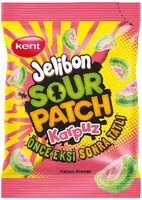
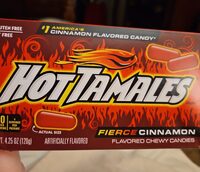
Popular products with Titanium dioxide
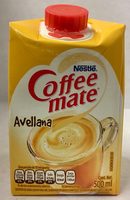 NOVA 4
 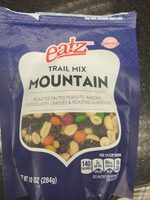 e NOVA 4
 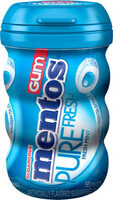 NOVA 4
  e NOVA 4
 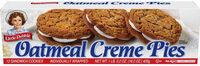 e NOVA 4
  NOVA 4
  NOVA 4
  NOVA 4
  NOVA 4
  e NOVA 4
 Titanium dioxide-free alternatives
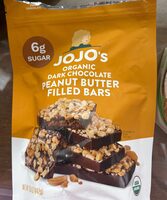
Popular products from the same categories that don't list Titanium dioxide and score Nutri-Score A–C.
 c NOVA 4
  c NOVA 4
  b NOVA 4
  a NOVA 4
  a NOVA 4
 How to spot Titanium dioxide on a label
Look for any of these names in the ingredient list:
Related additives
Frequently asked questions
Is titanium dioxide banned in the US?
No. It is an approved color additive in the US, limited to 1% of the food by weight. A petition asking the FDA to revoke that approval has been under review since 2023.
Why did Europe ban titanium dioxide?
In 2021 EFSA concluded that it could no longer be considered safe because a risk of DNA damage (genotoxicity) could not be ruled out, especially for nanoparticles. The EU ban took full effect in August 2022.
Is titanium dioxide bad for kids?
There is no proof it harms children, but children usually have the highest intake because it is common in candy and gum. Regulators disagree about the level of uncertainty, so limiting it is a reasonable precaution.
Is the titanium dioxide in food the same as in sunscreen?
It is the same compound, but food-grade E171 has its own purity specifications. Swallowing it and applying it to skin are assessed separately.
What foods contain titanium dioxide?
Mostly candy with a hard shell, coated chocolates, frosting and cake decorations, chewing gum, coffee creamers and some dressings. See the products and categories above for what is in our database.
Is titanium dioxide vegan?
Yes. It is a mineral and is not derived from animals.
How do I avoid titanium dioxide?
Check the ingredient list for "titanium dioxide", "color (titanium dioxide)" or "E171". Many brands sold in Europe already use versions without it.
Sources & references
- U.S. FDA — Titanium Dioxide as a Color Additive in Foods
- 21 CFR 73.575 — Titanium dioxide
- Federal Register (May 3, 2023). Filing of Color Additive Petition From Environmental Defense Fund, et al.; Request To Revoke Color Additive Listing for Use of Titanium Dioxide in Food
- EFSA (May 6, 2021). Titanium dioxide: E171 no longer considered safe when used as a food additive
- EFSA (2021). Safety assessment of titanium dioxide (E171) as a food additive. EFSA Journal 19(5):6585
- Commission Regulation (EU) 2022/63 (titanium dioxide, E 171)
- JECFA (November 2023). Risk assessment of titanium dioxide released
- Food Standards Australia New Zealand — Review of titanium dioxide as a food additive
Product data: Open Food Facts (ODbL), updated daily. Additive information is for general education and is not medical advice. Always check the package label. Our methodology.