
Raviolis Chinois au porc vs 4 Banh bao poulet teriyaki
Overall, 4 Banh bao poulet teriyaki has the better nutritional profile on the measures we compare. It wins on 7 of our comparison points versus 1.
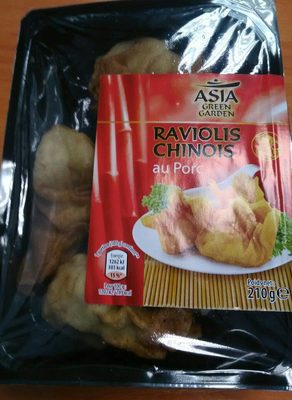
Raviolis Chinois au porc
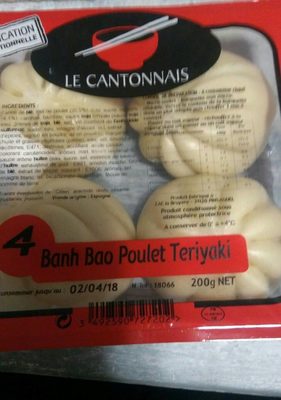
4 Banh bao poulet teriyaki
Nutrition per 100 g
| Nutrient | Raviolis Chinois au porc | 4 Banh bao poulet teriyaki |
|---|---|---|
| Nutri-Score | e | c |
| NOVA group | 4 | 4 |
| Calories | 289 kcal | 202 kcal |
| Fat | 18 g | 1.8 g |
| Saturated fat | 4.5 g | 0.7 g |
| Sugars | 3.8 g | 8 g |
| Salt | 2.4 g | 1 g |
| Fiber | — | 3.3 g |
| Protein | 6.8 g | 9.3 g |
| Additives | 3 | 10 |
| Allergens | Fish, Gluten, Soybeans | Gluten, Molluscs, Soybeans, Sulphur dioxide and sulphites |
Green = better value for that nutrient (less sugar, fat, salt and calories; more fiber and protein).
Key differences
- 4 Banh bao poulet teriyaki has 30% fewer calories (202 kcal vs 289 kcal).
- 4 Banh bao poulet teriyaki has 90% less fat (1.8 g vs 18 g).
- 4 Banh bao poulet teriyaki has 84% less saturated fat (0.7 g vs 4.5 g).
- Raviolis Chinois au porc has 53% less sugar (3.8 g vs 8 g).
- 4 Banh bao poulet teriyaki has 58% less salt (1 g vs 2.4 g).
- 4 Banh bao poulet teriyaki has 27% more protein (9.3 g vs 6.8 g).
- 4 Banh bao poulet teriyaki has the better Nutri-Score.
- Only Raviolis Chinois au porc lists: Fish.
- Only 4 Banh bao poulet teriyaki lists: Molluscs, Sulphur dioxide and sulphites.
Ingredients
Raviolis Chinois au porc
Raviolis au porc (6 x 30 g) : eau, farine de blé, gorge de porc 12% (origine: UE), champignon de Paris (champignon, eau, sel, acidifiant : acide citrique, antioxydant : acide ascorbique), huile de tournesol, morceau de tête de porc 5,5% (origine : UE), gras de porc 5,5%, carotte, sucre, sel, ciboule, fibre de blé, ail, antioxydant : extraits de romarin, persil, poivre, arômes naturels. Pourcentages exprimés sur le ravioli. Sauce nuoc-mâm (1 x 30g ) : eau, sucre, vinaigre d'alcool, sel, nuoc-mâm 1,6% (poisson, sel, eau), sauce soja (eau, graines de soja, sel, farine de blé).
4 Banh bao poulet teriyaki
Farine de blé, filet de poulet (20,5%), eau, sucre, oignons (4,1%), carottes, bambou, sauce soja teriyaki (sauce soja eau, graines de soja, blé, sel), vin (contient de l'anhydride sulfureux), sucre, eau, vinaigre d'alcool, sel, extrait d'épices, oignon en poudre, ail en poudre), margarine (huile et graisse végétales (palme), eau, sel, émulsifiants lécithines, E471, dextrose, acidifiant: acide citrique colorant: caroténoïdes, arôme), miel, levure boulangère, sauce arôme huître (eau, sucre, sel, essence de saveur d’huître, exhausteur de goût: E621, amidon modifié, farine de blé, extrait de levure, colorant: E150c, arôme), sel, vinaigre blanc, ail, bicarbonate de sodium, fécule de pomme de terre.
FAQ
Which is healthier: Raviolis Chinois au porc or 4 Banh bao poulet teriyaki?
Overall, 4 Banh bao poulet teriyaki has the better nutritional profile on the measures we compare. We compare Nutri-Score, processing level and seven nutrients per 100 g. Your own needs (for example low sugar or high protein) may make a different choice better for you.
Which has fewer calories?
4 Banh bao poulet teriyaki has fewer calories: 202 kcal versus 289 kcal per 100 g.
Which has less sugar?
Raviolis Chinois au porc has less sugar: 3.8 g versus 8 g per 100 g.