
Pasta carbonara vs Spaghetti carbonara
Neither product is clearly better overall — it depends on what matters most to you.
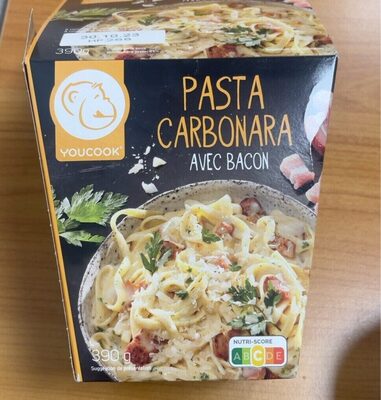
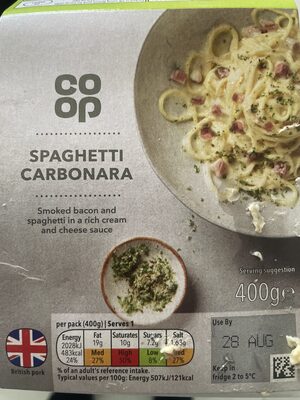
Nutrition per 100 g
| Nutrient | Pasta carbonara | Spaghetti carbonara |
|---|---|---|
| Nutri-Score | c | c |
| NOVA group | — | 4 |
| Calories | 167 kcal | 194 kcal |
| Fat | 8.4 g | 6.1 g |
| Saturated fat | 3.9 g | 3.1 g |
| Sugars | 0.9 g | 2.6 g |
| Salt | 0.6 g | 0.5 g |
| Fiber | 1.6 g | 1.2 g |
| Protein | 6 g | 8.3 g |
| Additives | 0 | 4 |
| Allergens | None listed | Gluten, Milk, Pork |
Green = better value for that nutrient (less sugar, fat, salt and calories; more fiber and protein).
Key differences
- Pasta carbonara has 14% fewer calories (167 kcal vs 194 kcal).
- Spaghetti carbonara has 27% less fat (6.1 g vs 8.4 g).
- Spaghetti carbonara has 22% less saturated fat (3.1 g vs 3.9 g).
- Pasta carbonara has 65% less sugar (0.9 g vs 2.6 g).
- Pasta carbonara has 23% more fiber (1.6 g vs 1.2 g).
- Spaghetti carbonara has 27% more protein (8.3 g vs 6 g).
- Only Spaghetti carbonara lists: Gluten, Milk, Pork.
Ingredients
Pasta carbonara
Not available.
Spaghetti carbonara
Cooked Spaghetti (37%) (Water, Durum Wheat Semolina), Milk, Smoked Bacon (9%) (Pork, Salt, Sugar, Stabiliser (Disodium diphosphate), Antioxidant (Sodium ascorbate), Preservative (Sodium nitrite)), Water, Single Cream (Milk), Medium Fat Hard Cheese (Milk) (4%), Medium Fat Soft Cheese (Milk) (3%), Crème Fraîche (Milk), Garlic Purée, Cornflour, Wheat Flour (Wheat Flour, Calcium carbonate, Iron, Niacin, Thiamin), Salt, Black Pepper. 8% Pork. Allergy Advice
FAQ
Which is healthier: Pasta carbonara or Spaghetti carbonara?
Neither product is clearly better overall — it depends on what matters most to you. We compare Nutri-Score, processing level and seven nutrients per 100 g. Your own needs (for example low sugar or high protein) may make a different choice better for you.
Which has fewer calories?
Pasta carbonara has fewer calories: 167 kcal versus 194 kcal per 100 g.
Which has less sugar?
Pasta carbonara has less sugar: 0.9 g versus 2.6 g per 100 g.