
King Prawns vs Prawn cocktail
Overall, King Prawns has the better nutritional profile on the measures we compare. It wins on 7 of our comparison points versus 0.
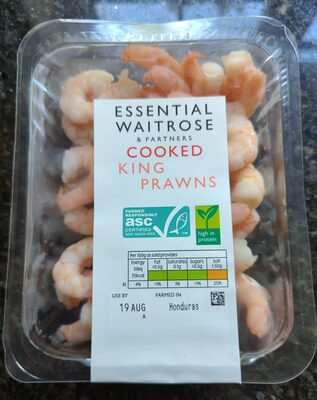
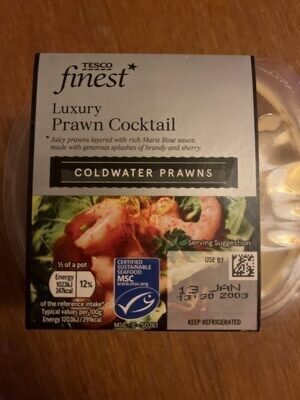
Nutrition per 100 g
| Nutrient | King Prawns | Prawn cocktail |
|---|---|---|
| Nutri-Score | a | d |
| NOVA group | — | 3 |
| Calories | 75 kcal | 285 kcal |
| Fat | 0.5 g | 25.7 g |
| Saturated fat | 0.1 g | 2.8 g |
| Sugars | 0.5 g | 2.2 g |
| Salt | 1.5 g | 1.2 g |
| Fiber | 0.5 g | 0.7 g |
| Protein | 17.4 g | 10 g |
| Additives | 0 | 0 |
| Allergens | Crustaceans | Crustaceans, Eggs, Milk, Mustard |
Green = better value for that nutrient (less sugar, fat, salt and calories; more fiber and protein).
Key differences
- King Prawns has 74% fewer calories (75 kcal vs 285 kcal).
- King Prawns has 98% less fat (0.5 g vs 25.7 g).
- King Prawns has 96% less saturated fat (0.1 g vs 2.8 g).
- King Prawns has 77% less sugar (0.5 g vs 2.2 g).
- King Prawns has 43% more protein (17.4 g vs 10 g).
- King Prawns has the better Nutri-Score.
- Only Prawn cocktail lists: Eggs, Milk, Mustard.
Ingredients
King Prawns
King prawns (Penaeus vannamel) (crustaceans) (99%), salt
Prawn cocktail
Prawn (Crustacean) (54%), Rapeseed Oil, Double Cream (Milk), Pasteurised Egg Yolk, Sugar, Salt, Tomato Paste, Brandy, Sherry, Worcestershire Sauce [Water, Sugar, Spirit Vinegar, Molasses, Onion Purée, Salt, Tamarind Paste, Clove, Ginger Purée, Garlic Puréel, Spirit Vinegar, Concentrated Lemon Juice, Cornflour, Mustard Flour, White Pepper. Made using prawns caught in the North-West Atlantic and NE Atlantic - Iceland. Allergy Advice For allergens, see ingredients in bold. Also, may contain fish and molluscs. 10 1178 285k Fat 25
FAQ
Which is healthier: King Prawns or Prawn cocktail?
Overall, King Prawns has the better nutritional profile on the measures we compare. We compare Nutri-Score, processing level and seven nutrients per 100 g. Your own needs (for example low sugar or high protein) may make a different choice better for you.
Which has fewer calories?
King Prawns has fewer calories: 75 kcal versus 285 kcal per 100 g.
Which has less sugar?
King Prawns has less sugar: 0.5 g versus 2.2 g per 100 g.