
Kalamata Olives with Herbs vs Whole Kalamta olives
Neither product is clearly better overall — it depends on what matters most to you.

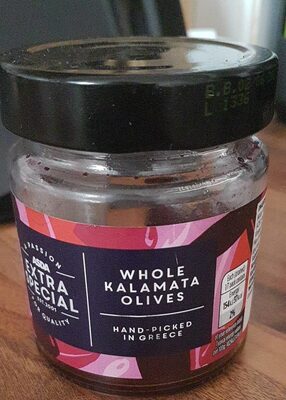
Nutrition per 100 g
| Nutrient | Kalamata Olives with Herbs | Whole Kalamta olives |
|---|---|---|
| Nutri-Score | d | d |
| NOVA group | 3 | 3 |
| Calories | 257 kcal | 249 kcal |
| Fat | 27.6 g | 26 g |
| Saturated fat | 3.2 g | 3.3 g |
| Sugars | 0.5 g | 0.5 g |
| Salt | 3.5 g | 2.7 g |
| Fiber | 6.4 g | 3.2 g |
| Protein | 1.6 g | 1.9 g |
| Additives | 1 | 0 |
| Allergens | None listed | Milk |
Green = better value for that nutrient (less sugar, fat, salt and calories; more fiber and protein).
Key differences
- Whole Kalamta olives has 23% less salt (2.7 g vs 3.5 g).
- Kalamata Olives with Herbs has 50% more fiber (6.4 g vs 3.2 g).
- Only Whole Kalamta olives lists: Milk.
Ingredients
Kalamata Olives with Herbs
Kalamata Olives (91%), Salt, Extra Virgin Olive Oil, Sunflower Oil, White Wine Vinegar, Red Peppe Powder, Cumin, Oregano, Spearmint, Thyme, Acidity Regulator: Lactic Acid.
Whole Kalamta olives
Water, Kalamata Olives (42%), Sea Salt, Red Wine Vinegar, Grape Must. May contain traces of nuts (drained) and milk.
FAQ
Which is healthier: Kalamata Olives with Herbs or Whole Kalamta olives?
Neither product is clearly better overall — it depends on what matters most to you. We compare Nutri-Score, processing level and seven nutrients per 100 g. Your own needs (for example low sugar or high protein) may make a different choice better for you.
Which has fewer calories?
Whole Kalamta olives has fewer calories: 249 kcal versus 257 kcal per 100 g.
Which has less sugar?
Kalamata Olives with Herbs has less sugar: 0.5 g versus 0.5 g per 100 g.