
Confit d’oignon vs Caramelised Red Onion Chutney
Overall, Confit d’oignon has the better nutritional profile on the measures we compare. It wins on 6 of our comparison points versus 3.
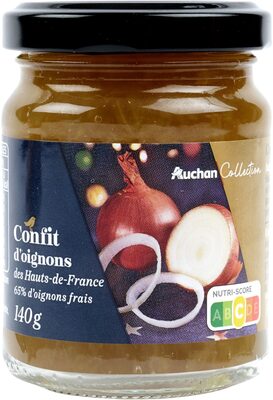
Confit d’oignon
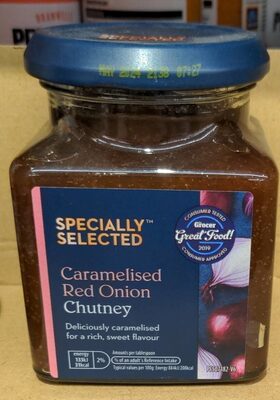
Caramelised Red Onion Chutney
Nutrition per 100 g
| Nutrient | Confit d’oignon | Caramelised Red Onion Chutne... |
|---|---|---|
| Nutri-Score | c | e |
| NOVA group | 4 | 3 |
| Calories | 150 kcal | 208 kcal |
| Fat | 0.5 g | 0.1 g |
| Saturated fat | 0.1 g | 0.1 g |
| Sugars | 36 g | 49.7 g |
| Salt | 0.3 g | 1.4 g |
| Fiber | 1.6 g | 1 g |
| Protein | 0.7 g | 1.1 g |
| Additives | 1 | 0 |
| Allergens | None listed | None listed |
Green = better value for that nutrient (less sugar, fat, salt and calories; more fiber and protein).
Key differences
- Confit d’oignon has 28% fewer calories (150 kcal vs 208 kcal).
- Caramelised Red Onion Chutney has 80% less fat (0.1 g vs 0.5 g).
- Confit d’oignon has 28% less sugar (36 g vs 49.7 g).
- Confit d’oignon has 79% less salt (0.3 g vs 1.4 g).
- Confit d’oignon has 38% more fiber (1.6 g vs 1 g).
- Caramelised Red Onion Chutney has 36% more protein (1.1 g vs 0.7 g).
- Confit d’oignon has the better Nutri-Score.
- Caramelised Red Onion Chutney is less processed (lower NOVA group).
Ingredients
Confit d’oignon
Oignon (origine France, Hauts de France), sucre, vinaigre d'alcool, vin blanc, gélifiant : pectines, sel, caramel (sucre, eau). Préparé avec 65g d'oignons pour 100g de produit fini.
Caramelised Red Onion Chutney
red onion (31%), sugar, bramley apple, white wine vinegar, balsamic vinegar (red wine vinegar, grape must), muscovado sugar, apple puree, molasses, sea salt, dried onion, ginger purée, garlic purée,
FAQ
Which is healthier: Confit d’oignon or Caramelised Red Onion Chutney?
Overall, Confit d’oignon has the better nutritional profile on the measures we compare. We compare Nutri-Score, processing level and seven nutrients per 100 g. Your own needs (for example low sugar or high protein) may make a different choice better for you.
Which has fewer calories?
Confit d’oignon has fewer calories: 150 kcal versus 208 kcal per 100 g.
Which has less sugar?
Confit d’oignon has less sugar: 36 g versus 49.7 g per 100 g.