
Carrot And Coriander Soup vs Carrot & Coriander
Overall, Carrot & Coriander has the better nutritional profile on the measures we compare. It wins on 7 of our comparison points versus 0.
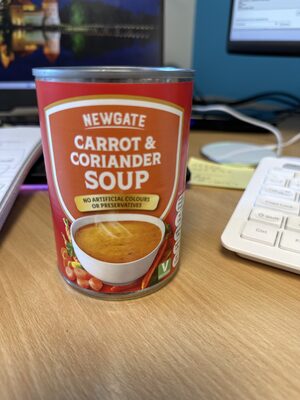
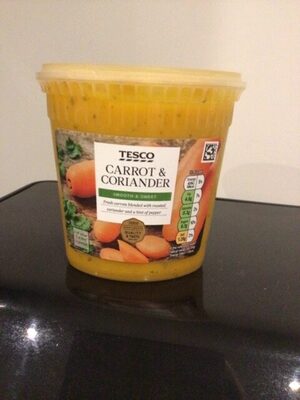
Nutrition per 100 g
| Nutrient | Carrot And Coriander Soup | Carrot & Coriander |
|---|---|---|
| Nutri-Score | b | a |
| NOVA group | 4 | 3 |
| Calories | 48 kcal | 33 kcal |
| Fat | 1.7 g | 1.6 g |
| Saturated fat | 0.9 g | 0.1 g |
| Sugars | 3.4 g | 2.9 g |
| Salt | 0.5 g | 0.4 g |
| Fiber | 1.5 g | 2.2 g |
| Protein | 0.6 g | 0.6 g |
| Additives | 1 | 0 |
| Allergens | Celery, Gluten, Milk | None listed |
Green = better value for that nutrient (less sugar, fat, salt and calories; more fiber and protein).
Key differences
- Carrot & Coriander has 31% fewer calories (33 kcal vs 48 kcal).
- Carrot & Coriander has 89% less saturated fat (0.1 g vs 0.9 g).
- Carrot & Coriander has 15% less sugar (2.9 g vs 3.4 g).
- Carrot & Coriander has 32% more fiber (2.2 g vs 1.5 g).
- Carrot & Coriander has the better Nutri-Score.
- Carrot & Coriander is less processed (lower NOVA group).
- Only Carrot And Coriander Soup lists: Celery, Gluten, Milk.
Ingredients
Carrot And Coriander Soup
Water, 35% Carrots, Crème Fraiche (Milk), Onion, Modified Maize Starch, Wheat Flour (Wheat Flour, Calcium Carbonate, Calcium Sulphate, Niacin, Iron, Thiamin), Carrot Juice Concentrate, Salt, Salted Butter (Milk), Coriander, Lemon Concentrate, Natural Flavouring (contains Celery), Color (Carotenes; White Pepper).
Carrot & Coriander
Carrot 52%, Water, Onion, Rapeseed Oil, Cornflour, Concentrated Orange Juice, Coriander, Salt, Coriander Powder, White Pepper
FAQ
Which is healthier: Carrot And Coriander Soup or Carrot & Coriander?
Overall, Carrot & Coriander has the better nutritional profile on the measures we compare. We compare Nutri-Score, processing level and seven nutrients per 100 g. Your own needs (for example low sugar or high protein) may make a different choice better for you.
Which has fewer calories?
Carrot & Coriander has fewer calories: 33 kcal versus 48 kcal per 100 g.
Which has less sugar?
Carrot & Coriander has less sugar: 2.9 g versus 3.4 g per 100 g.