
Stevia (steviol glycosides, E960)
Updated October 20, 2026
Stevia on an ingredient list means steviol glycosides — the intensely sweet compounds extracted from the leaves of Stevia rebaudiana, or now produced by fermentation. They are not metabolised into sugar: gut bacteria strip them down to steviol, which the liver conjugates and the body excretes, with no accumulation. EFSA and the WHO/FAO expert committee independently set the same acceptable daily intake, 4 mg per kg of body weight expressed as steviol equivalents, and found no evidence of cancer, genotoxicity or reproductive harm. The detail most "natural sweetener" marketing leaves out is that in the United States the stevia leaf itself and crude leaf extracts are not permitted as sweeteners at all — only the highly purified extract is.
Quick facts
- Also known as
- Stevia leaf extract, Steviol glycosides, Rebaudioside A, Reb M, E960
- E-number
- E960
- Function
- Sweeteners
- US status
- Not an approved food additive. Highly purified steviol glycosides (at least 95%) are used under GRAS notices FDA has not questioned; stevia leaves and crude extracts are subject to Import Alert 45-06 and are not permitted as sweeteners
- EU status
- Permitted as E 960a (from stevia leaf), E 960b (from fermentation), E 960c (enzymatically produced) and E 960d (glucosylated)
- Acceptable daily intake
- 4 mg per kg of body weight per day, expressed as steviol equivalents (EFSA, 2010; JECFA, 0–4 mg/kg since 2008)
- Found in
- 9,001 products (4,127 sold in the US)
- Foodmetria concern level
- Low concern How we rate additives
What is Stevia?
"Stevia" on a label is shorthand. The plant Stevia rebaudiana makes a family of sweet compounds called steviol glycosides — stevioside, rebaudioside A, rebaudioside D, rebaudioside M and relatives — and it is those purified compounds, not the leaf, that go into food.
They share a common core, steviol, with different sugar groups attached. That shared core is why limits are expressed "as steviol equivalents" rather than by weight of the extract: different glycosides carry different amounts of sugar decoration around the same active molecule.
What happens in the body is well described. Intact steviol glycosides are poorly absorbed. Gut bacteria hydrolyse them to steviol, which is absorbed; the liver converts it to steviol glucuronide, which humans excrete mainly in urine (rats mainly in bile). EFSA found no accumulation of steviol glycoside derivatives in the body.
On labels in Europe the E numbers are now split by how the glycosides were made: E 960a from the stevia leaf, E 960b from fermentation, E 960c enzymatically produced, E 960d glucosylated. In the United States you will usually see "steviol glycosides", "stevia leaf extract" or a specific name such as "rebaudioside A" or "Reb M".
Why is Stevia used in food?
Steviol glycosides are used for one reason: intense sweetness with no sugar and no calories. A very small quantity does the work of a large quantity of sugar, which is why they appear far down ingredient lists.
Where they show up:
- zero-sugar and reduced-sugar soft drinks, flavoured waters, iced teas and energy drinks;
- yogurts, desserts, cereals and protein products marketed as low-sugar;
- tabletop sweeteners, usually bulked out with erythritol or another carrier so a sachet measures like sugar;
- sugar-free chewing gum, confectionery and syrups.
Two practical notes. Steviol glycosides are often blended with other sweeteners, and the specific glycoside matters commercially: rebaudioside M and D are prized because they taste cleaner than stevioside at the same sweetness, which is why fermentation-produced and enzymatically produced grades exist at all — the leaf makes very little Reb M naturally.
Is Stevia safe? What the research says
Two regulators, one number. The WHO/FAO expert committee (JECFA) set an ADI of 0–4 mg per kg of body weight, expressed as steviol, at its 69th meeting in June 2008, based on a no-effect level of 970 mg/kg bw per day from a long-term study with stevioside. EFSA's Panel reached the same figure independently in April 2010: an ADI of 4 mg/kg bw per day as steviol equivalents, derived by applying a 100-fold uncertainty factor to a NOAEL of 967 mg stevioside/kg bw per day — about 388 mg steviol equivalents — from a two-year rat carcinogenicity study at 2.5% of the diet.
Cancer, DNA and reproduction. EFSA concluded that steviol glycosides are not carcinogenic, not genotoxic, and not associated with reproductive or developmental toxicity. The one nuance worth stating honestly: steviol itself — the breakdown product, not the sweetener — was genotoxic in some in-vitro tests when metabolic activation was added, but this was not expressed in living animals at doses up to 8000 mg/kg. That gap between a test tube with added liver enzymes and a whole animal is exactly the kind of thing the ADI's safety factor exists to cover.
Blood sugar and blood pressure. Both directions of the popular claim overshoot. In the human studies EFSA reviewed, single doses of 1000 mg steviol glycosides did not affect glucose homeostasis or blood pressure, in people with normal glucose tolerance or with type 2 diabetes; sixteen weeks of 1000 mg rebaudioside A daily did not alter glucose homeostasis in type 2 diabetics; and four weeks of the same dose did not significantly affect blood pressure in people with normal or low systolic pressure. So: it does not raise blood sugar, and it is not a treatment for anything.
The exposure caveat, in context. When EFSA revised its exposure assessment in January 2011, it found that high consumers would still exceed the ADI at the maximum use levels then proposed by industry — estimated 1.7 to 16.3 mg/kg bw per day for European children aged 1–14 and 5.6 to 6.8 for adults, with flavoured soft drinks the main source. That assessment predates the EU's authorised use levels, and EFSA itself flags the page as over a decade old. It is still the reason to read it as a real daily limit rather than a formality: for a 20 kg child the ADI is 80 mg of steviol equivalents a day, and sweetened drinks are where that gets spent.
What WHO added in 2023. WHO's guideline on non-sugar sweeteners covers "stevia and stevia derivatives" alongside the synthetic ones. Its recommendation — conditional, the weaker grade — is not to use them for weight control or to reduce disease risk, because long-term benefit for body fat has not been demonstrated; it does not apply to people who already have diabetes. This is advice about what sweeteners achieve, not a safety finding about stevia.
Bottom line: the toxicology here is unusually settled for a sweetener, and the honest asterisks are about use rather than hazard — a real daily limit that drinks can consume, and the fact that "natural" describes the origin of the molecule, not the manufacturing process that delivers it.
Stevia regulation: US vs EU
| Region | Status |
|---|---|
| United States | Not an approved food additive. Highly purified steviol glycosides (≥95%) are used under GRAS notices FDA has not questioned. Stevia leaves and crude extracts are not permitted as sweeteners and are subject to Import Alert 45-06 (most recently published October 13, 2026). Not on FDA's post-market review list as of October 2026. |
| European Union | Permitted as E 960a (steviol glycosides from stevia), E 960b (from fermentation), E 960c (enzymatically produced) and E 960d (glucosylated). EFSA set an ADI of 4 mg/kg bw per day as steviol equivalents in 2010. |
| United Kingdom | Permitted as E 960a, E 960b and E 960c in the sweeteners class, with E 960d covered in the same section. |
| WHO / FAO (JECFA) | ADI 0–4 mg/kg body weight expressed as steviol, set at the 69th meeting in 2008 from a NOEL of 970 mg/kg bw per day. Separately, WHO advises (conditionally) against using non-sugar sweeteners, stevia included, for weight control. |
The United States is the interesting case, because stevia is not an approved food additive there at all. Highly purified steviol glycosides are used under GRAS notices that FDA has reviewed without questions. The stevia leaf itself and crude leaf extracts are not permitted as sweeteners and are subject to Import Alert 45-06, which allows detention without physical examination (most recently published October 13, 2026). The dividing line is purity: extracts are exempt from the alert when they contain at least 95% steviol glycosides on a dried-weight basis with stevioside, rebaudioside A, D or M, enzyme-modified glycosides or other FDA-reviewed glycosides as principal components — as are steviol glycosides produced by fermentation without using stevia leaves. Separate exemptions cover products labelled as dietary supplements, research use and material destined for further purification. Steviol glycosides are not on FDA's post-market review list.
In the European Union and United Kingdom, steviol glycosides are authorised sweeteners and are now split by production route: E 960a from the stevia leaf, E 960b from fermentation, E 960c enzymatically produced and E 960d glucosylated steviol glycosides.
Who should limit or avoid Stevia?
- People with diabetes. Steviol glycosides are not metabolised to sugar and, in the trials EFSA reviewed, did not change glucose homeostasis in people with type 2 diabetes. WHO's 2023 recommendation against non-sugar sweeteners explicitly excludes people who already have diabetes.
- Children. The daily limit is per kilogram of body weight, so it is reached much sooner in a child: 4 mg/kg means roughly 80 mg of steviol equivalents a day for a 20 kg child. EFSA's exposure work found children at the top of the range, with soft drinks the dominant source.
- People buying "natural" sweeteners. The leaf and crude leaf extracts are not permitted as sweeteners in the US; what is in the packet is a purified compound, sometimes made by fermentation rather than from leaves at all. That is not a safety problem — it is a labelling expectation worth adjusting.
- Tabletop sweetener users. Stevia sachets are mostly bulking agent, commonly erythritol. If you are avoiding a specific sweetener, read past the word "stevia" on the front of the pack.
- Not an allergen concern. Steviol glycosides are purified plant compounds, free of gluten and the major allergens, and they contribute no phenylalanine.
Foods that commonly contain Stevia
Share of published products in each category whose ingredient list includes Stevia.
Popular products with Stevia
 c NOVA 4
 c NOVA 4
 NOVA 4
 NOVA 4
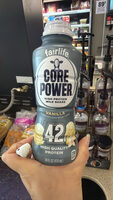 NOVA 4
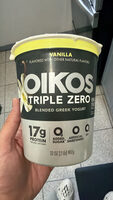 a NOVA 4
 NOVA 4
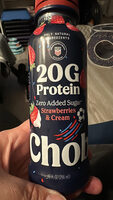 c NOVA 4
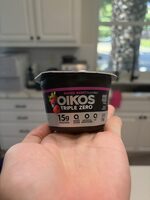 a NOVA 4
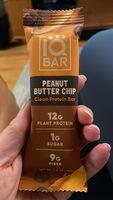 NOVA 4
Stevia-free alternatives
Popular products from the same categories that don't list Stevia and score Nutri-Score A–C.
 a NOVA 1
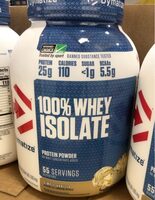 a NOVA 4
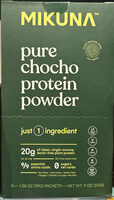 a
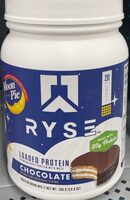 b NOVA 4
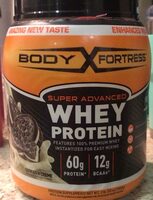 c NOVA 4
How to spot Stevia on a label
Look for any of these names in the ingredient list:
Related additives
Frequently asked questions
Is stevia safe?
Regulators say yes within the daily limit. EFSA and the WHO/FAO expert committee independently set the same acceptable daily intake of 4 mg per kg of body weight as steviol equivalents, and EFSA concluded that steviol glycosides are not carcinogenic, not genotoxic and not associated with reproductive or developmental toxicity.
How much stevia can you have per day?
The ADI is 4 mg per kg of body weight per day, expressed as steviol equivalents — roughly 280 mg for a 70 kg adult and 80 mg for a 20 kg child. EFSA found that high consumers of sweetened drinks could exceed it at the maximum use levels proposed to it in 2010-2011, so it is a limit worth knowing rather than a formality.
Is stevia banned in the United States?
The leaf is, in effect, and the purified extract is not. Stevia leaves and crude leaf extracts are not permitted as sweeteners and are held under Import Alert 45-06; extracts containing at least 95% steviol glycosides, and glycosides made by fermentation without leaves, are exempt and are used under GRAS notices.
Does stevia raise blood sugar?
In the human studies EFSA reviewed it did not. Single doses of 1000 mg did not affect glucose homeostasis in people with normal glucose tolerance or type 2 diabetes, and 16 weeks of 1000 mg rebaudioside A daily did not alter glucose homeostasis in type 2 diabetics.
Does stevia lower blood pressure?
Not at the doses studied. Four weeks of 1000 mg rebaudioside A a day did not significantly affect blood pressure in people with normal or low systolic pressure. It is a sweetener, not a treatment.
What is the difference between E960a, E960b, E960c and E960d?
They are the same family of sweet compounds made different ways: E 960a is extracted from the stevia leaf, E 960b is produced by fermentation, E 960c is produced enzymatically and E 960d is glucosylated steviol glycosides. The split exists because the leaf contains very little of the best-tasting glycosides such as rebaudioside M.
Is stevia natural?
The molecule originates in a plant, but what reaches food is a highly purified extract — and in the US it has to be, since the leaf and crude extracts are not permitted as sweeteners. Some grades are made by fermentation or enzymatic conversion without using leaves at all.
Sources & references
- U.S. FDA — Import Alert 45-06: Detention Without Physical Examination of Stevia Leaves, Crude Extracts of Stevia Leaves and Foods Containing Them
- U.S. FDA — High-Intensity Sweeteners
- JECFA — Summary and Conclusions of the 69th meeting (Rome, 17–26 June 2008): ADI 0–4 mg/kg bw as steviol
- EFSA (2010). Scientific Opinion on the safety of steviol glycosides for the proposed uses as a food additive. EFSA Journal 2010;8(4):1537
- EFSA (January 26, 2011). EFSA revises assessment of consumer exposure to steviol glycosides
- WHO (May 15, 2023). WHO advises not to use non-sugar sweeteners for weight control in newly released guideline
- UK Government — Approved additives and E numbers
- U.S. FDA — List of Select Chemicals in the Food Supply Under FDA Review
Product data: Open Food Facts (ODbL), updated daily. Additive information is for general education and is not medical advice. Always check the package label. Our methodology.