
Sucralose (E955)
Updated September 21, 2026
Sucralose is a no-calorie sweetener made by replacing three parts of a sugar molecule with chlorine, which makes it roughly 600 times sweeter than sugar and largely indigestible. FDA and EFSA both consider it safe at current intakes — EFSA re-confirmed its 15 mg/kg acceptable daily intake in February 2026 — though open questions remain about what happens when it is heated and about person-to-person differences in blood-sugar response.
Quick facts
- Also known as
- Splenda, E955
- E-number
- E955
- Function
- Sweeteners
- US status
- Approved as a general-purpose sweetener (21 CFR 172.831)
- EU status
- Permitted as E 955; EFSA re-confirmed the ADI in its 2026 re-evaluation
- Acceptable daily intake
- 5 mg per kg of body weight per day (FDA); 15 mg per kg (EFSA, JECFA)
- Found in
- 24,744 products (11,188 sold in the US)
- Foodmetria concern level
- Low concern How we rate additives
What is Sucralose?
Sucralose is a synthetic sweetener made from ordinary table sugar: three hydroxyl groups on the sucrose molecule are replaced with chlorine atoms. The result is about 600 times sweeter than sugar, tastes clean rather than bitter, and passes through the body largely unabsorbed, so it contributes essentially no calories.
In the US it appears on labels simply as sucralose, and in the retail packet as Splenda — though branded packets also contain bulking agents such as maltodextrin or dextrose, which is why a packet does have a few calories. In Europe it is E 955.
Why is Sucralose used in food?
Sucralose is the workhorse sweetener of "zero sugar", "diet", "light" and "keto" products: soft drinks, flavored waters, protein powders and bars, yogurt, syrups, chewing gum and tabletop sweeteners. Two properties explain its popularity. It is far more heat- and acid-stable than aspartame, so it survives pasteurization and long shelf lives; and because it is so intensely sweet, a tiny amount does the job.
It is often blended with acesulfame potassium (Ace-K) or stevia, because mixtures round out the aftertaste that each sweetener has on its own.
Is Sucralose safe? What the research says
What regulators say. FDA approved sucralose for 15 food categories in 1998 and as a general-purpose sweetener in 1999, after reviewing more than 110 studies on toxicity, carcinogenicity, reproduction and metabolism. FDA's acceptable daily intake (ADI) is 5 mg per kg of body weight per day. EFSA and the WHO/FAO expert committee (JECFA) use a higher figure, 15 mg/kg.
The 2026 EFSA re-evaluation. In February 2026 EFSA published its most thorough review of sucralose in two decades (EFSA Journal 2026;24:9854) and concluded there was no reason to change the ADI of 15 mg/kg. Estimated dietary exposure in the EU was below the ADI in every population group. EFSA did not confirm safety for one proposed new use — sucralose in fine bakery wares — because of an unresolved question about whether chlorine can transfer from sucralose to other molecules under prolonged high-temperature conditions. EFSA noted this uncertainty applies to home baking and frying as well, and recommended tightening the purity specifications for chlorinated impurities.
Sucralose-6-acetate. A 2023 laboratory study (Schiffman et al., Journal of Toxicology and Environmental Health, Part B) reported that sucralose-6-acetate, an impurity and metabolite, was genotoxic in cell-based assays. These were in vitro tests, not studies in people, and they have not changed any regulator's position; EFSA's 2026 review covered the available genotoxicity data and kept the ADI unchanged.
Blood sugar and gut bacteria. A 2022 randomized trial in Cell (Suez et al.) gave 120 healthy adults sachets of saccharin, sucralose, aspartame or stevia for two weeks at doses below the ADI. Sucralose and saccharin measurably worsened glucose responses in some participants, and the effect tracked with changes in gut bacteria — transferring participants' microbiomes into germ-free mice reproduced their donors' glucose patterns. The trial was small and short, and responses varied a lot between individuals; it suggests that "no effect on blood sugar" may not be true for everyone, not that sucralose is harmful.
Weight control. In 2023 the WHO issued a conditional recommendation against using non-sugar sweeteners, including sucralose, as a way to control body weight or reduce the risk of chronic disease — the long-term benefit did not hold up in the evidence. WHO itself notes the observational data may be confounded, and the guideline is not a safety warning.
Bottom line: regulators worldwide consider sucralose safe at the amounts people actually consume, and it is not on FDA's list of chemicals under post-market review. The genuinely open questions are about heating it to high temperatures and about individual variation in blood-sugar response.
Sucralose regulation: US vs EU
| Region | Status |
|---|---|
| United States | Approved as a general-purpose sweetener (21 CFR 172.831), used according to good manufacturing practice. FDA ADI: 5 mg/kg body weight per day. |
| European Union | Permitted as E 955 in specified foods. EFSA re-evaluated it in February 2026 and kept the ADI of 15 mg/kg; safety of a proposed extension into fine bakery wares was not confirmed. |
| United Kingdom | Permitted as E 955 under assimilated EU additive rules. |
| Canada | Permitted as a sweetener under the Food and Drug Regulations. |
| WHO / FAO (JECFA) | ADI 15 mg/kg body weight per day. Separately, WHO advises (conditionally) against using non-sugar sweeteners for weight control. |
Sucralose is one of the least contested additives on this site: it is permitted in the US, the EU, the UK, Canada, Australia and New Zealand, and no state law or federal proposal currently restricts it. The most recent regulatory event was EFSA's February 2026 re-evaluation, which kept the ADI at 15 mg/kg and left open the safety of a proposed extension of use into fine bakery wares. Check the latest status: rules can change.
Who should limit or avoid Sucralose?
- People tracking blood sugar closely. The 2022 trial suggests glucose responses to sucralose differ from person to person. If you use a glucose monitor, you can check your own response directly.
- Anyone baking or frying with it. EFSA flagged uncertainty about prolonged high-temperature heating. If you bake often with a sucralose-based sweetener, a different sweetener is a reasonable choice until that question is settled.
- People using sweeteners for weight loss. WHO's advice is that non-sugar sweeteners do not deliver long-term weight benefit. Swapping soda for sucralose soda still cuts sugar, but it is not a weight-loss strategy on its own.
- Anyone with digestive sensitivity. Sucralose itself is used in tiny amounts, but the bulking agents in tabletop packets (maltodextrin, dextrose) and the sugar alcohols it is often blended with can cause bloating.
Foods that commonly contain Sucralose
Share of published products in each category whose ingredient list includes Sucralose.
Popular products with Sucralose
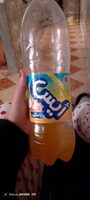 e NOVA 4
 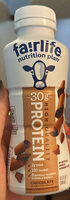 NOVA 4
 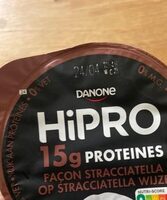 a NOVA 4
 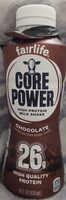 NOVA 4
 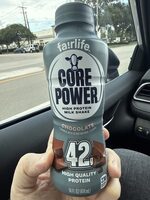 NOVA 4
 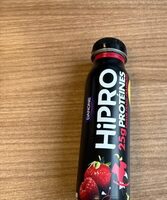 NOVA 4
  NOVA 4
 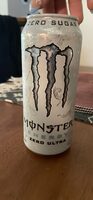 c NOVA 4
 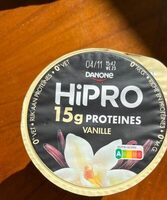 a NOVA 4
 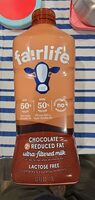 e NOVA 4
 Sucralose-free alternatives
Popular products from the same categories that don't list Sucralose and score Nutri-Score A–C.
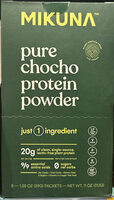 a
a 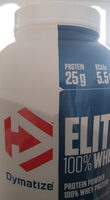 a NOVA 1
 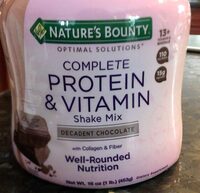 b NOVA 4
  a NOVA 4
 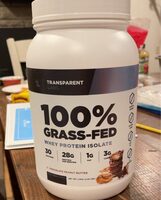 a NOVA 4
 How to spot Sucralose on a label
Look for any of these names in the ingredient list:
Related additives
Frequently asked questions
Is sucralose banned anywhere?
No. Sucralose is permitted in the US, the EU, the UK, Canada, Australia and New Zealand. EFSA re-confirmed its safety at current uses in February 2026.
Is sucralose bad for your gut?
A 2022 randomized trial found that two weeks of sucralose changed gut and oral bacteria and worsened glucose responses in some people, with large differences between individuals. That is a real signal worth watching, but it is one short trial and it does not show harm to gut health.
Does sucralose raise blood sugar?
Sucralose has no calories and no direct sugar load. The 2022 Cell trial found that in some participants it nonetheless blunted glucose tolerance, apparently through gut bacteria. Responses were person-specific, so a glucose monitor is the only way to know your own.
Is it safe to bake with sucralose?
Sucralose is heat-stable enough for most processed foods, but in its 2026 review EFSA could not rule out that prolonged high-temperature heating transfers chlorine from sucralose to other molecules, and on that basis did not approve its use in fine bakery wares. For frequent home baking, another sweetener is the cautious choice.
Does sucralose cause cancer?
No regulatory body classifies sucralose as a carcinogen. A 2023 study reported that the impurity sucralose-6-acetate damaged DNA in laboratory cell tests; those are in vitro results, and EFSA kept the ADI unchanged after reviewing the genotoxicity data in 2026.
How much sucralose is safe per day?
FDA's ADI is 5 mg per kg of body weight — about 150 mg for a 30 kg (66 lb) child and 350 mg for a 70 kg (154 lb) adult. EFSA and JECFA allow 15 mg/kg. Labels do not state the amount, only that sucralose is present.
Is sucralose vegan and gluten-free?
Sucralose is made from sugar and contains no animal ingredients or gluten, so it is generally considered both. Tabletop blends may add maltodextrin or dextrose — usually from corn, and also gluten-free.
Sources & references
- 21 CFR 172.831 — Sucralose (eCFR)
- U.S. FDA — Aspartame and Other Sweeteners in Food
- EFSA (2026). Re-evaluation of sucralose (E 955) as a food additive — plain language summary. EFSA Journal 2026;24:9854
- EFSA (2026). Re-evaluation of sucralose (E 955) as a food additive and evaluation of a new application on extension of use in fine bakery wares (full opinion, PDF)
- WHO (May 15, 2023). WHO advises not to use non-sugar sweeteners for weight control in newly released guideline
- Suez J. et al. (2022). Personalized microbiome-driven effects of non-nutritive sweeteners on human glucose tolerance. Cell 185(18):3307–3328
- Schiffman S.S. et al. (2023). Toxicological and pharmacokinetic properties of sucralose-6-acetate and its parent sucralose: in vitro screening assays. J Toxicol Environ Health B 26(6):307–341
- U.S. FDA — List of Select Chemicals in the Food Supply Under FDA Review
Product data: Open Food Facts (ODbL), updated daily. Additive information is for general education and is not medical advice. Always check the package label. Our methodology.