
Maltitol (E965)
Updated October 26, 2026
Maltitol (E965) is a sugar alcohol made from starch and the most common bulk sweetener in sugar-free chocolate and candy, because it behaves more like sugar than any other polyol. JECFA set no numerical daily limit and no regulator treats it as a toxicity concern. Its documented downside is digestive: it is poorly absorbed, and studies find clear symptoms around 40–45 g in a single sitting.
Quick facts
- Also known as
- Maltitol syrup, E965
- E-number
- E965
- Function
- Sweeteners
- US status
- Used under an industry GRAS determination; FDA has no regulation specific to maltitol but treats it as a sugar alcohol in its labeling and health-claim rules
- EU status
- Permitted as E965 (i) maltitol and (ii) maltitol syrup; EFSA has not yet completed its re-evaluation
- Acceptable daily intake
- No numerical limit: JECFA set an ADI "not specified" in 1993
- Found in
- 7,203 products (1,955 sold in the US)
- Foodmetria concern level
- Low concern How we rate additives
What is Maltitol?
Maltitol is a sugar alcohol (polyol) made by hydrogenating maltose, which in turn comes from starch — usually corn or wheat. It is sold in two forms, and the distinction matters enough that JECFA wrote separate specifications for them back in 1988:
- Maltitol — the crystalline, roughly 98%-pure substance.
- Maltitol syrup — a liquid mixture, also sold as hydrogenated starch hydrolysate or hydrogenated glucose syrup, in which maltitol is the main but not the only polyol.
Both appear on EU labels as E965, with the Roman numerals (i) and (ii) distinguishing them.
Maltitol's selling point is that it is the closest thing among the polyols to sugar itself: around 75–90% of sucrose's sweetness, no cooling aftertaste, and — crucially for confectionery — it melts and sets in a way that lets manufacturers run it through existing chocolate equipment.
Why is Maltitol used in food?
Maltitol is the workhorse of sugar-free confectionery, and mostly for reasons of manufacturing rather than nutrition.
- It behaves like sugar. Sugar does structural work in chocolate and hard candy — bulk, mouthfeel, crystallization, melting behavior. Maltitol substitutes for all of that more convincingly than erythritol (which cools the tongue) or xylitol (which cools harder still and costs more). If a sugar-free chocolate bar tastes close to the original, maltitol is usually why.
- It is a bulk sweetener. Like other polyols, it provides volume as well as sweetness, so it replaces sugar roughly gram for gram instead of leaving a hole in the recipe the way a high-intensity sweetener does.
- It does not feed cavity bacteria well. FDA names maltitol in 21 CFR 101.80, the regulation that allows foods sweetened with certain carbohydrates to claim they "do not promote dental caries" — alongside xylitol, sorbitol, mannitol, isomalt, lactitol and erythritol.
Is Maltitol safe? What the research says
What regulators say. The WHO/FAO expert committee (JECFA) last evaluated maltitol in 1993 and assigned an ADI "not specified" — the category reserved for substances of very low toxicity where a numerical daily limit is not considered necessary. That status was first given at JECFA's 29th meeting, confirmed at the 33rd and 41st, and later extended to cover maltitol syrup. The EU's old Scientific Committee on Food, reviewing maltitol syrup in December 1999, did not set its own figure and relied on those JECFA conclusions.
The US status is unusual, and worth stating plainly. Unlike sorbitol, which has its own GRAS affirmation regulation (21 CFR 184.1835), and unlike xylitol, which has a food additive regulation (21 CFR 172.395), maltitol has no regulation of its own that we could find. It is used on the basis of an industry GRAS determination. FDA's own rules nonetheless recognize it: its labeling regulation defines sugar alcohols as substances "listed by FDA… or… generally recognized as safe," and its health-claim regulation names maltitol explicitly. So the absence of a dedicated regulation reflects how GRAS works in the US, not an unresolved safety question.
The European re-evaluation is open, with one specific gap. EFSA has not yet reassessed maltitol. In January 2023 it issued a call for data asking for a single missing study — an in vitro micronucleus test under the current OECD guideline — because of "the lack of a fully reliable in vitro micronucleus test." EFSA set out both outcomes in advance: a negative result completes the assessment and maltitol is considered not genotoxic; a positive one would require follow-up work. The existing animal studies were judged inconclusive on procedural grounds, because they did not demonstrate that the target cells were exposed. The call has since expired, and as of EFSA's July 2026 panel update a joint assessment protocol covering six polyols was still being developed. This is a documentation gap, not a positive genotoxicity finding.
The digestive effects are the real story, and they are well quantified. Maltitol is absorbed slowly and incompletely; the remainder reaches the large intestine, draws in water and is fermented. A 2016 scientific review of sugar alcohols (Mäkinen, International Journal of Dentistry) collects the human data: 30 g in chocolate produced no significant symptoms in young adults; 40 g caused mild rumbling and gas without laxation; 45 g produced transitory osmotic diarrhea in 29 of 34 subjects (85.3%); in a different study, diarrhea appeared only at around 90 g a day. The same review notes that, unlike with xylitol, the gut flora did not adapt to maltitol over a nine-day period of consumption — so repeated exposure does not necessarily build tolerance. The author cautions that such figures "must not be regarded as universally valid."
Put next to a product label, that range is less reassuring than it sounds. A standard 100 g bar of sugar-free chocolate can contain upward of 40 g of maltitol, which lands squarely in the symptomatic range if eaten at once.
What is not established. Maltitol is not classified as a carcinogen by any regulatory body, and there is no toxicity finding behind its lack of a numerical limit. We did not find a regulatory determination quantifying maltitol's effect on blood glucose, so this page does not give a number for it.
Bottom line: by regulatory standards this is a low-concern additive. The practical caution is portion size, and maltitol deserves that caution more than most polyols because the products it goes into — chocolate bars, candy — are easy to eat a lot of at once.
Maltitol regulation: US vs EU
| Region | Status |
|---|---|
| United States | Used under an industry GRAS determination; FDA has no regulation specific to maltitol, but its labeling rule (21 CFR 101.9) treats it as a sugar alcohol and its health-claim rule (21 CFR 101.80) names it among sweeteners that do not promote dental caries. Not on FDA's post-market review list. |
| European Union | Permitted as E965 (i) maltitol and (ii) maltitol syrup. EFSA's re-evaluation is still open: a 2023 call for data sought a missing in vitro micronucleus test, and an assessment protocol covering six polyols was under development during 2026. Foods high in added polyols require a laxative warning. |
| United Kingdom | Permitted as E965 (i) maltitol and (ii) maltitol syrup, listed among approved sweeteners. |
| JECFA (WHO/FAO) | ADI "not specified" since 1993 (41st meeting), first assigned at the 29th meeting and later extended to maltitol syrup. Separate specifications for crystalline maltitol and maltitol syrup were drawn up in 1988. |
Maltitol is permitted in the US, the EU and the UK, and faces no pending ban or phase-out. It does not appear on FDA's list of chemicals under post-market review (page updated October 2, 2026), and the state additive laws passed in recent years do not cover it.
The only open regulatory thread is EFSA's unfinished re-evaluation: a genotoxicity testing gap flagged in a 2023 call for data, and a shared assessment protocol for six polyols under development through 2026. The most likely outcome is confirmation of the current status; the alternative is that the EU puts a number on maltitol for the first time.
As with the other sugar alcohols, one thing is worth keeping separate from the broader sweetener debate: the WHO's 2023 guideline advising against non-sugar sweeteners for weight control does not apply to maltitol. The guideline explicitly excludes "low-calorie sugars and sugar alcohols (polyols)" from its definition, because they contain calories. Whatever you have read about aspartame or sucralose does not carry over.
Who should limit or avoid Maltitol?
- Anyone eating sugar-free chocolate or candy by the bar. This is the one that matters. Maltitol is concentrated in products designed to be eaten in quantity, and the human studies put clear symptoms at around 40–45 g in one sitting — a plausible amount for a single bar. Start with a few squares.
- People with IBS or a sensitive gut. Poorly absorbed, fermentable carbohydrates are a recognized trigger of gas and bloating, and maltitol is one of them.
- Parents. The same portion delivers a far larger dose per kilogram of body weight to a child than to an adult, so sugar-free sweets are a common and benign explanation for stomach ache and loose stools.
- People managing blood sugar or following a low-carb diet. Maltitol is used in "no sugar added" products, but it is not carbohydrate-free, and under FDA labeling rules sugar alcohols count toward total carbohydrate. Of the common polyols it is generally considered the one with the most effect on blood glucose — check the Nutrition Facts panel rather than the front of the pack, and if the number matters medically, ask your clinician.
Foods that commonly contain Maltitol
Share of published products in each category whose ingredient list includes Maltitol.
Popular products with Maltitol
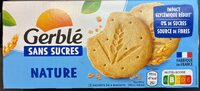 b NOVA 4
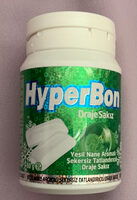 NOVA 4
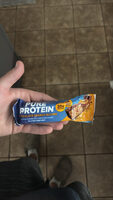 NOVA 4
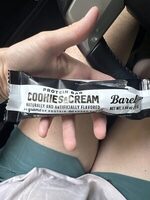 NOVA 4
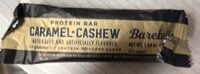 NOVA 4
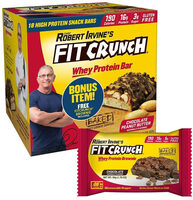 NOVA 4
 NOVA 4
 NOVA 4
 NOVA 4
 a NOVA 4
Maltitol-free alternatives
Popular products from the same categories that don't list Maltitol and score Nutri-Score A–C.
 a NOVA 4
 c NOVA 4
 c NOVA 4
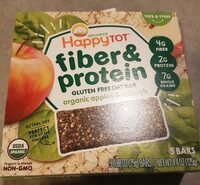 c NOVA 4
 c NOVA 4
How to spot Maltitol on a label
Look for any of these names in the ingredient list:
Related additives
Frequently asked questions
Is maltitol bad for you?
Regulators do not treat it as a toxicity concern: JECFA set no numerical daily limit and it is used in the US under a GRAS determination. The documented problem is digestive. Because maltitol is poorly absorbed, larger amounts pull water into the gut and ferment there, causing gas, cramping and diarrhea.
How much maltitol causes diarrhea?
Human studies collected in a 2016 scientific review found no significant symptoms at 30 g, mild gas and rumbling at 40 g, and transitory osmotic diarrhea in 29 of 34 people at 45 g in one sitting. A single 100 g bar of sugar-free chocolate can contain more than 40 g. Tolerance varies, and the same review notes that gut flora did not adapt over nine days of regular consumption.
Is maltitol keto-friendly?
It is not carbohydrate-free. Under FDA labeling rules sugar alcohols count toward total carbohydrate, and maltitol is generally considered the common polyol with the most effect on blood glucose. We did not find a regulatory assessment putting a number on that effect, so check the Nutrition Facts panel rather than front-of-pack claims — and if it matters medically, ask your clinician.
Is maltitol banned anywhere?
No. It is permitted in the US, the EU and the UK, and it is not on FDA's list of chemicals under post-market review. EFSA has not finished re-evaluating it, but that is a question of scheduling and one missing study, not a restriction.
Is maltitol the same as maltodextrin?
No, and the names are the main thing they share. Maltitol is a sugar alcohol used as a sweetener; maltodextrin is a starch-derived carbohydrate used as a filler, thickener and carrier, and it raises blood sugar readily. Check which one the label actually says.
Does maltitol cause tooth decay?
Mouth bacteria ferment it poorly, and FDA allows foods sweetened with it to carry the claim that they do not promote tooth decay (21 CFR 101.80), alongside xylitol, sorbitol, mannitol, isomalt, lactitol and erythritol.
What foods contain maltitol?
Above all sugar-free chocolate and chocolate-coated products, where it substitutes for sugar in the manufacturing process; also sugar-free hard and soft candy, chewing gum, protein and snack bars, ice cream and baked goods. Maltitol syrup, sometimes labeled hydrogenated starch hydrolysate, shows up in the same places. See the products and categories above for what is in our database.
Sources & references
- JECFA — Evaluation of maltitol (41st meeting, 1993; ADI not specified)
- JECFA — Evaluation of maltitol syrup
- EU Scientific Committee on Food (December 1999). Opinion on maltitol syrup
- EFSA — Call for data on genotoxicity data on maltitol (E 965 i), January 2023
- EFSA — Update on the re-evaluation of sweeteners, FAF Panel plenary, 1–2 July 2026
- 21 CFR 101.80 — Health claims: dietary noncariogenic carbohydrate sweeteners and dental caries
- 21 CFR 101.9 — Nutrition labeling of food (definition and declaration of sugar alcohols)
- Mäkinen K.K. (2016). Gastrointestinal Disturbances Associated with the Consumption of Sugar Alcohols. International Journal of Dentistry 2016:5967907
- WHO (May 15, 2023). WHO advises not to use non-sugar sweeteners for weight control (polyols excluded from scope)
- UK Government — Approved additives and E numbers
- U.S. FDA — List of Select Chemicals in the Food Supply Under FDA Review
Product data: Open Food Facts (ODbL), updated daily. Additive information is for general education and is not medical advice. Always check the package label. Our methodology.