
Aspartame (E951)
Updated September 18, 2026
Aspartame (E951) is a low-calorie sweetener about 200 times sweeter than sugar, used in diet sodas, sugar-free gum and yogurts. In 2023 the WHO's cancer agency classified it as "possibly carcinogenic" based on limited evidence, but the FDA, EFSA and WHO experts still consider it safe within the acceptable daily intake. People with PKU must avoid it.
Quick facts
- Also known as
- NutraSweet, Equal, E951, Contains phenylalanine
- E-number
- E951
- Function
- Sweeteners
- US status
- Approved sweetener (general-purpose since 1996); labels must warn people with PKU
- EU status
- Permitted as E951 with a phenylalanine warning
- Acceptable daily intake
- 50 mg per kg of body weight per day (FDA); 40 mg/kg (EFSA, JECFA)
- Found in
- 8,337 products (3,427 sold in the US)
- Foodmetria concern level
- Moderate concern How we rate additives
What is Aspartame?
Aspartame is made from two amino acids — aspartic acid and phenylalanine — joined together. It is about 200 times sweeter than sugar, so tiny amounts replace a lot of sugar and add almost no calories. In the body it breaks down into those two amino acids and a small amount of methanol — substances that are also produced when you digest many ordinary foods.
It is sold as a tabletop sweetener under brand names like NutraSweet and Equal.
Why is Aspartame used in food?
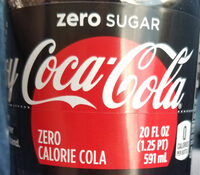
Aspartame lets manufacturers cut sugar and calories while keeping a sweet taste. It is common in diet and "zero sugar" soft drinks, sugar-free chewing gum, light yogurts, flavored waters and tabletop sweeteners.
It is not heat-stable, so it is rarely used in baked goods. It is often blended with acesulfame potassium to give a more sugar-like taste.
Is Aspartame safe? What the research says
The 2023 WHO review. In July 2023, the WHO's International Agency for Research on Cancer (IARC) classified aspartame as "possibly carcinogenic to humans" (Group 2B), based on limited evidence for liver cancer in people and limited evidence in animals. Group 2B is a statement about the strength of evidence, not about how dangerous something is at normal intakes. At the same time, the WHO/FAO expert committee (JECFA), which assesses risk, kept the acceptable daily intake at 40 mg/kg of body weight.
What that means in practice. JECFA calculated that a 70 kg (154 lb) adult would need to drink more than 9–14 cans of diet soda a day, every day, to exceed the ADI — assuming no other sources of aspartame.
What the FDA says. The FDA disagreed with IARC's classification, saying the studies it relied on had significant shortcomings, and that FDA scientists have no safety concerns when aspartame is used under approved conditions. The FDA's ADI is 50 mg/kg; EFSA reached 40 mg/kg in its 2013 re-evaluation.
The studies behind the concern. The best-known is the French NutriNet-Santé cohort (Debras et al., 2022), which followed about 103,000 adults: people with the highest intake of aspartame had a modestly higher cancer risk (about 15% overall, 22% for breast cancer) than non-consumers. Observational studies like this cannot prove cause and effect — people who drink a lot of diet soda may differ in other ways.
Bottom line: within normal amounts, regulators consider aspartame safe. The evidence is not strong enough to call it harmful, and not settled enough to call the question closed.
Aspartame regulation: US vs EU
| Region | Status |
|---|---|
| United States | First approved in 1974 for limited uses; general-purpose sweetener since 1996. ADI 50 mg/kg. PKU warning required. |
| European Union | Permitted as E951. ADI 40 mg/kg (EFSA 2013). Phenylalanine warning required. |
| WHO / FAO (JECFA) | ADI 0–40 mg/kg reaffirmed in July 2023. |
| IARC (WHO) | Group 2B, "possibly carcinogenic to humans" (July 2023) — a hazard classification based on limited evidence. |
Aspartame is approved in the US, the EU, the UK, Canada and most other countries. The FDA first approved it in 1974 for limited uses and as a general-purpose sweetener in 1996. In every major market, products containing it must warn people with phenylketonuria that it is a source of phenylalanine.
Who should limit or avoid Aspartame?
- People with phenylketonuria (PKU) must avoid it. PKU is a rare inherited condition in which the body cannot break down phenylalanine, one of aspartame's building blocks. That is why US labels say "Phenylketonurics: contains phenylalanine."
- People who drink diet soda in large amounts every day — they are the group closest to the acceptable daily intake.
- Anyone who prefers to limit sweeteners while the research continues. Water, unsweetened drinks, or products sweetened with small amounts of sugar are alternatives.
Foods that commonly contain Aspartame
Share of published products in each category whose ingredient list includes Aspartame.
Popular products with Aspartame
 c NOVA 4
  c NOVA 4
  c NOVA 4
  c NOVA 4
  c NOVA 4
  NOVA 4
  NOVA 4
  c NOVA 4
  NOVA 4
  c NOVA 4
 Aspartame-free alternatives
Popular products from the same categories that don't list Aspartame and score Nutri-Score A–C.
 c NOVA 4
  c NOVA 4
  b NOVA 4
  b NOVA 4
  b NOVA 4
 How to spot Aspartame on a label
Look for any of these names in the ingredient list:
Related additives
Frequently asked questions
Does aspartame cause cancer?
The evidence is limited. In 2023 IARC classified aspartame as "possibly carcinogenic" (Group 2B) based on limited evidence for liver cancer, while the WHO/FAO expert committee and the FDA concluded it is safe within the acceptable daily intake. Observational studies have found small associations, but they cannot prove cause and effect.
How much aspartame is safe per day?
The FDA's acceptable daily intake is 50 mg per kg of body weight; EFSA and JECFA use 40 mg/kg. For a 70 kg adult, JECFA estimates that means more than 9–14 cans of diet soda every day.
Why do labels say "contains phenylalanine"?
Aspartame is partly made of phenylalanine. People with phenylketonuria (PKU) cannot process it, so the warning is required on every product with aspartame.
Is aspartame worse than sugar?
They carry different risks. Aspartame adds almost no calories, while excess sugar is clearly linked to weight gain and tooth decay. The open question with aspartame is whether long-term heavy use has effects that current studies cannot yet rule out.
Is aspartame in Diet Coke and Coke Zero?
In the US, Diet Coke is sweetened with aspartame, and Coke Zero Sugar with aspartame plus acesulfame potassium. Recipes differ between countries, so check the label of the product you buy.
Is aspartame safe during pregnancy?
Regulators consider it safe within the ADI for the general population, including during pregnancy. Women with PKU must avoid it. Ask your doctor if you have concerns.
What are alternatives to aspartame?
Sucralose, stevia, monk fruit and acesulfame potassium are other low-calorie sweeteners, each with its own evidence base. Unsweetened drinks avoid the question altogether.
Sources & references
- WHO (July 14, 2023). Aspartame hazard and risk assessment results released
- U.S. FDA — Aspartame and Other Sweeteners in Food
- EFSA (2013). Scientific Opinion on the re-evaluation of aspartame (E 951) as a food additive. EFSA Journal 11(12):3496
- Debras C. et al. (2022). Artificial sweeteners and cancer risk: Results from the NutriNet-Santé population-based cohort study. PLoS Medicine 19(3):e1003950
Product data: Open Food Facts (ODbL), updated daily. Additive information is for general education and is not medical advice. Always check the package label. Our methodology.