
Erythritol (E968)
Updated September 28, 2026
Erythritol (E968) is a sugar alcohol with almost no calories and no effect on blood sugar, which made it the default sweetener in keto and sugar-free products. FDA treats it as safe and EFSA set a daily limit of 0.5 g per kg of body weight in 2023. Research since 2023 has linked blood erythritol to cardiovascular events and to platelet activity, but it has not established that eating it causes harm — and the body makes erythritol on its own, which complicates the picture.
Quick facts
- Also known as
- E968
- E-number
- E968
- Function
- Sweeteners
- US status
- Generally recognized as safe (GRAS); FDA had no questions about the industry GRAS conclusion (GRN 789, 2019)
- EU status
- Permitted as E968; foods with more than 10% added polyols must carry a laxative warning
- Acceptable daily intake
- 0.5 g per kg of body weight per day (EFSA, 2023)
- Found in
- 3,946 products (2,475 sold in the US)
- Foodmetria concern level
- Moderate concern How we rate additives
What is Erythritol?
Erythritol is a sugar alcohol (polyol) — a sugar-like molecule that the body handles differently from sugar. Commercially it is made by fermenting glucose with the yeast-like fungus Moniliella pollinis, then crystallizing the result. It also occurs naturally in small amounts in pears, melons, grapes and fermented foods such as soy sauce and wine.
It is about 70% as sweet as table sugar, with a clean taste and a distinct cooling sensation on the tongue. Unlike most polyols, most of what you eat is absorbed in the small intestine and then passed out in urine largely unchanged, rather than being fermented by gut bacteria — which is why it causes less bloating than sorbitol or maltitol.
Two things matter for reading the research that follows. First, erythritol raises neither blood glucose nor insulin. Second, the body also produces erythritol itself, from glucose through the pentose-phosphate pathway, and that internal production increases under oxidative stress.
On a label it appears as erythritol, often blended with stevia or monk fruit, or as E968.
Why is Erythritol used in food?
Erythritol is the bulking agent that makes "sugar-free" products look and behave like the originals. Stevia and monk fruit are hundreds of times sweeter than sugar, so a recipe needs only a pinch — leaving nothing to fill the volume sugar used to occupy. Erythritol provides that bulk with almost no calories.
You'll find it in keto and low-carb baked goods, sugar-free chocolate and candy, tabletop sweetener blends, protein bars, "zero sugar" drinks and ice cream, and chewing gum, where it also resists tooth decay because oral bacteria cannot ferment it.
Is Erythritol safe? What the research says
What regulators say. In the US, erythritol is used under GRAS status; FDA reviewed an industry notice in 2019 and said it had no questions about the conclusion that erythritol is safe for its intended uses. In 2023 EFSA re-evaluated it and set an acceptable daily intake of 0.5 g per kg of body weight per day — about 35 g for a 70 kg adult — which the panel said is protective both against the immediate laxative effect and against potential long-term effects.
Digestive effects. The 0.5 g/kg figure comes from human studies of diarrhea. EFSA also found that at the 95th percentile of intake, some consumers are at or above the ADI — mostly people eating a lot of sugar-free products. In the EU, foods with more than 10% added polyols must warn that excessive consumption may have a laxative effect, and EFSA concluded the evidence does not support exempting erythritol from that rule.
The cardiovascular question. In 2023, a Nature Medicine study reported that people with higher blood erythritol had a higher three-year risk of heart attack and stroke, across three patient groups totaling about 4,100 people (hazard ratios of roughly 1.8 and 2.2 in the validation groups). The same paper showed erythritol made platelets more likely to clot in laboratory tests and in animals, and found that 8 healthy volunteers who drank erythritol had elevated blood levels for more than two days. A follow-up study in 2024 gave 30 g of erythritol or glucose to two groups of 10 healthy volunteers: erythritol raised plasma levels more than a thousandfold and increased platelet reactivity within 30 minutes; glucose did not.
How to read that. These are the honest limits of what has been shown:
- The patient studies were observational. They measured erythritol in blood, not erythritol eaten, and people with metabolic disease make more erythritol internally. FDA's own 2023 review of the paper noted that such studies are incapable of establishing causation, that diet was not accounted for, and that the participants were already at high cardiac risk.
- The platelet work is mechanistic — laboratory and animal experiments plus short human studies with 8–20 people, measuring a marker of clotting rather than actual heart attacks.
- No study has yet shown that people who eat erythritol go on to have more cardiovascular events than people who don't.
FDA's position after reviewing the 2023 paper was that erythritol "has consistently been shown to be safe" over three decades of testing, and that carefully controlled studies are needed to work out whether blood erythritol is a marker of metabolic disease or a contributor to it. EFSA's 2023 re-evaluation, which came after the Nature Medicine paper, kept erythritol authorized.
Bottom line: erythritol remains approved on both sides of the Atlantic, and the case against it is unresolved rather than proven. If you use sugar-free products occasionally, there is nothing here that demands action. If erythritol is a daily staple in large amounts, the open question is worth knowing about, and varying your sweeteners is a low-cost hedge.
Erythritol regulation: US vs EU
| Region | Status |
|---|---|
| United States | Used under GRAS status. FDA responded in February 2019 that it had no questions about the industry conclusion that erythritol is GRAS for its intended uses (GRN 789). No use limit is set. |
| United States (review of 2023 research) | FDA evaluated the Nature Medicine paper in a June 15, 2023 memo, concluded the observational data cannot establish causation and took no regulatory action. |
| European Union | Permitted as E968. EFSA set an ADI of 0.5 g/kg of body weight per day in 2023. Foods with more than 10% added polyols must carry a laxative warning; EFSA found no basis to exempt erythritol. |
| Canada | Permitted as a sweetener in specified foods. |
Erythritol is permitted in the US and the EU, and the research since 2023 has not changed either status.
In the US it is used under GRAS status rather than a formal food additive regulation: manufacturers concluded it is safe, and FDA responded in 2019 that it had no questions. FDA reviewed the 2023 Nature Medicine paper in an internal memo dated June 15, 2023 and did not take regulatory action, calling for better-designed studies instead.
In the EU it is authorized as E968. EFSA re-evaluated it in 2023 and set an ADI of 0.5 g per kg of body weight per day. Foods containing more than 10% added polyols must carry the warning that excessive consumption may produce laxative effects; EFSA declined to exempt erythritol from it. Check the latest status: this is an active research area and either agency could revisit it.
Who should limit or avoid Erythritol?
- People with established cardiovascular disease or high risk. The open question applies most to you, and you are also the group in which erythritol was measured. It is reasonable to discuss heavy daily use with your doctor rather than to assume either way.
- Heavy users of sugar-free products. EFSA found that the highest consumers already reach or exceed the daily limit. If keto bars, sugar-free chocolate and zero-sugar drinks are daily items, rotating sweeteners keeps intake down.
- People with IBS or a sensitive gut. Erythritol is gentler than other polyols, but large single doses still cause nausea and diarrhea in some people.
- People with diabetes. Erythritol does not raise blood glucose or insulin, which is its main practical advantage over sugar.
- Dog owners. Erythritol is not the dangerous one — that is xylitol, which is toxic to dogs. Blends can contain both, so check the label.
Foods that commonly contain Erythritol
Share of published products in each category whose ingredient list includes Erythritol.
Popular products with Erythritol
 a NOVA 4
 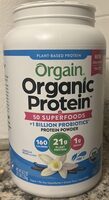 NOVA 4
 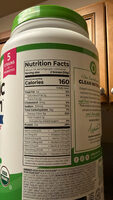 NOVA 4
  c NOVA 4
 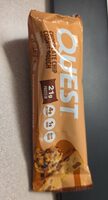 NOVA 4
 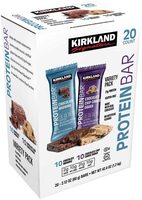 NOVA 4
 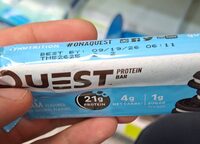 NOVA 4
  NOVA 4
 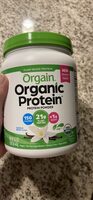 NOVA 4
  c NOVA 4
 Erythritol-free alternatives
Popular products from the same categories that don't list Erythritol and score Nutri-Score A–C.
 c NOVA 4
  c NOVA 4
  c NOVA 4
  c NOVA 4
  c NOVA 4
 How to spot Erythritol on a label
Look for any of these names in the ingredient list:
Related additives
Frequently asked questions
Is erythritol bad for your heart?
It has not been shown to be. Studies since 2023 found that higher erythritol in the blood goes together with more cardiovascular events, and that erythritol makes platelets more reactive in laboratory and short human tests. But those patient studies were observational, the body produces erythritol on its own — more so under metabolic stress — and no study has shown that eating erythritol causes heart attacks. FDA reviewed the evidence and took no action.
Is erythritol banned anywhere?
No. It is permitted in the US, the EU and Canada. EFSA re-evaluated it in 2023, after the cardiovascular research was published, and kept it authorized with a daily limit.
How much erythritol is safe per day?
EFSA's limit is 0.5 g per kg of body weight: about 15 g for a 30 kg (66 lb) child and 35 g for a 70 kg (154 lb) adult. EFSA found that the heaviest consumers of sugar-free products already reach or pass that.
Does erythritol cause digestive problems?
Less than most sugar alcohols, because it is absorbed in the small intestine rather than fermented in the colon. Large single doses can still cause nausea, gas or diarrhea. In the EU, foods with more than 10% added polyols must carry a laxative warning.
Does erythritol raise blood sugar or break a fast?
It does not raise blood glucose or insulin, which is why it is used in diabetic and keto products.
Is erythritol safe for dogs?
The sweetener that is dangerous to dogs is xylitol, not erythritol. Because sweetener blends sometimes contain both, check the ingredient list before sharing anything sugar-free with a dog.
What can I use instead of erythritol?
Allulose, monk fruit or stevia with a different bulking agent, small amounts of maple syrup or honey if sugar is acceptable, or other polyols such as xylitol (not around dogs) and maltitol, which are harder on digestion.
Sources & references
- U.S. FDA — Agency Response Letter, GRAS Notice No. GRN 000789 (erythritol), February 20, 2019
- EFSA (2023). Re-evaluation of erythritol (E 968) as a food additive. EFSA Journal 21(12):8430
- Witkowski M. et al. (2023). The artificial sweetener erythritol and cardiovascular event risk. Nature Medicine 29:710–718
- Witkowski M. et al. (2024). Ingestion of the non-nutritive sweetener erythritol, but not glucose, enhances platelet reactivity and thrombosis potential in healthy volunteers. Arteriosclerosis, Thrombosis, and Vascular Biology 44(9):2136–2141
- U.S. FDA — An evaluation of the article "The artificial sweetener erythritol and cardiovascular event risk" (June 15, 2023)
Product data: Open Food Facts (ODbL), updated daily. Additive information is for general education and is not medical advice. Always check the package label. Our methodology.