
Sorbitol (E420)
Updated October 26, 2026
Sorbitol (E420) is a sugar alcohol used as a bulk sweetener, humectant and texturizer, mostly in sugar-free gum, candy and baked goods. Regulators treat it as low-risk and set no numerical daily limit — the well-documented effect is digestive, not toxic: it is poorly absorbed, so larger amounts draw water into the gut and can cause gas, cramping and diarrhea. US labels must warn about that above a defined threshold.
Quick facts
- Also known as
- Sorbitol syrup, E420
- E-number
- E420
- Function
- Sweeteners
- US status
- Generally recognized as safe (21 CFR 184.1835); products that could deliver 50 g a day must carry a laxative warning
- EU status
- Permitted as E420 (i) sorbitol and (ii) sorbitol syrup; EFSA has not yet completed its re-evaluation
- Acceptable daily intake
- No numerical limit: JECFA set an ADI "not specified" in 1982
- Found in
- 17,978 products (5,194 sold in the US)
- Foodmetria concern level
- Low concern How we rate additives
What is Sorbitol?
Sorbitol is a sugar alcohol (polyol) — a sugar-like molecule with an extra hydroxyl group that the body handles differently from sugar. FDA's own definition describes it as 1,2,3,4,5,6-hexanehexol, a hexahydric alcohol, "differing from mannitol principally by having a different optical rotation."
Commercially it is not extracted from anything: the regulation says it is "produced by the electrolytic reduction, or the transition metal catalytic hydrogenation of sugar solutions containing glucose or fructose." In practice that usually means hydrogenating glucose from corn or wheat starch.
It is roughly half as sweet as table sugar, dissolves with a slight cooling effect, and holds water — which is why it turns up as much for texture as for sweetness.
Why is Sorbitol used in food?
Three jobs, often at once:
- Bulk sweetener. Unlike high-intensity sweeteners such as aspartame or sucralose, sorbitol provides volume as well as sweetness, so it can replace sugar roughly gram for gram in candy and gum without leaving a hole in the recipe.
- Humectant. It binds water and keeps products from drying out — shelf-stable baked goods, dried fruit, soft candy.
- Non-cariogenic sweetener. Mouth bacteria ferment it poorly, which is why FDA allows the claim that foods sweetened with it "do not promote dental caries" (21 CFR 101.80). Sorbitol is named in that regulation alongside xylitol, mannitol, maltitol, isomalt, lactitol and erythritol.
FDA's rules set maximum levels by food category: 99% in hard candy and cough drops, 98% in soft candy, 75% in chewing gum, 30% in baked goods and in non-standardized jams and jellies, 17% in frozen dairy desserts, and 12% in all other foods.
Is Sorbitol safe? What the research says
What regulators say. The WHO/FAO expert committee (JECFA) last evaluated sorbitol in 1982 and assigned an ADI "not specified" — the category it uses for substances of very low toxicity, where a numerical daily limit is not considered necessary. In the US, sorbitol is affirmed as generally recognized as safe (GRAS) under 21 CFR 184.1835 and used according to good manufacturing practice within the category limits above.
The European re-evaluation is not finished. EFSA is working through the authorized sweeteners, and sorbitol has not yet been reassessed — so the evaluation standing behind E420 in Europe is the older one, not a current EFSA opinion. In June 2023 EFSA issued a call for data asking for one specific missing study: an in vitro micronucleus test under the current OECD guideline. Its reason was "the lack of a fully reliable in vitro micronucleus test" — a gap in the test package, not a positive finding. The existing bacterial mutation test was negative, and the available animal studies did not close the gap for procedural reasons. As of EFSA's July 2026 panel update, a tailored assessment protocol covering six polyols was still being developed.
The real-world effect is digestive, and it is dose-dependent. Sorbitol is absorbed slowly and incompletely in the small intestine; what is left travels on, pulls water with it and is fermented by gut bacteria. That produces gas, bloating, cramping and, past a point, osmotic diarrhea. A 2016 scientific review of sugar alcohols (Mäkinen, International Journal of Dentistry) reports that most experts put the osmotic-diarrhea range at roughly 20–50 g of sorbitol, with milder changes possible in some adults at 10–20 g a day, and gives a maximum non-cathartic single dose of about 0.17 g/kg of body weight for men and 0.24 g/kg for women. The review's author cautions explicitly that "such values must not be regarded as universally valid" — tolerance varies a lot between people.
That is why US labels carry a warning. FDA requires the statement "Excess consumption may have a laxative effect" on foods whose reasonably foreseeable consumption could deliver 50 g of sorbitol a day. The EU requires a comparable laxative warning on foods with a high added-polyol content.
What is not established. No regulatory body classifies sorbitol as a carcinogen, and the long-term animal data have not produced a toxicity concern that would justify a numerical limit. We found no regulatory assessment of claims that sorbitol harms the gut microbiome or triggers irritable bowel syndrome, so this page does not make them — what is well documented is the dose-dependent digestive effect described above.
Bottom line: sorbitol is one of the better-understood additives, and the question for most people is not toxicity but quantity. A few pieces of gum are trivial; half a bag of sugar-free candy is a different matter.
Sorbitol regulation: US vs EU
| Region | Status |
|---|---|
| United States | Generally recognized as safe under 21 CFR 184.1835, used per good manufacturing practice within category limits (99% hard candy, 98% soft candy, 75% chewing gum, 30% baked goods, 17% frozen dairy desserts, 12% all other foods). Foods that could deliver 50 g/day must state "Excess consumption may have a laxative effect." Not on FDA's post-market review list. |
| European Union | Permitted as E420 (i) sorbitol and (ii) sorbitol syrup. EFSA's re-evaluation is still open: a genotoxicity data gap was flagged in a 2023 call for data, and an assessment protocol covering six polyols was under development during 2026. Foods high in added polyols require a laxative warning. |
| United Kingdom | Permitted as E420 (i) sorbitol and (ii) sorbitol syrup, listed among approved sweeteners. |
| JECFA (WHO/FAO) | ADI "not specified" since 1982 (26th meeting) — the category used for substances of very low toxicity where no numerical limit is considered necessary. |
Sorbitol is permitted on both sides of the Atlantic and is not the subject of any pending ban or phase-out. It does not appear on FDA's list of chemicals under post-market review (page updated October 2, 2026), and it is not covered by the state additive laws passed in recent years.
The one live regulatory thread is European: EFSA's re-evaluation of sorbitol is still open, with a genotoxicity data gap flagged in 2023 and a joint assessment protocol for six polyols under development through 2026. An opinion could change the EU picture — most likely by confirming the current status or by putting a number on it for the first time.
One point worth separating from the general sweetener debate: the WHO's 2023 guideline advising against non-sugar sweeteners for weight control does not apply to sorbitol. The guideline explicitly excludes "low-calorie sugars and sugar alcohols (polyols)" from its definition, on the grounds that they contain calories. Conclusions you may have read about aspartame or sucralose do not transfer here.
Who should limit or avoid Sorbitol?
- Anyone eating a lot of sugar-free products. This is the main practical issue. Sugar-free gum, mints, candy and "diabetic" sweets can add up quickly, and the digestive effects arrive without warning. If a sugar-free product upsets you, check the label for sorbitol before blaming something else.
- People with IBS or a sensitive gut. Poorly absorbed, fermentable carbohydrates are a recognized trigger of gas and bloating, and sorbitol is one of them. Many people in this group already avoid it on advice from a clinician.
- Parents. Children are smaller, so the same handful of sugar-free candy represents a much larger dose per kilogram of body weight. Loose stools after sugar-free sweets are a common and benign explanation.
- People managing blood sugar. Sorbitol has less effect on blood glucose than sugar, which is why it is used in products aimed at diabetics — but it is not calorie-free or carbohydrate-free, and under FDA labeling rules sugar alcohols still count toward total carbohydrate. Treat it as a reduced-impact carbohydrate, not a free one.
Foods that commonly contain Sorbitol
Share of published products in each category whose ingredient list includes Sorbitol.
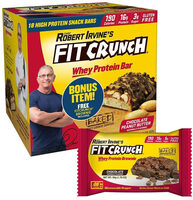
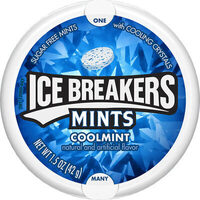
Popular products with Sorbitol
 e NOVA 4
 e NOVA 4
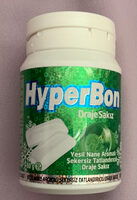 NOVA 4
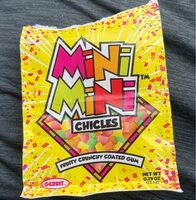 NOVA 4
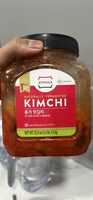 c NOVA 4
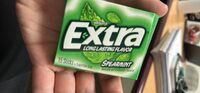 NOVA 4
 NOVA 4
 NOVA 4
 NOVA 4
 a NOVA 4
Sorbitol-free alternatives
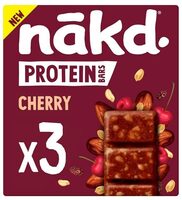
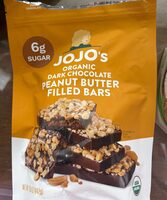
Popular products from the same categories that don't list Sorbitol and score Nutri-Score A–C.
 c NOVA 4
 c NOVA 4
 b NOVA 4
 c NOVA 4
 a NOVA 4
How to spot Sorbitol on a label
Look for any of these names in the ingredient list:
Related additives
Frequently asked questions
Is sorbitol bad for you?
Regulators do not treat it as a toxicity concern: JECFA set no numerical daily limit and FDA affirms it as generally recognized as safe. The documented effect is digestive. Because sorbitol is poorly absorbed, larger amounts draw water into the gut and cause gas, cramping and diarrhea — which is why US labels must warn about a laxative effect above a defined threshold.
How much sorbitol is too much?
There is no official daily limit, because the limiting factor is your gut rather than toxicity. A 2016 scientific review puts the osmotic-diarrhea range at roughly 20–50 g for most adults, with milder symptoms possible at 10–20 g a day in sensitive people. FDA requires a laxative warning on products that could deliver 50 g a day. Tolerance varies widely, and children reach the same dose per kilogram far sooner.
Is sorbitol banned anywhere?
No. It is permitted in the US, the EU and the UK, and it is not on FDA's list of chemicals under post-market review. EFSA has not yet finished re-evaluating it, but that is a scheduling matter, not a restriction.
Does sorbitol raise blood sugar?
Less than sugar does, which is why it appears in products marketed to people with diabetes. It is not carbohydrate-free, though: under FDA labeling rules sugar alcohols count toward total carbohydrate and may be listed separately on the Nutrition Facts panel. Treat it as a reduced-impact carbohydrate rather than a free one.
Is sorbitol good or bad for teeth?
Mouth bacteria ferment it poorly, and FDA allows foods sweetened with it to carry the claim that they do not promote tooth decay (21 CFR 101.80). Sorbitol is named in that regulation along with xylitol, maltitol, mannitol and erythritol.
What foods have sorbitol in them?
Mostly sugar-free gum and mints, sugar-free and "diabetic" candy, protein and snack bars, shelf-stable baked goods, and dried fruit, where it also keeps the product moist. See the products and categories above for what is in our database.
Is sorbitol vegan and gluten-free?
Sorbitol itself is made by hydrogenating glucose or fructose from plant starch, so it is not animal-derived. It can be produced from wheat starch, but the finished polyol is a purified chemical rather than a protein, so products containing it are routinely labeled gluten-free. If you have celiac disease, go by the product's gluten-free labeling rather than by the ingredient name.
Sources & references
- 21 CFR 184.1835 — Sorbitol (GRAS affirmation, use levels and laxative labeling)
- 21 CFR 101.80 — Health claims: dietary noncariogenic carbohydrate sweeteners and dental caries
- 21 CFR 101.9 — Nutrition labeling of food (definition and declaration of sugar alcohols)
- JECFA — Evaluation of sorbitol (26th meeting, 1982; ADI not specified)
- EFSA — Call for data on genotoxicity data on sorbitol (E 420 i), June 2023
- EFSA — Update on the re-evaluation of sweeteners, FAF Panel plenary, 1–2 July 2026
- Mäkinen K.K. (2016). Gastrointestinal Disturbances Associated with the Consumption of Sugar Alcohols. International Journal of Dentistry 2016:5967907
- WHO (May 15, 2023). WHO advises not to use non-sugar sweeteners for weight control (polyols excluded from scope)
- UK Government — Approved additives and E numbers
- U.S. FDA — List of Select Chemicals in the Food Supply Under FDA Review
Product data: Open Food Facts (ODbL), updated daily. Additive information is for general education and is not medical advice. Always check the package label. Our methodology.